#fintech

Fomo Raises $75M Series B to Expand On-Chain Trading

Fomo, a cryptocurrency trading platform, has raised $75 million in a Series B funding round led by Index Ventures, with Union Square Ventures and Benchmark also participating.

According to the team, the new funding will be used to expand Fomo’s asset classes, including equities, perpetuals, and prediction markets, while scaling its engineering team and further investing in its trading and social platform.
Through its consumer-focused platform and the removal of some technical barriers associated with on-chain trading, such as unpredictable gas fees, fragmented blockchains, and complex token bridges, Fomo aims to seamlessly onboard users on-chain.
“Most trading products aren’t built with the user in mind. They are dull, hard to understand, and make you want to rip your hair out,” said Paul Erlanger, Co-founder and CEO of Fomo.
“Each decision we make at Fomo is made to bring our users joy. Fomo is accessible, social, and understandable in 15 minutes. We believe people should be able to access global markets instantly, share opinions and convictions through their network, and participate without needing to understand the technical complexity underneath it all.”
By unifying liquidity, automatically routing transactions, and supporting familiar traditional payment methods such as Apple Pay, Fomo aims to make on-chain trading more accessible. With the inclusion of new asset classes, Fomo is positioned to reach more users globally.
About Fomo
Fomo is a consumer-focused, social-first crypto trading app designed to make on-chain trading simple and accessible. Everything it does revolves around its goal of simplifying crypto trading. To achieve this, Fomo integrates social trading features that allow users on the platform to discover trending assets, connect with top-performing traders, and track open positions.
Since launching last year, Fomo has done several impressive things, including becoming the largest cross-chain crypto trading app, raising more than $90 million in seed funding, growing its user base to more than 625,000, and processing over $4 billion in trading volume to date.

Trace Finance Raises $32M to Expand Stablecoin Payment Infrastructure

Trace Finance, a U.S.-based infrastructure company for cross-border banking and payments, has raised $32 million in a Series A round led by CoinFund. Other investors involved include Coinbase Ventures, Haun Ventures, Valor Capital, Jump Capital, Paxos, and HOF Capital.
According to the team, the funds will be used to support Trace’s expansion by scaling its transaction capacity and extending its stablecoin infrastructure beyond its current limits. With this funding, the team also aims to advance its vision of connecting the U.S. with Latin America.
Launched in 2021, Trace Finance was created to address settlement challenges such as poor service, high fees, and operational friction that hindered cross-border settlements and international remittances in Latin America. So far, the Trace team has remained focused on its mission, processing more than $10 billion in cross-border volume while serving as a leading provider for four of the largest global payment companies in Latin America.
“The international payments market has transformed profoundly in recent years. Beyond technological advances, flows are becoming increasingly complex, requiring operators to have deep regulatory knowledge and to operate through local regulated structures,” said Bernardo Brites, co-founder and CEO of Trace Finance.
“This round allows us to deepen the payments, compliance, and settlement infrastructure used by the largest technology companies, exchanges, international banks, and payment companies to connect digital settlement with trusted local financial systems.”
The team also plans to strengthen its product capabilities in foreign exchange, banking connectivity, compliance, and international settlement, while expanding its regulated footprint across the United States, Brazil, Latin America, and the Asia Pacific region.
Stablecoin Companies See Continued Investor Interest
Just as Trace Finance has, several crypto startups, especially stablecoin-focused companies, have attracted millions of dollars in investment. Range, a Switzerland-based company building stablecoin treasury and compliance tools for wallets, banks, and exchanges, recently raised $8.3 million in a Series A round.
Last month, OpenTrade, a company building institutional-grade "yield as a service" infrastructure for stablecoins, raised $17 million in a seed round led by a16z crypto. Checker, a company building a platform that allows financial institutions to access stablecoin liquidity, cross-border payments, treasury management, and credit, raised $8 million. To date, Checker has processed over $8 billion.
Robinhood Cuts 10% of Workforce in Efficiency Push

Robinhood Markets, Inc. will cut its staff by 10 percent as the company seeks to operate more efficiently and achieve greater impact from a lean workforce.
In a note shared by Robinhood’s communications team on behalf of chief executive officer Vlad Tenev, the company said it can no longer continue operating as a heavily layered organization.
“We must be a lean, hyper-focused team where every single individual is empowered to make a massive impact,” Tenev said in the note. “Our execution is strong today, but our ambitions require us to continuously raise our own bar. To achieve that, today we are flattening our organizational structure and reducing our overall team size by 10 percent of headcount.”
About 290 employees are expected to be affected. According to a Form 8-K filing with the United States Securities and Exchange Commission, the restructuring will cost 20 million dollars in cash severance benefits and 8 million dollars in equity-based compensation.
Robinhood’s layoff comes as the cryptocurrency industry continues to see workforce reductions. Last month, Kraken reduced its staff by about 5 percent, or roughly 150 employees. Coinbase cut its global workforce by about 14 percent, resulting in the loss of approximately 700 jobs. Some reports have linked recent restructuring efforts in the sector to a broader shift toward AI initiatives, though companies have also cited cost-control and efficiency goals.
Several other cryptocurrency-focused companies have also carried out layoffs, including Crypto.com, Dune, Algorand, and Block. According to an industry tracking report, more than 5,000 jobs have been cut across dozens of companies.
Despite the reduction, Robinhood’s chief executive said the company will continue to hire strategically and invest in top-tier talent. Robinhood recently acquired WonderFi, expanding its presence in the Canadian market. The company’s growth metrics remain strong, reporting net revenue of $1.07 billion in the first quarter, up approximately 15% from $927 million in the same period a year earlier.

Ripple Invests in Flutterwave to Boost Africa Payments

Ripple, the leading blockchain technology company that provides blockchain-based solutions to banks and financial institutions, has just invested in Flutterwave, Africa’s biggest fintech unicorn.
The investment, which was part of Flutterwave’s Series E funding round, aligns with the unicorn’s long-term value proposition to build Africa’s leading unified payments infrastructure that connects the continent seamlessly to the global economy.

According to Flutterwave, the partnership is built on three core pillars: embedding Ripple’s RLUSD into Flutterwave’s payment rails to scale large volume payments and remittances; leveraging Ripple’s XRP Ledger for faster transaction clearing; and deploying a unified API that seamlessly bridges Flutterwave’s domestic network with Ripple’s global payment network.
"This investment marks a pivotal moment in our journey, enabling us to significantly scale our infrastructure and expand our stablecoin-enabled payments roadmap,” said Olugbenga "GB" Agboola, Flutterwave’s Founder and CEO.
“By unlocking faster settlement and lower cost cross-border payments, we are building a payment superhighway that connects African commerce directly to the global economy. This partnership is a catalyst for Nigerian and African sovereignty in the digital financial age, ensuring our markets are primary participants in the global digital asset revolution.”
Through partnering with Ripple, Flutterwave takes a significant step towards achieving its “stablecoin first” payment infrastructure that eliminates traditional bottlenecks. By integrating Ripple’s RLUSD stablecoin into its payment infrastructure, Flutterwave aims to deliver immense speed, liquidity, and cost efficiency to Africa’s cross-border payment network, transforming how Africa interacts with global markets.
About Flutterwave
Flutterwave is one of Africa’s leading fintech companies. Launched in 2016, Flutterwave was created to solve fragmented payment systems that limited Africa’s connection to the global economy. Through a single API and platform, Flutterwave enables businesses to accept payments, make payouts, and process cross-border transactions across Africa and internationally.
Since its inception, Flutterwave has raised over $ 500 million through multiple funding rounds and is currently valued at $ 3.2 billion, making it Africa’s most highly valued fintech company. Its services are available in more than 35 African countries, and its payment infrastructure supports over 150 currencies.
Exodus Partners With Ondo To Launch Tokenized Stocks

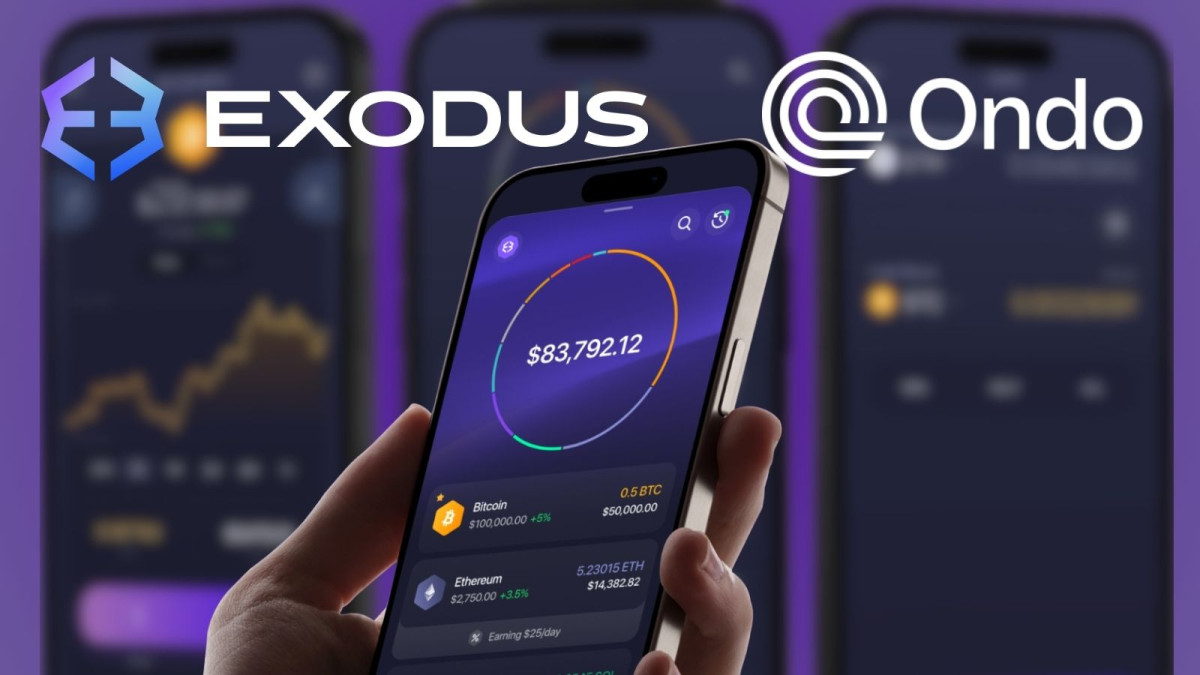
Exodus Movement Inc. (NYSE American: EXOD), a publicly traded financial technology company and developer of the Exodus wallet, has partnered with Ondo Finance to launch Exodus Markets, a platform for trading tokenized assets.

With Exodus Markets, users can now buy and sell more than 200 tokenized stocks, exchange-traded funds (ETFs), and real-world assets directly in the Exodus wallet app on the Solana blockchain.
"Tokenized stocks are one of the most important developments in modern finance," said JP Richardson, CEO and co-founder of Exodus.
"For the first time, our customers can trade and hold tokenized equities with the same direct control and global access they expect from crypto. Exodus is becoming the front door to every asset you hold, without compromising on trust and control."
The launch of Exodus Markets aligns with Exodus’s goal of transforming from a custodial wallet into a full financial platform that allows users to trade, earn rewards, send, spend, and manage money.
As part of its efforts to become a comprehensive financial app, Exodus launched Exodus Pay, a self-custodial payment feature within the Exodus app that enables users to transact with digital assets, including stablecoins, for everyday purchases. The company also launched XO Cash, a stablecoin pegged to the U.S. dollar.
The Tokenization Space
The tokenization space, particularly real-world assets (RWAs), has experienced significant growth over the past 1 to 2 years. Excluding stablecoins, the tokenization sector grew from roughly $5 billion to $6 billion at the start of 2025 to $27 billion to $31 billion or more by mid 2026, representing an increase of more than 400% over a period of 15 to 18 months.
Several institutions are also entering this growing sector, with Bitget most recently launching Reality, its real-world asset (RWA) platform. Kraken has also launched xChange, an on-chain trading engine designed for trading tokenized equities. MetaMask, Trust Wallet, Blockchain.com, and Robinhood have also made strategic moves to enter the sector, partnering with RWA firms and rolling out tokenized assets and stocks.
Given the level of growth and adoption the real-world asset and tokenization sector has seen so far, several projections have been made regarding its future potential. The Boston Consulting Group and Ripple have projected that the sector could be worth more than $15 trillion by 2030.
Japan’s Top Banks to Launch Yen Stablecoin by 2027

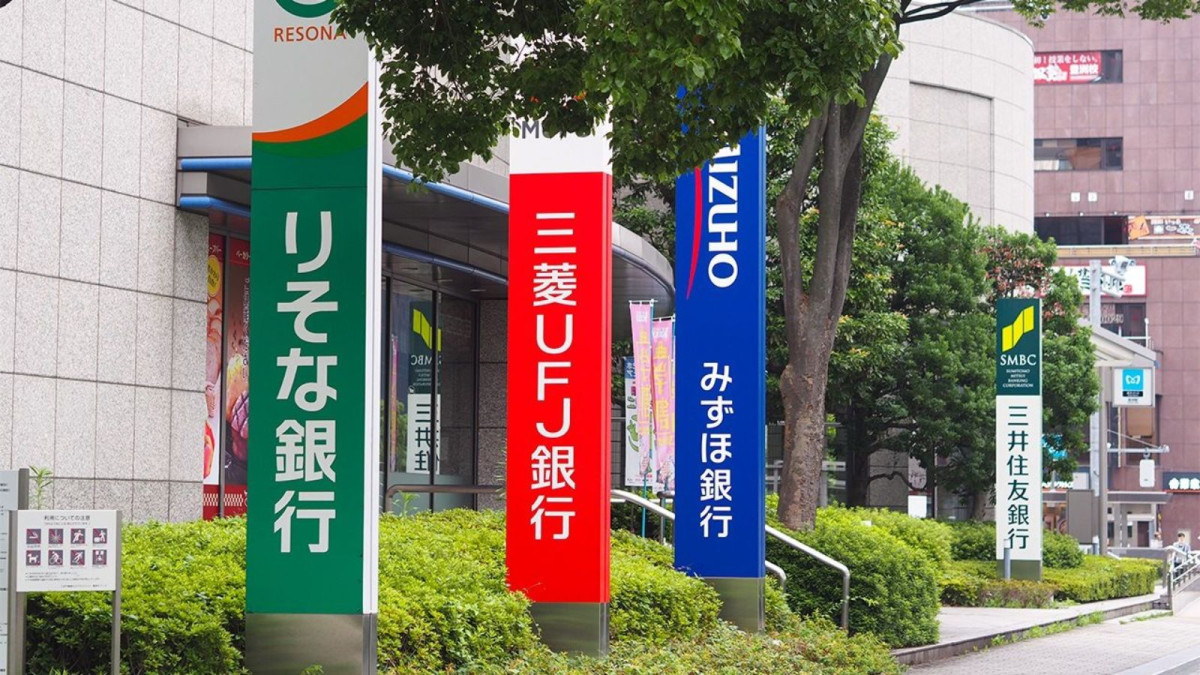
Japan’s top three largest banks, Mitsubishi UFJ Financial Group (MUFG), Sumitomo Mitsui Banking Corporation, and Mizuho Bank, Ltd, have announced plans to jointly launch a yen-backed stablecoin by March 2027.
In a recent press release, the three megabanks said plans were already in place for the trio to conduct actual commercial transactions using the stablecoin. This is not a test or pilot program but a real financial infrastructure enabling stablecoin-based payments.
As a major step toward this goal, the three megabanks signed a Memorandum of Understanding (MoU) to establish a voluntary joint council responsible for developing the stablecoin operational framework, including issuance infrastructure, systems, schemes, governance, and future collaboration with other institutions.
Together with the Financial Services Agency (FSA), Japan’s primary financial regulatory authority, the three banks conducted a FinTech Proof of Concept pilot program around November 2025. The goal of the pilot was to assess whether multiple banks could jointly issue the stablecoin while ensuring compliance with all regulatory, legal, and compliance standards.
The Mitsubishi UFJ Financial Group’s partnership with the two other megabanks comes shortly after Mitsubishi Corporation, an entity within the broader Mitsubishi Group, adopted JPMorgan’s Kinexys blockchain network for cash management for its global subsidiaries.
Just like Japan’s megabanks' collaboration to launch a stablecoin, other banks have made similar moves, notable among which is Qivalis, a consortium comprising 37 European banks that are collaborating to launch a stablecoin for the euro.
Stablecoins continue to grow rapidly, with many traditional financial institutions entering the sector. According to a recent report, stablecoin transaction volume exceeded 28 trillion dollars in the first quarter of this year, approaching the 33 trillion dollar annual transaction volume recorded in 2025. US dollar pegged stablecoins still make up a large share of the global stablecoin supply, representing about 97 percent of the total global stablecoin supply.
Mastercard Expands Stablecoin Settlements Across Network

Mastercard is expanding its stablecoin settlement capabilities to support intraday, weekend, and holiday settlements using both fiat currencies and on-chain card settlements.

According to Mastercard, the expansion is aimed at providing users across the company's global payments network with greater flexibility, allowing them to better manage liquidity and gain greater control over how their money moves. The expansion is also expected to facilitate transactions that depend on timing and transparency, including cross-border payments, treasury operations, and payouts.
"The next phase of stablecoin adoption is about real-world utility, especially in settlement, where timing and liquidity matter most," said Raj Dhamodharan, executive vice president of Blockchain & Digital Assets at Mastercard.
"By introducing intraday and weekend settlement options across our global network, we're expanding how partners manage liquidity and operate in an always-on digital economy while maintaining the trust, resilience, and safeguards they expect from Mastercard."
With this expansion, Mastercard will support additional stablecoins, including Paxos's PYUSD, USDG, and USDP; Ripple's RLUSD; and SoFi's SoFiUSD, in addition to Circle's USDC, which it already supports. These stablecoins will be supported across multiple blockchain networks, including Arbitrum, Base, Canton, Ethereum, Polygon, Solana, Tempo, and XRPL.
ARQ (formerly known as DolarApp), CBW Bank, Cross River, Lead Bank, and Nuvei will be among the first companies in the United States and Latin America to support Mastercard's stablecoin settlement options, with further expansion expected throughout the year.
Mastercard's addition of more settlement options comes shortly after the payments giant acquired BVNK, a leading stablecoin infrastructure company, in March. The acquisition is part of Mastercard's broader strategy to connect on-chain payment rails with traditional fiat rails.
Mastercard is currently one of the world's largest payment processing networks, with more than 150 million merchant locations across 210 countries and territories. The company processed approximately $10.6 trillion in gross dollar volume (GDV) and reported net revenue of about $8.4 billion in the first quarter of this year.
MoneyGram Launches MGUSD Stablecoin on Stellar Network

MoneyGram has launched MGUSD, a U.S. dollar pegged stablecoin on the Stellar blockchain network, aimed at facilitating cross border transfers and remittances.
According to MoneyGram, the MGUSD stablecoin is designed to serve non crypto native users, particularly people who regularly move money across borders and those with little or no access to local financial services, including individuals living in high inflation markets.

By launching MGUSD, MoneyGram aims to provide these users with greater financial stability, enabling them to hold and access their dollar denominated MGUSD assets around the clock and convert MGUSD into local currencies whenever they choose, from anywhere in the world and on their own terms.
"The stablecoin market has largely focused on the asset itself. MoneyGram is taking a fundamentally different approach. Starting with our distribution platform, we're using stablecoin as a foundation to build future applications on our global network," said Anthony Soohoo, Chairman and Chief Executive Officer of MoneyGram.
"MGUSD is the stablecoin we built for our customers, for the families sending money home and for the billions of people around the world with limited financial access."
The launch of MGUSD was made possible through partnerships with several companies involved in the project. These include Stellar, which provides the blockchain on which MGUSD is issued; Bridge, a Stripe owned company that serves as the regulated issuer of the stablecoin; M0, which provides the smart contract infrastructure for minting and burning the stablecoin; and Fireblocks, which provides custodial services.
MGUSD will be integrated directly into the MoneyGram app through a self custodial wallet that will allow users to view their dollar denominated balances. Although MGUSD has launched in the U.S. market, MoneyGram said it plans to expand the stablecoin's availability globally.
About MoneyGram
MoneyGram is a global financial services company that provides fast, accessible cross border money transfers, particularly for people with limited access to traditional banking services. Its core mission is to make sending money across borders simple, reliable, and accessible to millions of migrant workers and their families.
In line with this mission, MoneyGram operates one of the world's largest networks, with nearly 500,000 agent locations worldwide and more than 5 billion endpoints. The company serves more than 60 million active users across 200 countries and territories.
Robinhood Expands Into Canada With WonderFi Purchase
Robinhood Markets, Inc. has completed the acquisition of WonderFi, a formerly publicly traded Canadian fintech company focused on cryptocurrency and digital assets.
The acquisition, valued at $180 million, now allows Robinhood to fully enter the Canadian crypto market, with WonderFi subsidiaries Bitbuy, a crypto trading platform, and Coinsquare, a regulated crypto exchange, becoming part of the Robinhood brand.
“WonderFi has extensive experience operating regulated crypto platforms that serve beginner and advanced crypto users alike, making it an ideal partner to accelerate Robinhood’s mission in Canada,” said Johann Kerbrat, SVP and General Manager of Robinhood Crypto & International.
“We’re pleased to have closed our acquisition and look forward to delivering innovative, user-centric investing products to Canadian customers,” he added.
With this acquisition, WonderFi employees will join more than 240 Robinhood employees based in Canada, collectively serving more than 1 million Robinhood customers internationally and 300,000 existing WonderFi customers.
About Robinhood
Robinhood Markets, Inc. is a Nasdaq-listed American financial technology company with a presence in the United Kingdom, the European Union (EU), and now Canada.
Established in February 2018, Robinhood operates a dual trading platform across mobile and web that is designed to make access to different asset classes easier, particularly for newer investors. Its mission is simple: to democratize finance for all.
Since its launch, Robinhood has achieved several milestones, including pioneering commission-free trading in the United States, a move that prompted many brokerage firms to eliminate commission fees. Over the years, Robinhood has also completed a number of acquisitions, including X1, a financial technology company; TradePMR; Bitstamp, a cryptocurrency exchange; and Pluto Capital.
Like Robinhood, several other companies have completed acquisitions this year to expand into new areas of finance and cryptocurrency. Bullish, a cryptocurrency exchange, recently acquired Equiniti for approximately $4.2 billion as part of its effort to enter the tokenized securities sector. Other companies, including Mastercard, Polygon Labs, and OKX, have also pursued strategic acquisitions to expand their market presence.

Cash App Goes Live With USDC For 60M Users

Block's Cash App has officially begun rolling out USDC stablecoin payments to its nearly 60 million monthly users. The feature went live today for roughly 25% of the platform's user base, with full availability expected by the end of the week.
The rollout covers four blockchain networks: Solana, Ethereum, Polygon, and Arbitrum. Users can now send USDC from their Cash App wallet to external wallets on any of the supported chains, and incoming USDC is automatically converted into a dollar balance within the app. No separate transfer fee applies, at least for now.
A Reluctant Pivot, Years in the Making
The launch carries some ideological weight. Jack Dorsey, Block's CEO and longtime Bitcoin maximalist, spent years positioning Cash App as a Bitcoin-first platform. He built out Bitcoin trading, backed mining hardware development, and integrated Lightning Network support for Square merchants globally. Stablecoins were not part of that vision.
That changed, grudgingly. In March, Dorsey publicly acknowledged the shift. "I don't like that we're going to support stablecoins but our customers want to use them," he said. "I don't think it's wise to go from one gatekeeper to another." The comment was candid in a way that's rare for major fintech announcements, and it framed the product addition less as strategic enthusiasm and more as a concession to market demand.
Block first hinted at the feature on the Cash App website late last year, describing stablecoins strictly as a payments mechanism rather than an investment tool. But that early hint has carried through to the live product.
Why Solana (and Why Not Just Solana)
Solana started as the sole chain involved with Cash App. Back in November 2025, Solana confirmed its involvement after sharing a demo by Circle's Jeremy Allaire showcasing a USDC transfer on the network. The choice made sense: Solana transactions typically cost under a cent and settle in under a second, conditions well-suited for the kind of peer-to-peer and remittance use cases Cash App serves.
But Block's Miles Suter framed the company's stance as "chain- and coin-agnostic" from the beginning. Solana was a starting point, not a commitment. The live rollout now includes Ethereum, Polygon, and Arbitrum alongside Solana, giving users flexibility across networks with different cost and speed profiles. Ethereum's gas fees can still spike during congestion, which is precisely why Layer 2 options like Arbitrum and Polygon matter.
The multi-chain approach also future-proofs the integration somewhat. If one network faces congestion or reliability issues at scale, users and the platform aren't locked in.
The Guardrails Are Real
Cash App is not positioning this as a DeFi on-ramp. The feature comes with meaningful restrictions. Sending is capped at $2,000 per day and $5,000 per week; receiving tops out at $10,000 weekly. The service is currently unavailable in New York and on sponsored accounts. Identity verification is required.
Perhaps most importantly, the app warns users that blockchain transactions are irreversible. Funds sent to a wrong address or unsupported network are gone permanently. That's a steep hill to climb for a consumer platform serving tens of millions of people who may be encountering on-chain transfers for the first time.
Stablecoins Are Here To Stay...and Thrive
Cash App's move lands against a backdrop of surging stablecoin adoption. As of this week, the total market value of stablecoins has hit a record $322 billion, exceeding the foreign exchange reserves of 95 nations, including the UK and Canada. USDC, issued by Circle, is the second-largest stablecoin and already sees over $14 billion in liquidity on Solana alone.
Western Union launched Solana-based remittances in the first half of 2026. Stripe has added USDC support across multiple chains. Visa has integrated Solana for stablecoin settlements. The regulatory picture has also clarified somewhat, with the GENIUS Act signed in July 2025 establishing a clearer federal framework for stablecoin issuance.
Taken together, this feels less like a novelty launch and more like a platform making its peace with where consumer payments are heading. Dorsey may not love it, but the product is live, the networks are there, and 60 million people now have a relatively frictionless path to on-chain dollar transfers whether they know what a blockchain is or not.

Tether Partners With Georgia to Launch GELT Stablecoin

Tether, the largest stablecoin issuer, has partnered with the Georgian government to launch GELT, a stablecoin representing the lari, the country’s official currency.

The partnership, announced on Monday, aims to create a financial ecosystem that supports cross-border commerce, fintech development, and broader access to programmable financial infrastructure across Georgia.
GELT will serve as a digital representation of the Georgian lari and will be designed to enable lower transaction costs, near instant settlement, programmable payments, and more efficient movement of value across digital financial systems.
“Together with visionary partners like Tether, Georgia is laying the foundations for a more connected, transparent, and digitally empowered financial world,” said Irakli Kobakhidze, Prime Minister of Georgia.
The launch of the GELT stablecoin is built on a regulatory framework created by the Georgian government and the National Bank of Georgia. In March this year, the National Bank of Georgia developed a framework governing the issuance of stablecoins.
The framework, officially known as “The Rule for the Initial Coin Offering of a Stable Virtual Asset by a Virtual Asset Service Provider,” sets out standards that must be met by all virtual asset service providers (VASPs) operating in the country, including requirements for 100 percent reserve backing, strong consumer protections, proper risk management, and full compliance with the country’s Anti Money Laundering (AML) standards.
“Stablecoins are no longer a niche financial instrument. They are becoming part of the infrastructure layer for global finance,” said Paolo Ardoino, CEO of Tether. “Georgia has moved early to create serious regulatory architecture for digital assets and stablecoins, and that clarity creates the foundation for real innovation and adoption.”
Georgia’s stablecoin framework is also designed to be compatible with other regulatory frameworks, including the Guiding and Establishing National Innovation for U.S. Stablecoins Act (GENIUS Act) and Markets in Crypto Assets (MiCA).
By partnering with Tether to launch the GELT stablecoin, Georgia becomes the first country to team up with a major stablecoin issuer to issue a government-supported stablecoin pegged to its national currency. The UAE has also launched a dirham-pegged stablecoin, but unlike Georgia’s GELT, that stablecoin was issued by local consortia rather than a major stablecoin issuer such as Tether.
The planned launch of the GELT stablecoin comes shortly after Tether launched its self-custodial wallet. In an effort to increase access to stablecoins, Qivalis recently expanded its consortium to include more banks, which are collectively working to launch a euro-pegged stablecoin.
Flipcash and Coinbase Launch USDF Stablecoin

Flipcash, a digital payment app founded by Ted Livingston, the founder of messaging app Kik, has partnered with Coinbase to launch USDF, a stablecoin pegged to the U.S. dollar.

According to Coinbase, the launch aims to make stablecoin issuance more accessible. Through the partnership, Flipcash can leverage Coinbase’s custom stablecoin platform to create its own stablecoin asset without having to handle much of the underlying technical complexity itself. As a result, Flipcash does not need to build an entire stablecoin infrastructure from scratch.
The USDF stablecoin will be issued on the Solana blockchain and will be 1:1 backed by USDC. It will also serve as Flipcash’s native currency. Since Flipcash allows users to create their own digital currencies, USDF will be the asset in which those currencies are priced and settled. It will serve as the settlement asset for trading digital currencies within the Flipcash app.
Coinbase’s Custom Stablecoin Platform
Coinbase custom stablecoin, or stablecoin as a service, is a platform launched by Coinbase in 2025 that allows businesses to easily create and issue their own branded stablecoins backed by the United States dollar.
As the stablecoin market continues to grow and gain institutional adoption, Coinbase launched its stablecoin platform to make it easier for businesses to enter the stablecoin market, reducing the technical and compliance work associated with issuing stablecoins.
Stablecoins launched on Coinbase’s custom stablecoin platform, including USDF, which is the first stablecoin created on the platform, will maintain a 1-to-1 backing with USDC and will be supported across multiple chains, including Base and Solana.
About Flipcash
Flipcash is a Solana-based non-custodial mobile wallet and digital payment app created by Canadian entrepreneur Ted Livingston in 2021.
It was created to digitize cash and make peer-to-peer payments as frictionless as possible. Through its “Currency Creator” feature, which officially went live last month, Flipcash allows anyone to create a fixed supply of digital currencies.