#Defi
Zapper Shuts Down After 7 Years

Zapper, the popular DeFi dashboard and portfolio tracker, will wind down its operations after about seven years in the crypto industry.
"After close to seven years building Zapper, I regret to announce that Zapper will be winding down," said Seb Audet, co-founder and CEO. "We evaluated a number of different options, pursued some to the fullest extent possible, and came to the realization that an orderly wind down is the best course of action."
Before its decision to shut down, Zapper allowed users to track and visualize assets, liabilities, NFTs, and DeFi positions, including staking, liquidity pools, and loans, across multiple blockchains in real time. According to Audet, Zapper served more than 2 million monthly users and processed more than $13 billion in peak transaction volume.
Zapper's shutdown will be completed on August 3, with the team discontinuing all of its services, including zapper.xyz, its mobile apps, and its API services. The team also said it will send an email to existing API users to help with the transition.
Zapper's decision to shut down comes shortly after crypto exchange AscendEX wrapped up its operations, citing regulatory pressure and its failure to obtain authorization under the European Union's Markets in Crypto Assets, or MiCA, regulation, which fully took effect on July 1, 2026.
The AscendEX team also cited financial and operational challenges, stating that users will no longer be able to open accounts, deposit assets, trade, swap, stake, lend, or participate in referral or promotional campaigns. Account access will remain available only for limited offboarding purposes.
The shutdowns of Zapper and AscendEX come amid a broader wave of closures across the crypto industry. Since the start of the year, approximately 70 to 75 crypto projects and firms have either shut down or filed for bankruptcy.
Last month, blockchain protocol Radiant Capital shut down after failing to recover from an exploit it suffered months earlier. Tether also discontinued its Alloy platform, citing low user activity and weak market demand. Binance also shut down its NFT marketplace.

Summer Finance Hit by $6 Million Exploit

Summer Finance, a DeFi yield optimization protocol, was hit by an exploit that affected the protocol's USDC vaults, resulting in an estimated loss of roughly $6 million.
The exploit was confirmed by several blockchain security firms, including Blockaid, Cyvers, and CertiK. According to Cyvers, the attack appears to have been caused by the exploitation of a shared accounting vulnerability. The stolen funds were eventually swapped for the DAI stablecoin and transferred to the attacker's wallet.
Although all vaults across the Lazy Summer Protocol were immediately paused after the exploit was confirmed, the team later released a post-mortem report detailing how the attack occurred, its scope and impact, the response actions taken, and ongoing fund recovery efforts.

Image credit: x.com
According to the post-mortem report, the exploit targeted two Lazy Summer Protocol USDC vaults on the Ethereum mainnet. The attack, which is believed to have been planned over a period of about 3 months, was executed using a $65 million flash loan. Of that amount, approximately $64.8 million was deposited into Summer's vaults.
The attacker then deposited Varlamore USDC (vgUSDC) Growth tokens, which were essentially worthless, into the vulnerable Silo Ark vault, which had been partially shut down. Because the vault's accounting logic incorrectly treated the fake vgUSDC tokens as legitimate assets with real value, the attacker was able to withdraw genuine funds from the protocol.
In response, the Summer Finance team took several measures to contain the impact, including pausing vaults across the Ethereum, Base, Arbitrum, and Sonic networks. The team has also launched an investigation and begun tracing the stolen funds.
The Summer Finance exploit occurred around the same time that the BonkDAO treasury was drained of approximately $20 million. In that incident, the attacker reportedly purchased $4.4 million worth of BONK tokens, allowing them to meet the DAO's low quorum threshold. The attacker then passed a malicious governance proposal, BIP 76, which automatically transferred approximately $20 million from the treasury.
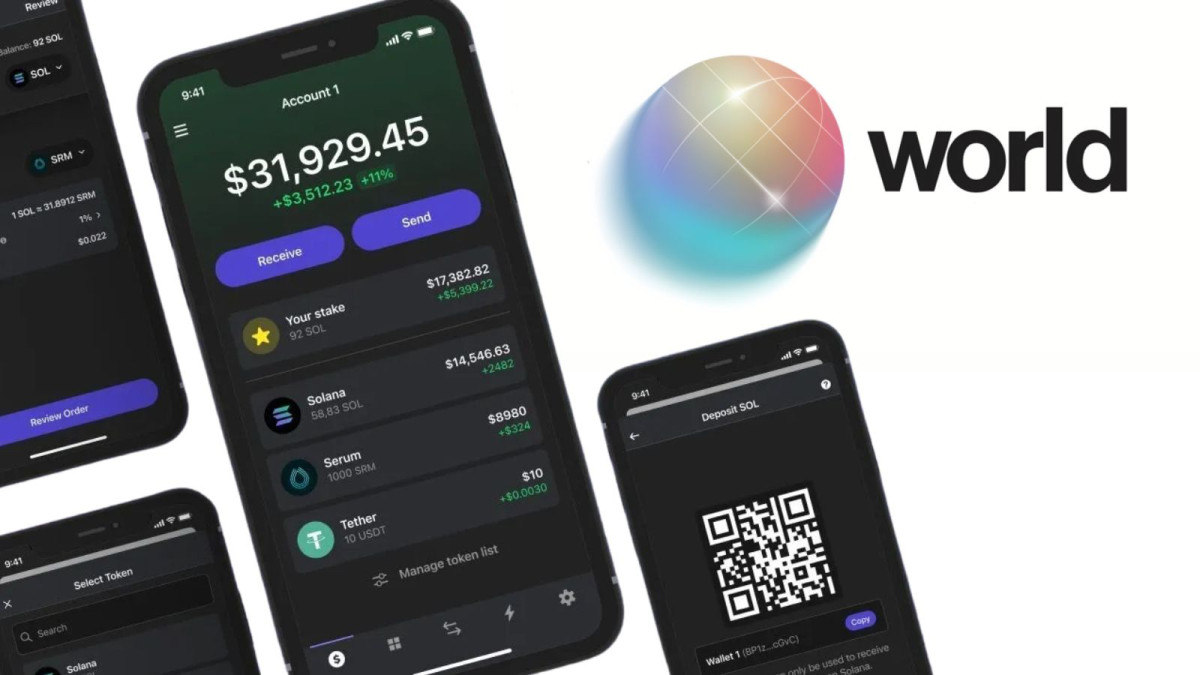
World Prediction Market Launches in Phantom Wallet

World, a fully on-chain, Solana native prediction market powered by Chainlink that aims to compete with Kalshi and Polymarket, has launched on Phantom Wallet.

Image credit: x.com
According to the team, the World prediction market will allow users to predict outcomes on crypto price movements and the ongoing 2026 FIFA Men's World Cup. Additional markets across sports, geopolitics, and macroeconomics will be added in the coming weeks.
"Prediction markets are one of the most powerful applications you can build on a high-performance blockchain," said Pedro Miranda, Head of Consumer at the Solana Foundation. "World is designed to show what Solana makes possible: real-time markets, on-chain settlement, and a user experience that meets people where they are."
Unlike most prediction markets that require users to interact with centralized infrastructure, World is designed to operate entirely on-chain. Every market, every position, and every settlement happens on-chain; as such, users do not have to move their funds to any custodial or centralized entity, as they can interact directly with Solana liquidity.
The platform uses $CASH as its settlement stablecoin. Since it’s launched directly within the Phantom Wallet, World will be available to more than 20 million Phantom Wallet users. It is also important to note that this World project is entirely different from Sam Altman's World. This World is a prediction market project, while Sam Altman's World is an identity project.
World's launch comes at a time when prediction markets are gaining significant traction, especially since the start of the 2026 FIFA Men's World Cup. Since early June, prediction market platforms, including Kalshi and Polymarket, have seen inflows of more than $3.8 billion.
Despite regulatory challenges in some jurisdictions, prediction market companies continue to grow and expand. Kalshi and Polymarket have both recently secured substantial funding from investors. Kalshi recently raised funding at a $22 billion valuation, while Polymarket raised $600 million at a $15 billion valuation and is reportedly in talks to raise an additional $400 million.
Robinhood Launches Mainnet Blockchain

Robinhood Chain, the mainnet blockchain of Robinhood Markets Inc., is now live after about 5 months of running its public testnet.
The mainnet chain, unveiled at the recent "Robinhood Presents: The World is Flat" event at the Old Royal Naval College in London, is built on the Arbitrum blockchain and aims to bridge the gap between traditional and decentralized finance.
“Decentralized finance unlocks possibilities beyond what traditional finance can offer, but historically, it has required technical expertise to navigate,” said Johann Kerbrat, SVP and General Manager of Crypto and International at Robinhood.
“We’re bringing the best of traditional finance and DeFi together, and in doing so, expanding financial ownership to every corner of the globe.”
According to the Robinhood team, Uniswap will serve as the chain's primary public liquidity protocol and will deploy a dedicated Automated Market Maker (AMM), while decentralized trading firm Pleiades will also deploy a proprietary AMM and serve as the chain's primary proprietary trading venue. The chain also features fast block times and a permissionless environment where builders can innovate seamlessly.
Other Product Launches
The Robinhood team also launched new stock tokens that allow eligible users in more than 120 countries to trade directly 24/7 on the Robinhood Chain. Users will be able to trade spot tokens through decentralized exchanges such as Uniswap, Lighter, and 1Inch. The first set of these stock tokens, known as Classic Stock Tokens, will be available to European users through the Robinhood app.
Robinhood Earn, a product that allows users to lend their Global Dollar (USDG) stablecoin at an estimated annual percentage yield (APY) of 7%, was also rolled out. This lending infrastructure is powered by Morpho Protocol.
The launch of the Robinhood Chain comes shortly after Robinhood trimmed its workforce by 10% last month, a move aimed at achieving greater impact with a leaner team. Following its recent entry into Canada and Singapore, Robinhood has also revealed plans to enter the UK market. Robinhood currently serves 28 million users across 38 countries and three continents.
Morpho Raises $175M to Expand DeFi Lending Network

Morpho, a leading decentralized finance lending protocol, has raised $175 million in a funding round led by Paradigm, a16z crypto, and Ribbit Capital. Other firms involved in the round include Apollo Funds, Circle Ventures, VanEck, Ledger Cathay, Variant, Wintermute Ventures, Prelude, IOSG, HashKey, Mirana, NJJ Capital, SBI Group, Bpifrance, and Bam Azizi.

With the funds raised, Morpho aims to further deepen its technical and commercial integrations with strategic partners and continue its mission of developing and strengthening the on-chain infrastructure businesses need to build programmable credit products.
“The true value of finance has always been held back by outdated infrastructure, fragmented systems, and extractive intermediaries,” says Paul Frambot, co-founder of Morpho. “We started Morpho to change that. We’re building the open credit network for the world, connecting those with excess capital to those who need financing globally.”
About Morpho
Morpho is a leading decentralized, permissionless lending protocol operating across Ethereum, Base, and other EVM-compatible blockchain networks. Launched in 2021, Morpho aims to efficiently connect lenders and borrowers globally through its decentralized credit network.
Morpho claims to have facilitated more than $11 billion in deposits since its launch. Its decentralized lending platform is currently used by several institutional clients, including Bitwise, Galaxy, Anchorage Digital, Ledger, Trezor, Bitpanda, Coinbase, Kraken, and Binance. In total, Morpho has raised more than $244 million, with a valuation of approximately $2 billion.
The State of DeFi Lending
On-chain lending remains one of the largest and most mature sectors in decentralized finance. According to data from DeFiLlama, the total value locked in DeFi lending across more than 600 protocols stands at approximately $35.5 billion to $35.8 billion, with Aave, Morpho, and SparkLend holding the largest market shares in the sector.
Institutional adoption in DeFi lending has also accelerated significantly, with blockchain protocols such as Morpho launching Morpho Blue and MetaMorpho vaults, which allow easier integration of the Morpho platform with other centralized finance and institutional platforms. SparkLend has also launched dedicated products targeting institutional clients.
Several other companies, including Gemini, Crypto.com, Fireblocks, Bitwise, J.P. Morgan, and VanEck, have also become involved in institutional DeFi lending through partnerships or the launch of DeFi lending products.
MetaMask Launches AI Agent Wallet for DeFi Trading

MetaMask, one of the major cryptocurrency wallets, has rolled out MetaMask Agent Wallet, a non-custodial wallet that enables AI agents to autonomously execute DeFi activities such as swaps, perpetuals trading, prediction markets, and liquidity provisioning.

According to the MetaMask team, the new wallet is designed for crypto native traders, automators, and builders who already understand on-chain workflows and want these tasks executed by agents. Because the wallet supports multiple agentic platforms, users are not required to adopt a single framework. Compatible platforms include OpenClaw, OpenAI Codex, Claude Code, Nous Research Hermes Agent, and Cursor.
"The next great expansion of the on-chain economy will not be driven by humans alone. Machine intelligences will increasingly transact, coordinate, and verify one another on crypto rails because crypto protocols are uniquely well designed for autonomous actors," Consensys co-founder Joseph Lubin said in a statement.
"Agents will manage real capital and make real financial decisions, and the infrastructure underneath has to be worthy of that. MetaMask Agent Wallet is the first agent wallet built with comprehensive full-stack security for that world, one where agents act with autonomy, security is mandatory, and the person behind the agent stays in control."
To maintain a high level of wallet security, MetaMask has implemented several security mechanisms, including a Trusted Execution Environment (TEE) that protects users' private keys.
The MetaMask team has also implemented Transaction Simulation, which allows users to preview the outcome of a transaction before it is sent on chain; Transaction Shield Threat Scanning, powered by Blockaid, which detects potential threats before execution; Smart Transactions MEV Protection, which scans transactions for potential Maximal Extractable Value (MEV) exploitation; and Transaction Protection Coverage, which provides coverage of up to $10,000 per month. These mechanisms are designed to ensure that AI agents operate within defined security constraints while maintaining a degree of autonomy.
The MetaMask Agent Wallet will initially be available to a limited group of traders and developers through an early access program. The program will provide access to two operating modes: Guard Mode, the default with stricter controls, and Beast Mode, with fewer restrictions.
The launch of the new self-custodial wallet comes shortly after MetaMask co-founder Dan Finlay announced his departure from the company, citing a desire to spend more time with his family. Consensys, MetaMask's parent company, also recently partnered with SG FORGE, a subsidiary of French banking group Société Générale, to integrate the USDCV stablecoin into the MetaMask wallet.
Solayer Launches Margin Trade Mainnet for Multi-Asset Perpetual Trading

Solayer, a hardware-accelerated Layer 1 blockchain and Solana’s first restaking platform, has launched the mainnet of Margin Trade, its new on-chain perpetual trading platform
Margin Trade is a Solana native, on-chain perpetuals trading platform that aims to bridge crypto native on chain trading with traditional finance (TradFi) instruments in a unified environment, making it possible for users to trade different asset classes, including cryptocurrencies, commodities such as silver and gold, and synthetic equity indices, all in one place.
By leveraging Solayer’s low-latency InfiniSVM infrastructure, Margin Trade delivers high-performance on-chain trading, enabling traders to benefit from real-time trade execution, high throughput, low fees, full transparency, and self-custody of their assets.
“Most perpetual futures trading infrastructure today remains siloed across separate markets and fragmented collateral account structures,” said Joshua Sum, Solayer’s Chief Product Officer.
“Margin Trade is designed to bring capital efficiency, real-time execution, and multi-asset exposure into a unified environment that feels closer to the vision of truly global financial markets than traditional trading platforms.”
Margin Trade is being developed by a team of professionals, including former traders from leading financial institutions and crypto exchanges such as Citadel and Kraken. The platform combines the speed and efficiency of centralized exchanges with the transparency, permissionless nature, and self-custody principles of decentralized finance (DeFi).
About Solayer
Solayer, also known as Solayer Labs, is a blockchain infrastructure company building a next-generation execution layer for real-time financial applications. Its goal is to create on-chain infrastructure that matches or exceeds the speed and performance of traditional financial systems.
Since its launch in 2023, the Solayer team has raised $12 million in funding. The company has also launched InfiniSVM, a hardware-accelerated Layer 1 blockchain built on the Solana Virtual Machine (SVM). According to the company, the network is capable of achieving up to 1,000,000 transactions per second and throughput exceeding 100 Gbps.
Margie Feng, Solayer’s Head of Marketing, is also scheduled to speak at the upcoming Rare Evo 2026 conference, which will be held from July 28 to July 31 this year.
Ethena Labs Partners with Anchorage for Institutional Lending

Decentralized finance protocol Ethena Labs has partnered with Anchorage Digital, a digital asset infrastructure provider, to expand its presence in institutional lending through Anchorage Digital's Atlas Collateral Management platform, which manages institutional-grade digital asset collateral.

As Ethena Labs seeks to deepen its involvement in institutional lending, the partnership will see Anchorage Digital act as collateral manager for Ethena's institutional lending activities. This arrangement allows Ethena to focus on deploying capital for loans, while Anchorage Digital manages and safeguards the associated collateral under its custody.
"Institutions want access to crypto native capital, but not at the cost of custody, controls, or operational rigor. Atlas Collateral Management lets protocols like Ethena Labs meet institutional borrowers where they are, combining the speed of DeFi with the standards institutions require," said Nathan McCauley, Co-Founder and CEO of Anchorage Digital.
Through the Atlas Collateral Management platform, Anchorage can monitor collateral and loan thresholds in real time, support margin processes, and execute rules-based actions when necessary. Because the collateral remains under Anchorage's custody and does not move on the chain, Ethena can access traditional institutional lending markets without requiring institutions to adopt blockchain native custody solutions or interact directly with DeFi smart contracts.
For borrowers, the collaboration provides access to crypto native credit while allowing them to maintain their existing custodial, compliance, and risk management frameworks. Atlas offers protocols a streamlined way to expand into institutional lending without building and maintaining their own collateral management, monitoring, and liquidation infrastructure.
The partnership between Ethena Labs and Anchorage Digital builds on an existing relationship. In July 2025, Ethena partnered with Anchorage Digital Bank, the first federally chartered crypto bank in the United States, to become the primary issuer of USDtb, Ethena Labs' institutional-grade stablecoin.
As part of its broader push into institutional lending, Ethena recently partnered with Solana-based DeFi platform Jupiter and Bitwise Asset Management to launch an institutional-grade USDe lending market on Jupiter's lending platform.
The partnership between Anchorage Digital and Ethena Labs comes at roughly the same time as Coinbase's investment in Ethena Labs, which included the purchase of an undisclosed amount of ENA tokens. Coinbase and Ethena are working together to launch on-chain savings and finance products for Coinbase's more than 100 million users.
New PAC Launches to Protect DeFi Developers

Crypto's political machine keeps getting bigger, and now it's getting more specialized. A brand-new political action committee called Defend Developers PAC launched Wednesday with a pretty specific mandate: back the lawmakers who are willing to fight for legal protections for the people actually writing blockchain code.
The group describes itself as the first hybrid PAC focused exclusively on American crypto developers, DeFi builders, and blockchain technologists. It was federally registered just last month, and its founders say they plan to put six figures or more into dozens of congressional races before November.
Who's Behind It
The PAC was founded by Gavin Zavatone, who also serves as policy lead at the DeFi Education Fund, a trade group that lobbies for DeFi-friendly regulation in Washington. The board pulls together names from across the industry: Uniswap Labs, the Solana Policy Institute, the American Innovation Project, and Orca Creative all have representation.
"We plan to raise and contribute more than six figures across dozens of key races in the midterms, because crypto technologists deserve champions in Congress who will go to bat for them," Zavatone said in a statement. No specific dollar amounts have been disclosed yet regarding the PAC's initial funding, but the stated plan is to draw contributions primarily from crypto founders, CEOs, and builders who have a direct stake in how DeFi regulation shakes out.
A Different Kind of Strategy
What sets Defend Developers apart is who it plans to back. Rather than looking for new candidates to anoint or taking shots at incumbents it dislikes, the group says it will focus its money on lawmakers who are already in Congress and already working on these issues. The theory is that incumbent support carries more weight in shaping actual legislation, especially when that legislation, namely the Clarity Act, is still actively being negotiated.
Developer protections have emerged as one of the trickier sticking points in the Clarity Act talks. The bill, which cleared the Senate Banking Committee earlier this year with bipartisan support, still needs to navigate several unresolved issues before it can reach a floor vote. Defend Developers PAC is betting that funneling money toward lawmakers who are already shaping those negotiations is smarter than trying to build from scratch.
A Crowded Field With One Clear Leader
Let's be clear about where Defend Developers sits in the broader crypto PAC landscape: it's not challenging Fairshake anytime soon. The industry's dominant super PAC, backed by Coinbase, Andreessen Horowitz, and Ripple, entered 2026 with north of $191 million in its war chest and has been racking up wins all cycle.
Just this week, Fairshake went 11-for-11 in Tuesday's primaries, backing nine Democratic House candidates in California, one in New Jersey, and Republican Senator Mike Rounds in South Dakota. All of them won. That follows a dominant performance in Texas last week, where crypto-aligned PACs spent more than $9 million across both parties and delivered a notable defeat to Rep. Al Green, a longtime critic of the industry, who lost his seat to Christian Menefee. Fairshake has spent $6.5 million on that race alone.
The new PAC also doesn't yet rival mid-tier players like the Fellowship PAC, which is tied to Tether, or the Digital Freedom Fund, connected to Tyler and Cameron Winklevoss at Gemini. But it's also not trying to. Defend Developers is playing a narrower game, and that might actually be the point.
What To Expect Heading Into November
The launch of another crypto PAC is one more sign of just how much the industry has matured as a political force. Lobbying groups have reportedly spent well over $271 million swaying electoral outcomes since the start of 2026 alone, largely through advertising. The latest addition to that landscape signals that crypto's political operation is growing more specialized, not just bigger.
The Blockchain Association also organized a Washington fly-in this week, bringing former national security and law enforcement officials to Capitol Hill for briefings with staff from roughly 18 Senate offices. A virtual town hall with lawmakers was also scheduled for Thursday. The coordination across lobbying groups, PACs, and trade organizations is about as sophisticated as it's ever been.
With prediction markets roughly split on which party controls Congress after November, the crypto industry's bipartisan strategy is starting to look less like a compromise and more like a deliberate hedge. The general election stakes are high, and groups like Defend Developers are clearly trying to make sure that regardless of who wins, there will be friendly faces in the room when the serious DeFi legislation gets written.
Radiant Capital to Shut Down After $53M Exploit Fallout

Radiant Capital, a decentralized omnichain money market protocol built on LayerZero, has announced plans to shut down after failing to recover from an exploit it suffered more than a year ago.
The decision to cease operations stems from the protocol's inability to recover from losses of more than $50 million due to a security exploit in 2024. According to the team, the DAO no longer has a viable path forward, as there has been no meaningful recovery of funds and no new capital raised since the incident.
"Over the past months, contributors and the community continued to operate under increasingly difficult conditions, working to support users, maintain the protocol, and pursue recovery. That effort was real. And it was consistent. But effort alone is not enough without recovery, capital, or growth," the team wrote in a post on X.
Although the decision to wind down operations has already been made, the Radiant team said the shutdown will not happen immediately. The protocol's front end will remain live, smart contracts will remain accessible on chain, and users will continue to be able to withdraw funds, repay loans, and manage their positions.
The protocol will transition into maintenance mode, with no further development, upgrades, or expansion planned. Borrow caps will be set to zero, and RDNT token emissions will be discontinued.
Despite its decision to wind down, the Radiant team said it will continue efforts to recover the stolen funds. To support this process, the protocol's remediation portal will remain active to ensure that any recovered funds are returned to affected users.
The Radiant Capital Exploit
On October 16, 2024, Radiant Capital was hit by a sophisticated social engineering and malware attack. The attackers, reportedly linked to North Korean threat actors, deployed the malware via a fake Telegram message impersonating a former Radiant team member.
When members of the Radiant engineering team attempted to sign what appeared to be legitimate transactions in the protocol's Gnosis Safe wallet, the malware intercepted the requests and replaced them with malicious transactions in the background.
After gaining control of the protocol's 3-of-11 multisignature wallet, the attackers upgraded the pool provider contract and drained roughly $53 million from the protocol's lending pools on Arbitrum and BNB Chain. The exploit triggered a sharp decline in the protocol's total value locked (TVL), which fell from more than $300 million before the attack to approximately $75 million afterward.
Grayscale Targets To Corner HYPE ETF Market With Lowest Fee

Grayscale is making a run at the growing Hyperliquid ETF market, filing an amended S-1 registration statement with the Securities and Exchange Commission on Monday that sets a sponsor fee of 0.29% for its Grayscale Hyperliquid Staking ETF, ticker HYPG. The updated filing also confirms the fund will list on Nasdaq, and according to Bloomberg Intelligence ETF analyst James Seyffart, a launch could come as soon as this week.
That fee sits just below the 0.30% charged by 21Shares on its THYP fund, and meaningfully below Bitwise's BHYP, which carries a 0% introductory rate for the first month before jumping to 0.34%. It's a deliberate pricing move, and in a market where basis points can drive significant asset flows, Grayscale is clearly trying to get ahead before the institutional money settles.
Grayscale's entry would make HYPG the third U.S.-listed spot HYPE product, following Bitwise's BHYP and 21Shares' THYP, which launched in May on Nasdaq. Early demand for these funds has been hard to ignore. HYPE-focused ETFs pulled in over $132 million in net inflows in roughly their first month of trading, with zero outflow days recorded during an 8-day streak that coincided with HYPE hitting new all-time highs. For context, that run came while Bitcoin and Ethereum ETFs were actually losing assets.
The 21Shares THYP fund collected more than $5 million within days of its May 12 debut, with Eli Ndinga, the firm's global head of research, describing the early response as evidence of real investor appetite for regulated, round-the-clock exposure to crypto-linked markets. Bitwise's BHYP held more than $40 million in net assets as of late May, while the two funds combined purchased roughly $16 million in spot HYPE in a single 24-hour window as share issuance expanded.
What Is Hyperliquid Anyway?
For people still getting familiar with the name, Hyperliquid is a decentralized derivatives exchange built on its own Layer-1 blockchain. It lets traders open perpetual futures positions entirely on-chain, without the custodial risk of a centralized venue. That 24/7 availability and non-custodial structure has made it increasingly attractive to both retail and institutional traders, particularly as centralized exchange perpetuals volumes dropped roughly 34% in early 2026.
The protocol's native token, HYPE, now ranks among the top 10 cryptocurrencies by market cap, sitting around $16 to $17 billion as of early June. The token has climbed from roughly $20 at the start of 2026 to recent all-time highs above $73, a move that reflects both the platform's surging trading volumes and the structural demand created by HYPE buybacks. Hyperliquid directs nearly all of its trading fee revenue toward buying back and burning HYPE tokens, a mechanism that Grayscale's own research team described as a standout feature in a May 28 report calling the protocol "the breakout success story" of modern crypto.
Hyperliquid logged roughly $2.9 trillion in perpetual futures volume during 2025, and open interest has consistently ranked third globally, behind only Binance and Bybit. At a Bernstein conference in late May, Jeff Sprecher, chief executive of Intercontinental Exchange and owner of the New York Stock Exchange, said the 11-person platform had made a bigger impact on finance than Nasdaq. Whether or not that comparison holds up over time, it signals how seriously traditional finance is paying attention.
Seed Investment and Staking Angle
Grayscale's amended filing isn't just about fees. The firm has also been in discussions to secure a seed investment of around $115 million in HYPE tokens ahead of launch, a figure that would give HYPG substantial early liquidity. The fund's full name, the Grayscale Hyperliquid Staking ETF, suggests it intends to incorporate staking into its strategy, similar to Bitwise's BHYP, which targets staking roughly 70% of fund assets and reports a 2.25% gross staking reward rate. Coinbase is listed as custodian.
The staking component matters because it gives the ETF a yield angle that pure spot exposure does not. With HYPE's token unlock for core contributors worth roughly $684 million scheduled for June 6, near-term price volatility is possible, though analysts note the unlock represents just around 1% of total supply. The protocol's aggressive buyback engine and continued inflows into ETF products remain the more dominant forces.
Fee War Is Just Getting Started
The fee gap between Grayscale, 21Shares, and Bitwise looks small right now, but history suggests that it won't stay there. The same dynamic played out in Bitcoin ETF competition in 2024, where initial fee differentials narrowed sharply as issuers competed for long-term AUM. Grayscale is entering behind competitors who already have first-mover brand recognition in HYPE, so pricing aggressively from day one is arguably the right call.
With Seyffart expecting a launch by the end of the week, HYPG could be live before most investors have had a chance to compare their options. HYPE has generated more institutional interest per dollar of market cap than almost any altcoin this cycle and Grayscale is betting that being the cheapest option in a fast-growing category is enough to corner the market. For now anyway.
Bitget Launches Reality for Tokenized Stocks and ETFs

Bitget, a global cryptocurrency exchange, has launched Reality, a real-world asset (RWA) platform that gives users access to tokenized traditional financial assets.
With Reality, Bitget aims to bring tokenized U.S. stocks and exchange-traded funds into its trading ecosystem, enabling access to financial instruments that have traditionally been difficult to access due to geographic restrictions, market hours, and settlement barriers.

The launch aligns with Bitget’s Universal Exchange (UEX) roadmap, which aims to transform Bitget from a crypto exchange into a global trading platform that allows users to trade cryptocurrencies, tokenized stocks, exchange-traded funds, commodities, forex, and other real-world assets through a single account using cryptocurrencies.
“Reality is built around Bitget’s 10% vision: by 2030, nearly 10% of financial assets could exist in tokenized form,” said Gracy Chen, Bitget CEO. “Stablecoins, faster blockchain settlement, and growing interest from major exchanges are pushing RWAs from experiment to market infrastructure. Reality is Bitget’s step toward making that future accessible to global users.”
How Reality Will Work
Reality will be natively integrated into Bitget and serve as the exchange’s specialized arm for tokenizing traditional financial instruments. It will also serve as the primary layer for standardizing traditional market value in the crypto economy.
The Reality platform will issue rTokens to users, which are on-chain representations of publicly traded equities and exchange-traded funds (ETFs). Each rToken will be backed 1:1 by real shares held with a FINRA-registered, SIPC-protected U.S. broker-dealer.
To ensure the highest level of transparency, the Reality platform will be regularly audited by third-party auditors. These audits will provide a live proof-of-asset dashboard and CPA-level audit reports to ensure verifiable asset integrity at all times.
Reality will initially focus on providing tokenized exposure to selected U.S. stocks and ETFs, with the team introducing additional tokenized assets as the platform expands. However, access to the platform, including user eligibility, product availability, and trading features, will depend on applicable geographical laws and regional restrictions.
Bitget’s entry into the RWA tokenization industry comes as several institutions, including Payward, Bitwise, and Nasdaq, are tapping into the growing sector. The RWA tokenization market is currently valued at around $34 billion, with the Boston Consulting Group projecting it to reach $16 trillion by 2030.