#Blockchain
Zapper Shuts Down After 7 Years

Zapper, the popular DeFi dashboard and portfolio tracker, will wind down its operations after about seven years in the crypto industry.
"After close to seven years building Zapper, I regret to announce that Zapper will be winding down," said Seb Audet, co-founder and CEO. "We evaluated a number of different options, pursued some to the fullest extent possible, and came to the realization that an orderly wind down is the best course of action."
Before its decision to shut down, Zapper allowed users to track and visualize assets, liabilities, NFTs, and DeFi positions, including staking, liquidity pools, and loans, across multiple blockchains in real time. According to Audet, Zapper served more than 2 million monthly users and processed more than $13 billion in peak transaction volume.
Zapper's shutdown will be completed on August 3, with the team discontinuing all of its services, including zapper.xyz, its mobile apps, and its API services. The team also said it will send an email to existing API users to help with the transition.
Zapper's decision to shut down comes shortly after crypto exchange AscendEX wrapped up its operations, citing regulatory pressure and its failure to obtain authorization under the European Union's Markets in Crypto Assets, or MiCA, regulation, which fully took effect on July 1, 2026.
The AscendEX team also cited financial and operational challenges, stating that users will no longer be able to open accounts, deposit assets, trade, swap, stake, lend, or participate in referral or promotional campaigns. Account access will remain available only for limited offboarding purposes.
The shutdowns of Zapper and AscendEX come amid a broader wave of closures across the crypto industry. Since the start of the year, approximately 70 to 75 crypto projects and firms have either shut down or filed for bankruptcy.
Last month, blockchain protocol Radiant Capital shut down after failing to recover from an exploit it suffered months earlier. Tether also discontinued its Alloy platform, citing low user activity and weak market demand. Binance also shut down its NFT marketplace.
Swift Launches Blockchain Ledger for Cross-Border Payments Pilot With 17 Banks

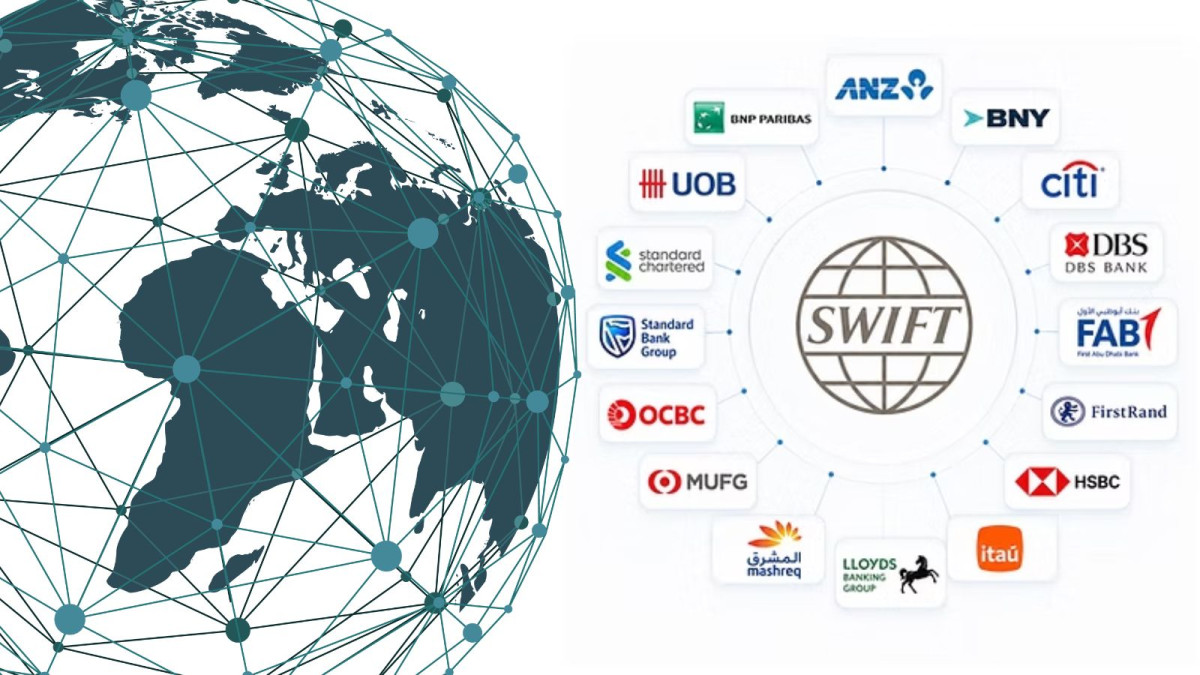
Swift has launched a blockchain-based ledger that enables banks to execute cross-border payments 24 hours a day, seven days a week, using tokenized deposits while maintaining final settlement on existing infrastructure.

Image credit: x.com
According to Swift, 17 banks from six continents are set to pilot transactions on its blockchain-based ledger. Among the banks participating in the pilot program are Wells Fargo, First Abu Dhabi Bank, Standard Chartered, Bank of New York Mellon, Citibank, HSBC, DBS, and Lloyds Bank, among others.
Swift says the shared ledger will provide participating banks with a secure orchestration layer that allows them to issue tokenized deposits on their respective ledgers, enabling customers' funds to move quickly, including on weekends. Participating banks are also expected to benefit from improved client experience and enhanced global liquidity, without compromising their existing compliance, risk, and operational standards.
"With our new ledger capability, we're extending the trust and stability of established finance into the frontiers of digital money. It allows tokenized value to move across borders with the velocity and flexibility modern commerce expects, while maintaining the same high levels of resiliency, security, and compliance global finance requires," said Thierry Chilosi, Chief Business Officer at Swift.
"The strong support from banks shows the practical value of this approach, one that will help scale benefits globally while creating a foundation for future innovation in areas like programmable money and agentic commerce."
Swift said it took nine months to build the blockchain-based ledger, with the team incorporating feedback from financial institutions throughout the development process. According to the company, 75% of payments on the shared ledger will reach beneficiary banks within 10 minutes, and often within seconds. Swift said it also plans for the network to help meet the G20 target for faster international payments.
About Swift
Swift, short for Society for Worldwide Interbank Financial Telecommunication, is a global entity that enables banks and other institutions to exchange standardized, secure instructions for cross-border payments, securities, trade, and treasury transactions.
Since its inception, Swift has connected more than 11,500 institutions in over 200 countries. Before its most recent blockchain-based ledger pilot, Swift had conducted multiple interoperability pilots, testing tokenized assets, stablecoins, CBDCs, and the integration of traditional financial rails with blockchains.
Ripple Secures Full MiCA CASP License in Europe

Ripple, the leading blockchain technology company building digital infrastructure for cross-border payments, has secured a full Crypto Asset Service Provider (CASP) license from the Commission de Surveillance du Secteur Financier in Luxembourg.

Image credit: x.com
The full CASP authorization, announced on Monday, comes shortly after Ripple received preliminary approval from Luxembourg's financial regulator in June. With this license, Ripple is now fully compliant with the Markets in Crypto Assets (MiCA) regulation, enabling it to offer its crypto services to businesses and institutions across all 30 countries of the European Economic Area.
"This CASP authorization means Ripple enters the post-transitional MiCA era fully compliant and ready to scale," said Cassie Craddock, Managing Director for the United Kingdom and Europe at Ripple.
"The institutions we work with across Europe are looking to build their digital asset services alongside regulated partners, and Ripple is licensed and ready to meet that demand."
Ripple now joins a small group of digital asset firms, including Coinbase, Kraken, Crypto.com, Bitstamp, and OKX, that have obtained full authorization under MiCA. The company says it now holds more than 75 regulatory licenses worldwide, in addition to the Electronic Money Institution (EMI) license it secured in February.
Elsewhere on the regulatory front, the MiCA July 1 deadline is now fully in effect, with unlicensed digital asset firms required to stop serving clients in the European Union. It is estimated that more than 80 percent of the approximately 1,200 previously registered firms that lacked full licenses by late June have either exited the European Union or restricted their operations there.
Ripple's full CASP license comes shortly after the company was named among more than 140 members of the Open Standard consortium, a group of companies collaborating on the launch of OpenUSD (OUSD), a dollar-pegged stablecoin. The company also recently invested in Flutterwave, Africa's largest fintech unicorn.

Robinhood Launches Mainnet Blockchain

Robinhood Chain, the mainnet blockchain of Robinhood Markets Inc., is now live after about 5 months of running its public testnet.
The mainnet chain, unveiled at the recent "Robinhood Presents: The World is Flat" event at the Old Royal Naval College in London, is built on the Arbitrum blockchain and aims to bridge the gap between traditional and decentralized finance.
“Decentralized finance unlocks possibilities beyond what traditional finance can offer, but historically, it has required technical expertise to navigate,” said Johann Kerbrat, SVP and General Manager of Crypto and International at Robinhood.
“We’re bringing the best of traditional finance and DeFi together, and in doing so, expanding financial ownership to every corner of the globe.”
According to the Robinhood team, Uniswap will serve as the chain's primary public liquidity protocol and will deploy a dedicated Automated Market Maker (AMM), while decentralized trading firm Pleiades will also deploy a proprietary AMM and serve as the chain's primary proprietary trading venue. The chain also features fast block times and a permissionless environment where builders can innovate seamlessly.
Other Product Launches
The Robinhood team also launched new stock tokens that allow eligible users in more than 120 countries to trade directly 24/7 on the Robinhood Chain. Users will be able to trade spot tokens through decentralized exchanges such as Uniswap, Lighter, and 1Inch. The first set of these stock tokens, known as Classic Stock Tokens, will be available to European users through the Robinhood app.
Robinhood Earn, a product that allows users to lend their Global Dollar (USDG) stablecoin at an estimated annual percentage yield (APY) of 7%, was also rolled out. This lending infrastructure is powered by Morpho Protocol.
The launch of the Robinhood Chain comes shortly after Robinhood trimmed its workforce by 10% last month, a move aimed at achieving greater impact with a leaner team. Following its recent entry into Canada and Singapore, Robinhood has also revealed plans to enter the UK market. Robinhood currently serves 28 million users across 38 countries and three continents.
Coinbase, Visa, Stripe Join Consortium to Build OpenUSD Stablecoin

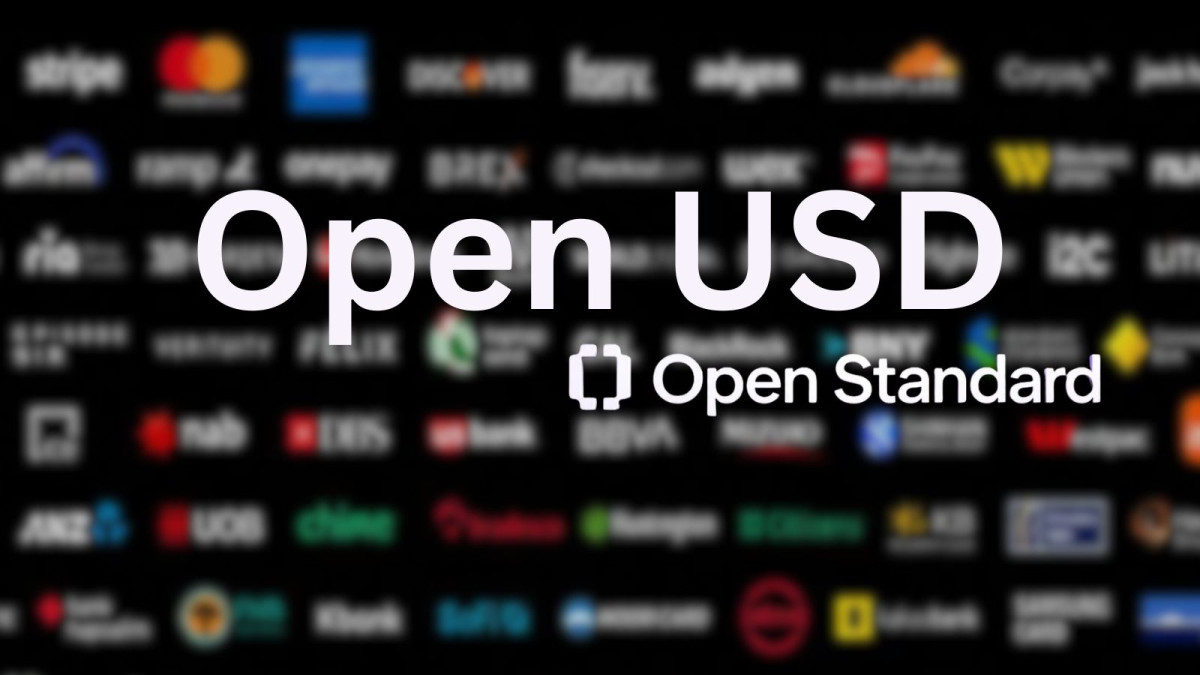
Coinbase, Visa, and Stripe have joined the Open Standard consortium, which comprises more than 140 companies working to support the development of the OpenUSD (OUSD) stablecoin.

Announced on June 30, 2026, OpenUSD (OUSD) is a United States dollar-pegged stablecoin developed by Open Standard, a consortium that includes BlackRock, Google, Ripple, Solana, Aave, and more than 140 companies.
Although the OpenUSD token has not yet launched, it is expected to go live later this year. According to the core development team, the OUSD stablecoin will be backed on a one-to-one basis by the United States dollar and U.S. Treasuries. Because it is designed to scale, businesses can mint and redeem the stablecoin at no cost, with no volume caps for founding partners.
"Existing stablecoins have great strengths, but to use them at scale, businesses need something that is open, low cost, high throughput, broadly accessible, and aligned with their interests," Open Standard CEO Zach Adam said.
"We are thrilled to bring together more than 140 businesses to launch OpenUSD. It is a stablecoin built for the internet economy and designed by the businesses growing it."
Another distinguishing feature of the OpenUSD stablecoin is its shared yield model. After the operating costs of running the stablecoin infrastructure are deducted, users and participants will share almost all of the earnings generated from the stablecoin's reserves based on network activity.
Shortly after the announcement of the OpenUSD stablecoin, Circle's CRCL stock fell more than 16%, with many analysts attributing the decline to the launch of OUSD. Despite the sharp drop, Circle CEO Jeremy Allaire welcomed competition in the stablecoin sector, saying that USDC remains the most widely adopted stablecoin for institutional use while reiterating the company's expansion plans. Tether CEO Paolo Ardoino also welcomed the launch of OUSD in a post on X, saying, "Player 2 has entered the game."

Fomo Raises $75M Series B to Expand On-Chain Trading

Fomo, a cryptocurrency trading platform, has raised $75 million in a Series B funding round led by Index Ventures, with Union Square Ventures and Benchmark also participating.

According to the team, the new funding will be used to expand Fomo’s asset classes, including equities, perpetuals, and prediction markets, while scaling its engineering team and further investing in its trading and social platform.
Through its consumer-focused platform and the removal of some technical barriers associated with on-chain trading, such as unpredictable gas fees, fragmented blockchains, and complex token bridges, Fomo aims to seamlessly onboard users on-chain.
“Most trading products aren’t built with the user in mind. They are dull, hard to understand, and make you want to rip your hair out,” said Paul Erlanger, Co-founder and CEO of Fomo.
“Each decision we make at Fomo is made to bring our users joy. Fomo is accessible, social, and understandable in 15 minutes. We believe people should be able to access global markets instantly, share opinions and convictions through their network, and participate without needing to understand the technical complexity underneath it all.”
By unifying liquidity, automatically routing transactions, and supporting familiar traditional payment methods such as Apple Pay, Fomo aims to make on-chain trading more accessible. With the inclusion of new asset classes, Fomo is positioned to reach more users globally.
About Fomo
Fomo is a consumer-focused, social-first crypto trading app designed to make on-chain trading simple and accessible. Everything it does revolves around its goal of simplifying crypto trading. To achieve this, Fomo integrates social trading features that allow users on the platform to discover trending assets, connect with top-performing traders, and track open positions.
Since launching last year, Fomo has done several impressive things, including becoming the largest cross-chain crypto trading app, raising more than $90 million in seed funding, growing its user base to more than 625,000, and processing over $4 billion in trading volume to date.
Tether to Shut Down Alloy Platform and aUSDT Stablecoin

Tether, the world’s largest stablecoin issuer, has announced plans to shut down its Alloy platform, along with the platform’s main product, Alloy Tether (aUSDT).
According to Tether, the decision was based on a review of user activity levels, market demand, and the company’s broader priorities, with the team planning to focus its resources on areas where it sees stronger user demand, deeper liquidity, and longer-term market opportunity.
The wind-down will take place in phases, with Tether disabling both aUSDT minting and the opening of new positions on the Alloy platform. Users will, however, be able to continue redeeming their aUSDT and withdrawing their Tether Gold (XAUT) collateral from the Alloy platform for the next three months, until September 17, 2026.
This is not the first time Tether has shut down one of its products. In 2024, the stablecoin issuer discontinued its euro-pegged stablecoin, Euro Tether (EURT), citing low demand. In February of this year, it discontinued issuing its yuan-pegged stablecoin, Chinese Yuan Tether (CNHT), due to low demand and usage.
About Alloy
Alloy by Tether is an open platform launched by Tether that allows users to create Tethered assets, a category of digital assets designed to track the price of referenced assets such as the United States dollar, using over-collateralized assets like Tether Gold (XAUT).

Hsiao Wei Wang Leaves Ethereum Foundation Leadership

Hsiao Wei Wang, co-executive director and board member of the Ethereum Foundation (EF), has announced her departure from the foundation, shortly after co-executive director Tomasz Stańczak left in February this year.
“After my sabbatical, I have decided to step down as co-executive director and board member of the Ethereum Foundation, effective today,” Wang wrote in an X post.
“Serving as EF co-executive director let me see the bigger picture of how the Ethereum community collaborates. I’m proud of what we’ve accomplished, not only at the EF, but across the builders, researchers, educators, validators, users, and many other contributors who have helped build, maintain, secure, and use the infrastructure and applications on top of it.”
Wang joined the EF research team in 2017, where she worked on protocol design, consensus mechanisms, sharding proofs-of-concept, and distributed systems. In March 2025, she was appointed co-executive director and board member alongside Tomasz Stańczak. During her time at the EF, Wang contributed to a range of projects, including sharding research, data availability sampling, EIP 4844, ETHTaipei, and the Taipei Seminar.
Reacting to her departure, Ethereum co-founder Vitalik Buterin commended Wang for her contributions to the foundation. “I still remember her early days in the Ethereum research community, first outside the Foundation and then inside it, and the thought and care she put into making Ethereum research and consensus work more organized and legible,” Buterin wrote in an X post.
“Last year, she, along with Stańczak, voluntarily took on the burden of what is perhaps the most challenging position in the Ethereum Foundation, at one of the most challenging times for Ethereum and, realistically, a challenging time for all of humanity. She handled the task skillfully and gracefully, and has constantly strived to find and insist on outcomes that are right both for the Ethereum protocol and for the human beings who build and maintain it.”
Wang’s departure from the Ethereum Foundation comes as several notable researchers have left the organization, including Tomasz Stańczak and Josh Stark, who departed in April. So far, at least eight senior researchers have left the Ethereum Foundation this year.

Ripple Invests in Flutterwave to Boost Africa Payments

Ripple, the leading blockchain technology company that provides blockchain-based solutions to banks and financial institutions, has just invested in Flutterwave, Africa’s biggest fintech unicorn.
The investment, which was part of Flutterwave’s Series E funding round, aligns with the unicorn’s long-term value proposition to build Africa’s leading unified payments infrastructure that connects the continent seamlessly to the global economy.

According to Flutterwave, the partnership is built on three core pillars: embedding Ripple’s RLUSD into Flutterwave’s payment rails to scale large volume payments and remittances; leveraging Ripple’s XRP Ledger for faster transaction clearing; and deploying a unified API that seamlessly bridges Flutterwave’s domestic network with Ripple’s global payment network.
"This investment marks a pivotal moment in our journey, enabling us to significantly scale our infrastructure and expand our stablecoin-enabled payments roadmap,” said Olugbenga "GB" Agboola, Flutterwave’s Founder and CEO.
“By unlocking faster settlement and lower cost cross-border payments, we are building a payment superhighway that connects African commerce directly to the global economy. This partnership is a catalyst for Nigerian and African sovereignty in the digital financial age, ensuring our markets are primary participants in the global digital asset revolution.”
Through partnering with Ripple, Flutterwave takes a significant step towards achieving its “stablecoin first” payment infrastructure that eliminates traditional bottlenecks. By integrating Ripple’s RLUSD stablecoin into its payment infrastructure, Flutterwave aims to deliver immense speed, liquidity, and cost efficiency to Africa’s cross-border payment network, transforming how Africa interacts with global markets.
About Flutterwave
Flutterwave is one of Africa’s leading fintech companies. Launched in 2016, Flutterwave was created to solve fragmented payment systems that limited Africa’s connection to the global economy. Through a single API and platform, Flutterwave enables businesses to accept payments, make payouts, and process cross-border transactions across Africa and internationally.
Since its inception, Flutterwave has raised over $ 500 million through multiple funding rounds and is currently valued at $ 3.2 billion, making it Africa’s most highly valued fintech company. Its services are available in more than 35 African countries, and its payment infrastructure supports over 150 currencies.
Keyrock Secures MiCA License to Expand Across EU

Keyrock, a leading crypto investment company and digital asset liquidity provider, has secured a Markets in Crypto Assets Regulation (MiCA) license, advancing its efforts to expand its presence across the European Union (EU).

The company announced the authorization in a Monday blog post, stating that it was granted through its French subsidiary, Keyrock FR SAS. According to Reza Ghadiri Zare, Keyrock’s general counsel, the MiCA license provides regulatory certainty as the firm scales its operations across EU member states, thereby strengthening investor confidence.
“Achieving a MiCA license not only demonstrates our uncompromising market integrity, but also signals our intent for the future,” commented Kevin de Patoul, CEO of Keyrock. “We’ll continue to drive progress in digital assets, but never at the expense of security or transparency. As we grow, we’ll provide clients with the stability and confidence required in a regulated market.”
With MiCA licensing secured and regulatory hurdles cleared, Keyrock aims to enhance its cross-border operations across the EU. Coupled with its liquidity and risk management infrastructure, the company plans to further scale its digital asset initiatives.
With a valuation of $1.1 billion, Keyrock operates a liquidity infrastructure that spans more than 85 centralized and decentralized exchanges and over 1,400 markets.
About Keyrock
Founded in 2017, Keyrock is a leading global digital asset market maker that aims to make crypto markets more accessible and scalable. Leveraging its high-frequency trading technologies, risk management capabilities, and deep liquidity, Keyrock offers a range of services, including market making, OTC trading, and digital asset and wealth management.
As one of the earliest crypto market makers, Keyrock has achieved several significant milestones, including raising more than $170 million and achieving unicorn valuation. The company has also secured the necessary licenses, reducing regulatory uncertainty as it expands across the EU. Keyrock serves institutional clients, including hedge funds, asset managers, and traditional finance companies entering the digital asset market.

Appeals Court Upholds Sam Bankman-Fried FTX Conviction

A federal appeals court, the U.S. Court of Appeals for the Second Circuit in Manhattan, has upheld the conviction of Sam Bankman-Fried, the founder of the now-defunct FTX cryptocurrency exchange.
Following his conviction on March 28, 2024, Bankman-Fried’s lawyers filed a direct appeal with the U.S. Court of Appeals on April 11, 2024. His legal team argued that the trial was unfair, citing alleged judicial bias by Judge Lewis Kaplan, disputed jury instructions, and other procedural issues.
Through the appeal filing, Bankman-Fried’s legal team sought to overturn the conviction and secure a new trial before a different judge. However, the appeals court rejected the request, stating that there was “robust” evidence supporting the conviction.
“The overwhelming evidence presented at trial proved that Bankman-Fried knowingly and intentionally committed large-scale fraud against FTX’s customers,” Judge Barrington Parker wrote.
“While he was publicly reassuring customers, investors, and regulators that FTX customer funds were safe, he was simultaneously using FTX as his own personal piggy bank, spending customer funds on real estate, political contributions, and investments.”
Following the decision, Bankman-Fried’s legal team has the option of requesting an en banc review, in which all active judges on the Second Circuit would rehear the case. This request must typically be filed within 14 days, although the exact deadline depends on the court’s rules. If the review is denied, his lawyers could petition the U.S. Supreme Court to consider the case.
The appeals court’s rejection of Bankman-Fried’s retrial bid comes shortly after he reportedly filed for a presidential pardon from former President Donald Trump. The request does not seek to shorten or reduce his sentence, but instead aims to restore certain civil rights associated with a felony conviction.
Before the appeals court ruling, Bankman-Fried had filed a request for a new trial in February, arguing that there was newly discovered evidence. However, the request was denied by Judge Lewis Kaplan on April 28, 2026.
The former founder of what was once the world’s largest cryptocurrency exchange is currently serving a 25-year sentence after being convicted on multiple charges, including conspiracy to commit wire fraud, securities fraud, commodities fraud, and money laundering.
Exodus Partners With Ondo To Launch Tokenized Stocks

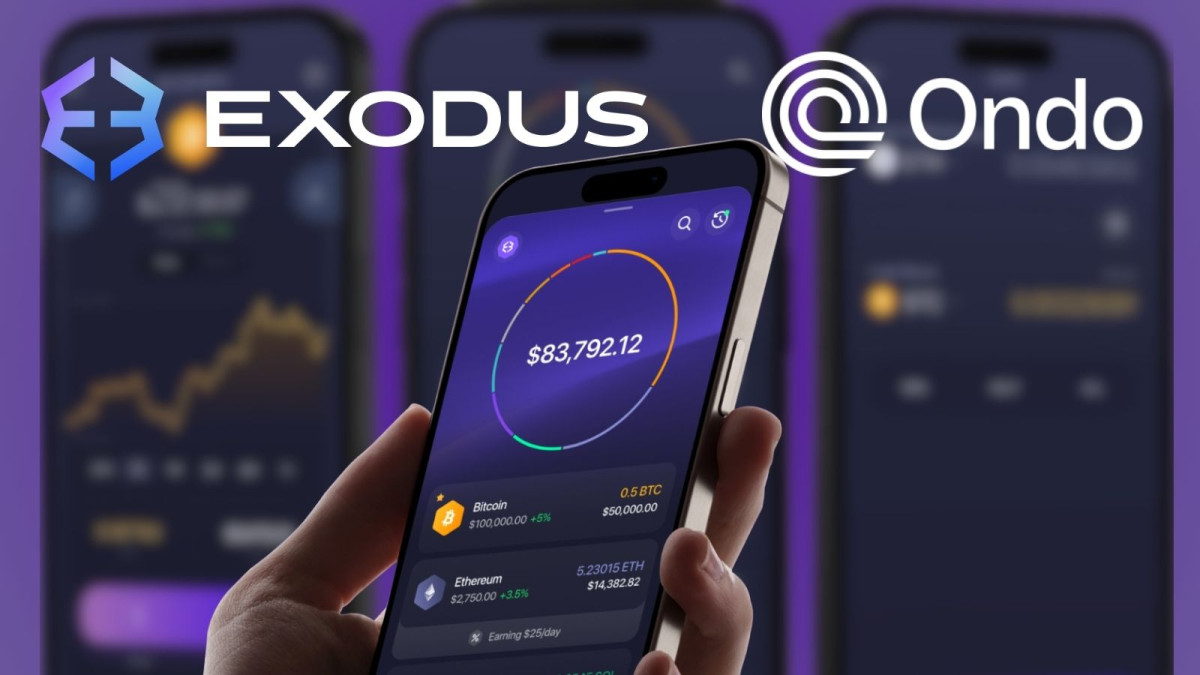
Exodus Movement Inc. (NYSE American: EXOD), a publicly traded financial technology company and developer of the Exodus wallet, has partnered with Ondo Finance to launch Exodus Markets, a platform for trading tokenized assets.

With Exodus Markets, users can now buy and sell more than 200 tokenized stocks, exchange-traded funds (ETFs), and real-world assets directly in the Exodus wallet app on the Solana blockchain.
"Tokenized stocks are one of the most important developments in modern finance," said JP Richardson, CEO and co-founder of Exodus.
"For the first time, our customers can trade and hold tokenized equities with the same direct control and global access they expect from crypto. Exodus is becoming the front door to every asset you hold, without compromising on trust and control."
The launch of Exodus Markets aligns with Exodus’s goal of transforming from a custodial wallet into a full financial platform that allows users to trade, earn rewards, send, spend, and manage money.
As part of its efforts to become a comprehensive financial app, Exodus launched Exodus Pay, a self-custodial payment feature within the Exodus app that enables users to transact with digital assets, including stablecoins, for everyday purchases. The company also launched XO Cash, a stablecoin pegged to the U.S. dollar.
The Tokenization Space
The tokenization space, particularly real-world assets (RWAs), has experienced significant growth over the past 1 to 2 years. Excluding stablecoins, the tokenization sector grew from roughly $5 billion to $6 billion at the start of 2025 to $27 billion to $31 billion or more by mid 2026, representing an increase of more than 400% over a period of 15 to 18 months.
Several institutions are also entering this growing sector, with Bitget most recently launching Reality, its real-world asset (RWA) platform. Kraken has also launched xChange, an on-chain trading engine designed for trading tokenized equities. MetaMask, Trust Wallet, Blockchain.com, and Robinhood have also made strategic moves to enter the sector, partnering with RWA firms and rolling out tokenized assets and stocks.
Given the level of growth and adoption the real-world asset and tokenization sector has seen so far, several projections have been made regarding its future potential. The Boston Consulting Group and Ripple have projected that the sector could be worth more than $15 trillion by 2030.