#crypto news
Tether to Shut Down Alloy Platform and aUSDT Stablecoin

Tether, the world’s largest stablecoin issuer, has announced plans to shut down its Alloy platform, along with the platform’s main product, Alloy Tether (aUSDT).
According to Tether, the decision was based on a review of user activity levels, market demand, and the company’s broader priorities, with the team planning to focus its resources on areas where it sees stronger user demand, deeper liquidity, and longer-term market opportunity.
The wind-down will take place in phases, with Tether disabling both aUSDT minting and the opening of new positions on the Alloy platform. Users will, however, be able to continue redeeming their aUSDT and withdrawing their Tether Gold (XAUT) collateral from the Alloy platform for the next three months, until September 17, 2026.
This is not the first time Tether has shut down one of its products. In 2024, the stablecoin issuer discontinued its euro-pegged stablecoin, Euro Tether (EURT), citing low demand. In February of this year, it discontinued issuing its yuan-pegged stablecoin, Chinese Yuan Tether (CNHT), due to low demand and usage.
About Alloy
Alloy by Tether is an open platform launched by Tether that allows users to create Tethered assets, a category of digital assets designed to track the price of referenced assets such as the United States dollar, using over-collateralized assets like Tether Gold (XAUT).
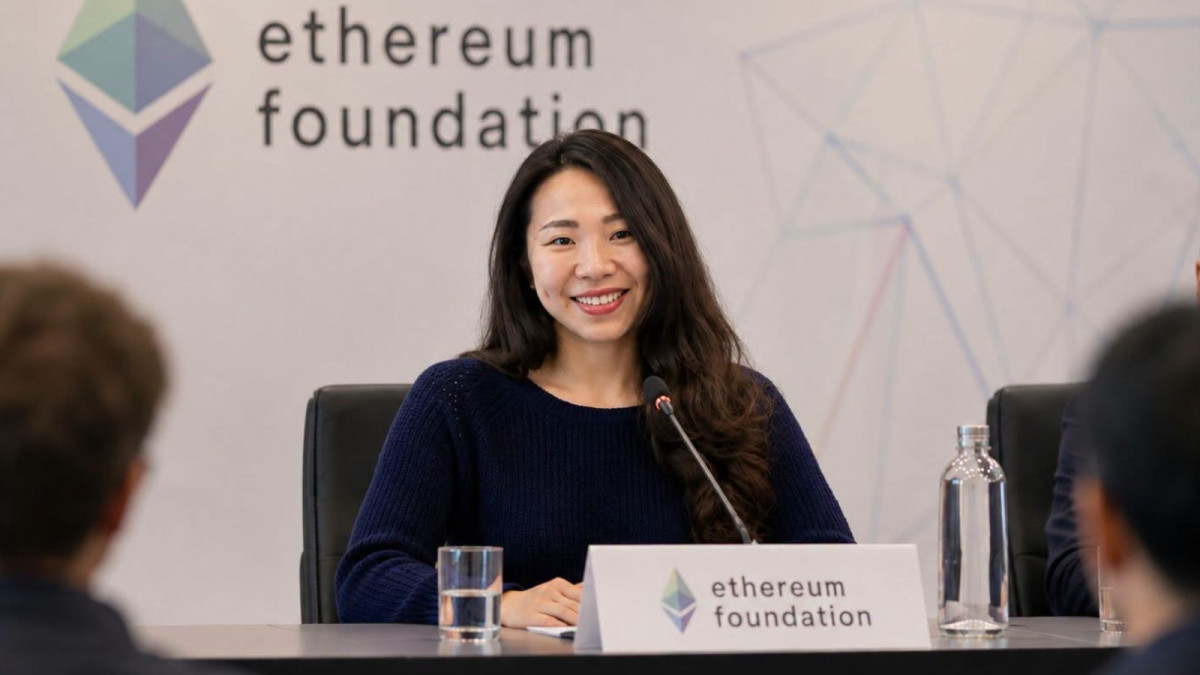
Hsiao Wei Wang Leaves Ethereum Foundation Leadership

Hsiao Wei Wang, co-executive director and board member of the Ethereum Foundation (EF), has announced her departure from the foundation, shortly after co-executive director Tomasz Stańczak left in February this year.
“After my sabbatical, I have decided to step down as co-executive director and board member of the Ethereum Foundation, effective today,” Wang wrote in an X post.
“Serving as EF co-executive director let me see the bigger picture of how the Ethereum community collaborates. I’m proud of what we’ve accomplished, not only at the EF, but across the builders, researchers, educators, validators, users, and many other contributors who have helped build, maintain, secure, and use the infrastructure and applications on top of it.”
Wang joined the EF research team in 2017, where she worked on protocol design, consensus mechanisms, sharding proofs-of-concept, and distributed systems. In March 2025, she was appointed co-executive director and board member alongside Tomasz Stańczak. During her time at the EF, Wang contributed to a range of projects, including sharding research, data availability sampling, EIP 4844, ETHTaipei, and the Taipei Seminar.
Reacting to her departure, Ethereum co-founder Vitalik Buterin commended Wang for her contributions to the foundation. “I still remember her early days in the Ethereum research community, first outside the Foundation and then inside it, and the thought and care she put into making Ethereum research and consensus work more organized and legible,” Buterin wrote in an X post.
“Last year, she, along with Stańczak, voluntarily took on the burden of what is perhaps the most challenging position in the Ethereum Foundation, at one of the most challenging times for Ethereum and, realistically, a challenging time for all of humanity. She handled the task skillfully and gracefully, and has constantly strived to find and insist on outcomes that are right both for the Ethereum protocol and for the human beings who build and maintain it.”
Wang’s departure from the Ethereum Foundation comes as several notable researchers have left the organization, including Tomasz Stańczak and Josh Stark, who departed in April. So far, at least eight senior researchers have left the Ethereum Foundation this year.
Bitbank Warns Users Against Polymarket Amid Japan Gambling Laws

Bitbank, one of Japan’s major cryptocurrency exchanges, has warned its users against using their Bitbank accounts for Polymarket and other prediction market activities.

According to a press release from the exchange, the warning comes in compliance with Japan’s strict laws against prediction market activities, which it broadly categorizes as gambling.
“We would like to inform you of a cautionary note regarding the connection to and use of prediction market services, including Polymarket,” Bitbank wrote in a blog post.
“While these prediction market services may be operated by overseas companies, accessing them from within Japan and using them for the purpose of financial gain may constitute gambling or similar activities.”
As part of its enforcement measures, Bitbank said it may suspend accounts found to be involved in deposits or withdrawals related to prediction market services. If an account is suspended, the affected user will lose access to the account, including cryptocurrency deposits and withdrawals, buying and selling of crypto assets, and withdrawals in Japanese yen.
Bitbank’s move to restrict accounts involved in prediction markets reflects the country’s strong stance against gambling overall. The country’s penal code criminalizes all forms of wagering or gambling activities, with prison sentences of up to five years for offenders.
Thus, while the country or any of its financial regulators have not outright banned prediction markets, crypto entities like Bitbank, for compliance purposes, are proactively distancing themselves from prediction markets.
Bitbank’s restriction on prediction market activities comes shortly after the United States Commodity Futures Trading Commission released a framework that will guide the use of prediction market platforms. According to the framework, betting contracts related to terrorism, assassinations, and war are banned. Although sports event contracts can still be offered, they will be subject to thorough scrutiny to prevent manipulation.
Despite the regulatory bans and challenges facing the prediction market sector, prediction market companies continue to thrive and scale. Recently, Kalshi announced it had raised $1 billion at a valuation of $22 billion, while Polymarket said it was in talks with investors to raise $400 million at a valuation of $15 billion.
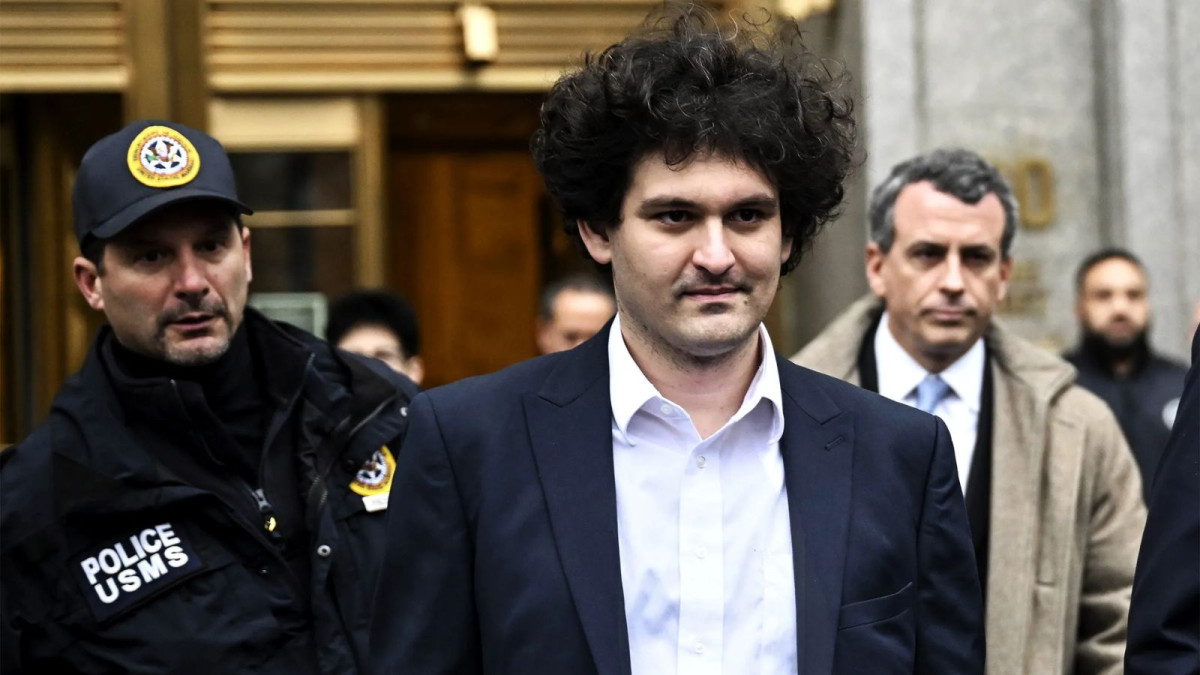
Sam Bankman-Fried Files Presidential Pardon Request With Trump

Sam Bankman-Fried, CEO of the now-defunct FTX cryptocurrency exchange, has formally submitted an application to the U.S. Department of Justice's Office of the Pardon Attorney, seeking a presidential pardon from U.S. President Donald Trump.
The application, which falls under the category of "Pardon after completion of sentence," does not request that Trump shorten or end Bankman-Fried's 25-year prison sentence. Instead, it seeks a presidential pardon that would formally forgive his federal convictions for fraud and related charges, restore certain civil rights, and remove the legal stigma associated with a felony conviction.
Speaking in a phone interview with Fox Business correspondent Susan Li, Bankman-Fried acknowledged that he would welcome a presidential pardon from Trump. However, he declined to comment on whether his parents or anyone close to him had contacted the White House on his behalf.
With the application now filed, the Office of the Pardon Attorney will conduct a thorough review of the petition and verify the information provided. Since the application was submitted just two years into his 25-year sentence, the process could take months or even years to reach a decision. If approved by the reviewing authorities, the recommendation will be forwarded to the president, who may choose to grant, deny, or take no action on the request.
The pardon application comes just months after Bankman-Fried sought a retrial in March, requesting the introduction of new witnesses. The move was later opposed by some U.S. prosecutors.
Bankman-Fried is currently serving a 25-year prison sentence for his role in the collapse of the FTX cryptocurrency exchange. He was convicted of fraud after prosecutors accused him of secretly diverting customer funds to purchase luxury real estate, make large political donations, and engage in other forms of financial misconduct.
At trial, Bankman-Fried was found guilty of wire fraud, securities fraud, commodities fraud, and money laundering. He was subsequently sentenced to 25 years in prison. Despite his conviction, he continues to argue that the prosecution was unjust.
"I didn't steal user funds either," Bankman-Fried said during his phone interview with Susan Li of Fox Business. "Customers have been repaid now 170% or so on their deposits. I can only tell you what I think and, you know, ultimately, customers have been repaid again nearly twice what they had on the platform, and it's a great disservice to them that it has taken three years."
Binance NFT Marketplace Is Shutting Down

Binance is winding down its centralized non-fungible token (NFT) platform and has instructed users to move their NFT assets before July 3, 2026.
Although the shutdown was framed as an "upgrade" by the exchange, users have been urged to transfer their NFT assets from the Binance NFT marketplace to the Binance Wallet, which the exchange says will now support NFT custody.

Users holding transferable NFT assets have been given one month's notice, until July 3, 2026, to move their NFTs to either their Binance Wallet or any other compatible wallet of their choice, or risk losing access to any NFTs that remain unwithdrawn.
As for users holding non-transferable NFTs, those assets will neither be withdrawable nor transferable because they were originally coded to prevent withdrawal and transfer. However, Binance said through Binance Academy that it will issue PDF certificates to users who have completed courses on the Binance Academy platform.
To facilitate the prompt withdrawal of NFTs from its marketplace, Binance said it will reimburse 1 USDC to up to 100,000 users withdrawing general NFTs from the platform. The 1 USDC reimbursement represents the estimated cost of withdrawing a single NFT. For users holding CR7-themed NFTs, Binance said it will refund the full withdrawal fees.
Declining NFT Market
The NFT market has experienced a dramatic decline in recent years, falling sharply from its 2021 and 2022 peaks. At its height, the market was valued at an estimated $17 billion to $24 billion, with monthly trading volume surpassing $4 billion.
However, market conditions have changed significantly, and the sector has fallen to historic lows. The global NFT market is currently valued at approximately $1.5 billion, representing a decline of more than 90% from its 2022 peak. Monthly trading volume has also dropped substantially and now ranges between roughly $400 million and $720 million, well below the peak level of more than $4 billion recorded in 2022.
Several NFT platforms, including Magic Eden, X2Y2, Zora, and Nifty Gateway, have either scaled back parts of their operations, significantly reduced their activity, or shifted their focus away from the NFT market, citing the sector's prolonged downturn.
Binance Launches Access to 7,000 U.S. Stocks and ETFs

Binance, the world's largest cryptocurrency exchange by trading volume, has launched access to more than 7,000 U.S. stocks and exchange-traded funds (ETFs) for traders outside the United States.
The launch, announced on Monday, will give non-U.S. traders access to a range of U.S.-listed stocks, including major companies such as Apple, Tesla, and Nvidia, all within the Binance app.

To make investing more accessible, Binance has enabled users to purchase fractional shares with as little as $5. Traders will also be able to buy and sell U.S. stocks and ETFs with zero commissions, subject to a minimum platform fee of $0.35 per order or 10 basis points on orders above $350.
According to Binance, stock trading on the platform will be available 24 hours a day, five days a week. Because the service is integrated into the Binance app, users will no longer need to switch between platforms to manage different asset classes. Both stock and cryptocurrency holdings will be accessible through a single account.
The launch of U.S. stocks and ETFs for non-U.S. traders marks a significant step in Binance's effort to become a multi-asset financial super app.
"We have set out to reach the next 3 billion users, and to do that, we need to make it simpler for users to access opportunities across asset classes, diversify their portfolios, and move more easily between traditional investing and on-chain finance," said Yi He, a co-founder of Binance. "That is what a multi-asset financial super app should help people do," she added.
As part of the rollout, Binance said it will soon launch bStocks, tokenized securities that represent selected U.S. stocks and ETFs. Users will be able to convert their bStocks holdings into on-chain assets. The launch is expected in the coming weeks, with Binance saying additional details will be released at a later date.
The launch follows Binance's recent introduction of a wallet-lockdown feature designed to help prevent wrench attacks. Meanwhile, Steve Gregory, chief executive officer of Binance.US, is scheduled to speak at the upcoming Rare Evo 2026, which will take place from July 28 to July 31, 2026.
StablR Stablecoins Lose Peg After $10M Wallet Exploit

EURR and USDR, stablecoins issued by StablR, have each lost their euro and dollar pegs following an exploit on StablR’s multisignature wallets.
The exploit, first flagged by on-chain sleuth ZachXBT, led to losses of about $10 million. According to ZachXBT, two contracts tied to StablR were exploited, with the attacker funding their wallet through Circle’s Cross Chain Transfer Protocol (CCTP) on Noble.
In a further update on his Telegram channel, ZachXBT said he had helped freeze six figures worth of the stolen funds, while adding that the StablR team appeared to be inactive as the attack was still ongoing three hours after he raised the alarm.
Blockchain security company Blockaid also detected the exploit, attributing the compromise to a private key issue in StablR multisignature wallets. According to Blockaid, the attacker gained access to one of StablR’s three multisignature wallets.
Since the multisignature wallet had a threshold of 1 out of 3, the attacker, after gaining admin access, replaced the other two legitimate owners. The attacker then minted 8.35 million USDR and 4.5 million EURR stablecoins and swapped them on decentralized exchanges. Blockaid further stated that the attack was not a smart contract bug, but instead a key management and governance failure.
A few hours after the incident was flagged, the StablR team issued a security update stating that they were actively working to contain and minimize the impact of the hack.

At the time of writing, EURR, StablR’s euro-pegged stablecoin, had lost about 53 percent of its value, dropping to about $0.54 according to CoinGecko. USDR, the stablecoin pegged to the US dollar, had risen slightly to $0.99.
This is not the first time a protocol has lost its stablecoin peg due to a governance exploit. In March of this year, Resolv Lab suffered a governance exploit that enabled attackers to gain admin access and mint roughly $80 million worth of Resolv’s USR, a dollar-pegged stablecoin.
Due to this uncontrolled minting, the USR stablecoin lost its peg to the US dollar, crashing to roughly $0.05 within minutes. USR is currently trading at $0.16 according to CoinGecko.
OKX Eyes Coinone Stake as Crypto M&A Boom Accelerates

Global cryptocurrency exchange OKX and Korea Investment & Securities are reportedly looking to acquire approximately 20% stakes each in Coinone, a cryptocurrency exchange based in South Korea.
To maximize capital flow, the acquisition will involve Coinone issuing new equity shares to OKX and its acquisition partner, rather than selling shares held by existing shareholders. Although the acquisition is, for now, just a financial investment, some industry observers have opined that OKX may become more involved in the exchange’s managerial activities in the future.
Currently, The One Group, a private investment company managed by Cha Myung hoon, Coinone’s founder, owns about 34.30% of Coinone, followed by Com2uS Holdings, a South Korean gaming firm, which owns 21.95%, and Com2uS Plus, one of its entities, which owns 16.47 percent. Coinone's CEO, Cha Myung-hoon, owns 19.14%.
If successful, this will be the third time a global cryptocurrency exchange has acquired a stake in a South Korean exchange. In 2022, crypto exchange Crypto.com fully acquired OK BIT, a small South Korean crypto exchange, while in 2025, Binance acquired a 67% majority stake in Gopax, one of South Korea’s top five crypto exchanges.
Crypto Acquisitions on the Rise
The partial acquisition of Coinone by OKX comes at the same time as Hana Bank, one of South Korea’s largest commercial banks, announced a 6.55% stake acquisition in Dunamu, the parent company of Upbit, the largest cryptocurrency exchange in South Korea.
Kraken, through its parent company Payward, has also agreed to acquire Reap, a payments infrastructure firm based in Hong Kong, for about $600 million, just a few weeks after it acquired Bitnomial for $550 million in April.
Several other crypto entities have also been involved in acquisitions, including the crypto exchange Bullish, which acquired Equiniti for $4.2 billion, and MoonPay, which recently acquired Dawn Labs.
According to a report from Architect Partners, about 89 crypto acquisition deals were completed in the previous quarter, with approximately $3.2 billion spent on crypto-related acquisitions, a significant increase from the first quarter of 2025, which recorded 61 deals and $2.2 billion in deal value.
Ethereum Foundation Names Three New Co-Leads
The Ethereum Foundation has appointed Will Corcoran, Kev Wedderburn, and Fredrik as co-leads of its protocol cluster, following the departure of some of its prominent engineers.
“While Barnabé and Tim are moving on from the Ethereum Foundation soon, and Alex Stokes will be on sabbatical, the Protocol cluster, as it exists today, is in large part due to their work. Under their coordination, Protocol launched tracks and helped to ship Fusaka to mainnet in December 2025, introducing PeerDAS and raising the mainnet gas limit on the path to 200M and beyond,” the foundation wrote in a blog post.
“Tim, Barnabé, and Alex shaped Protocol in ways that will outlast their time as cluster leads. We are grateful, and we are looking forward to what each of them takes on next.”
What to Know About the New Co-Leads
Will Corcoran is a research coordinator within the protocol, with experience working on zkVM proving, post quantum consensus, and the Fast Confirmation Rule. He has also facilitated numerous community calls, breakout rooms, and in-person protocol events, giving him a deep understanding of how the protocol works.
Kev Wedderburn leads the zkEVM team in the protocol and has experience working at the intersection of research and engineering, while Fredrik leads the protocol’s security and has been deeply involved in cross-cluster work.
About the Protocol Cluster
The protocol cluster, often called the protocol, is the core group within the Ethereum Foundation responsible for designing, researching, coordinating, and developing Ethereum's base layer, or L1, blockchain protocol. After its rebranding in 2025, it had one goal: to tackle Ethereum's biggest challenges.
To address these challenges, the protocol prioritizes three main areas: enhancing Ethereum's scalability, improving user experience, and strengthening the security and resilience of the Ethereum blockchain network.
The protocol also oversees several technical domains, including AllCoreDevs meetings, cryptography, prototyping, security, zkEVM, and peer-to-peer systems. It is currently working on Glamsterdam, the next major Ethereum L1 upgrade, which will introduce features such as enshrined proposer builder separation, known as ePBS under EIP 7732, and gas repricing to support higher gas limits.
The restructuring of the Ethereum protocol comes shortly after key figures in the foundation, Josh Stark, last month, and Tomasz K. Stańczak, more recently, left the protocol. Other developers within the foundation have also departed to join other Layer 1 blockchain projects such as Tempo.
Circle Raises $222M in Arc Token Presale

Stablecoin issuer Circle has raised $222 million in a private presale of its Arc token, the native token of its institutional stablecoin-focused Layer 1 blockchain.
The presale was led by venture capital firm Andreessen Horowitz, which invested $75 million. Investors, including BlackRock, Apollo Global Management, Intercontinental Exchange, SBI Group, Janus Henderson Investors, Standard Chartered, General Catalyst, Marshall Wace, ARK Invest, IDG Capital, Haun Ventures, and crypto exchange Bullish, also participated in the funding round.
Speaking in an exclusive interview with CNBC, Circle CEO Jeremy Allaire said the company was building an operating system with multiple stakeholders and major companies that would run the infrastructure supporting the network and contribute to its governance.
Allaire also likened the Arc blockchain to a mobile operating system or cloud platform, saying the network was designed to allow major companies to build and operate infrastructure on the chain while participating in governance.
The Arc token has an initial total supply of 10 billion tokens. Circle has allocated 60% of the token supply to participants building, using, and contributing to the Arc blockchain. Circle itself will hold a 25% stake, enabling it to act as a validator for the network, while the remaining 15% has been allocated to a long-term reserve. The fundraising gives Arc a fully diluted network valuation of $3 billion.
The launch of the Arc blockchain is aimed at expanding Circle’s business beyond USDC issuance, allowing the company to generate additional revenue from its stablecoin operations while owning and controlling the settlement and distribution infrastructure on which the USDC stablecoin operates. This would reduce Circle’s reliance on blockchains such as Ethereum and Solana, as well as its dependence on Coinbase.
Circle Publishes Its First-Quarter Stablecoin Report
Alongside the announcement of its successful presale round, Circle also released its first quarter report for this year, which highlighted strong momentum and adoption of its stablecoin.
According to the report, total revenue and reserve income for its USDC stablecoin reached $694 million, marking a 20% year over year increase. USDC on-chain transaction volume also surged to $21.5 trillion in the last quarter, representing a 263% year over year increase.

Although net income from continuing operations fell 15%, USDC in circulation grew 28% year over year to $77.0 billion by the end of the quarter. The report also highlighted the introduction of Agent Stack, a platform designed by Circle that allows AI agents to conduct autonomous financial transactions using USDC.
US Treasury Freezes $344M USDT Linked to Iran

The U.S. Department of the Treasury, specifically the Office of Foreign Assets Control (OFAC), has frozen $344 million in USDT allegedly linked to Iran.
In a Friday post on X, U.S. Treasury Secretary Scott Bessent announced the crypto seizure. The move, according to Bessent, is part of the U.S. effort to systematically degrade Tehran’s ability to generate, move, and repatriate funds.

“We will follow the money that Tehran is desperately attempting to move outside of the country and target all financial lifelines tied to the regime,” Bessent wrote.
While the announcement from Bessent confirmed the freeze and the imposition of sanctions on the owners of the wallets involved, the technical action of the freeze itself was carried out by stablecoin issuer Tether. The stablecoin issuer had earlier stated that it was supporting OFAC and law enforcement agencies in freezing the $344 million linked to the Islamic Revolutionary Guard Corps (IRGC) and the Hezbollah militant group.
Following the announcement, Tether blacklisted two specific wallet addresses on the Tron blockchain, holding $213 million and $131 million in USDT respectively. This move by the U.S. Department of the Treasury follows a similar action in February, when OFAC sanctioned more than 30 individuals and entities allegedly linked to Iran’s oil shipping network.
Tether Expands Blockchain Development Efforts
Tether has consistently pushed forward with innovative blockchain developments. Just this month, it launched tether.wallet, its self custodial wallet that brings Tether’s global financial infrastructure within reach of those who have been left unbanked by the traditional financial system.
In an effort to enhance the utility of its stablecoins, Tether last month invested 5.2 million dollars into Ark Labs, supporting the building of Arkade, an infrastructure layer that brings programmable, instant transactions directly to the Bitcoin network. Through the Arkade network being built by Arkade Labs, we might see the introduction of stablecoins, including USDT, into Bitcoin.
Tether, for the first time, expanded USAT, its US regulated stablecoin, to the Celo blockchain. Since Celo is an Ethereum Layer 2 network optimized for payments, the expansion of USAT to Celo enabled the integration of USAT into Opera MiniPay and Google Cloud infrastructure.
MetaMask Cofounder Dan Finlay Leaves Consensys

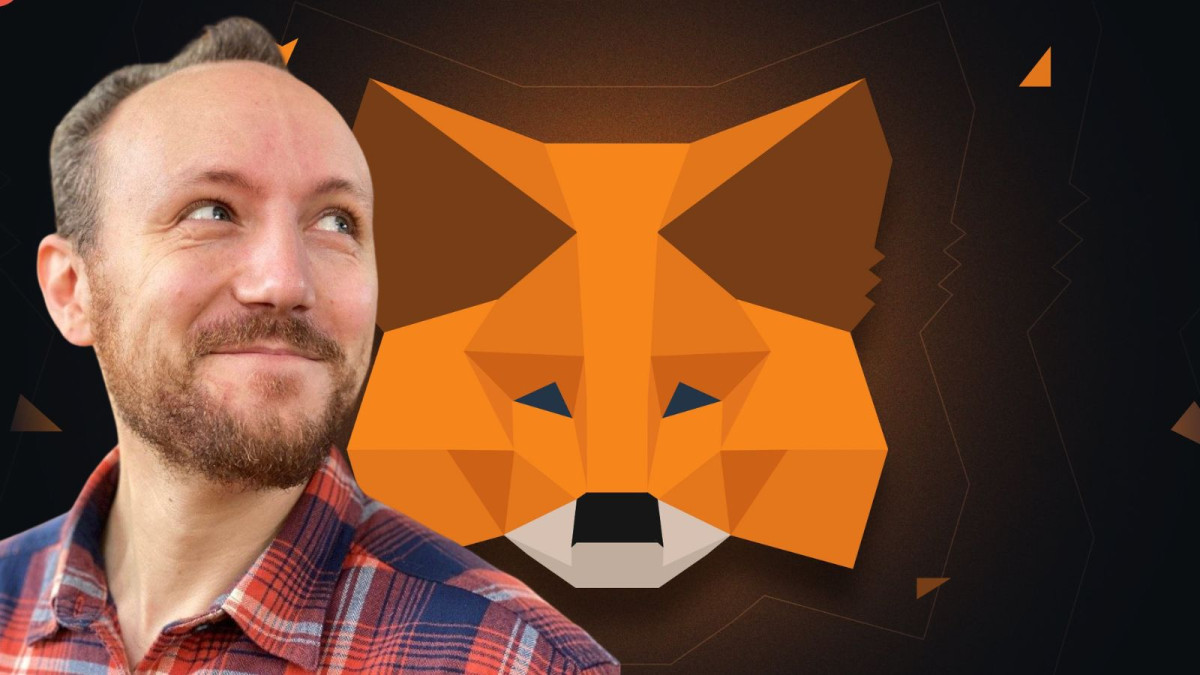
MetaMask cofounder Dan Finlay has left Consensys after spending about a decade working with the self-custodial wallet firm.
Finlay announced his departure from Consensys in a Thursday post on X, citing burnout and the need to spend more time with his family. He also wished the Consensys team well, saying the team has an amazing road ahead of them.

Since joining Consensys in 2016, Dan Finlay, alongside cofounder Aaron Davis, worked hand in hand on the development of MetaMask, Consensys’s self-custodial wallet. Finlay played an instrumental role in shaping MetaMask, transforming it from a browser-based Ethereum wallet into one of the mainstream crypto wallets, enabling access to decentralized finance (DeFi), non-fungible tokens (NFTs), and many other on-chain services.
Finlay was also key in the design and creation of some of MetaMask’s technical features, including Snaps, a MetaMask feature that allows third-party developers to safely extend MetaMask’s capabilities. Some of the capabilities added through Snaps include the ability to explore other blockchains such as Bitcoin, Solana, and Cosmos, as well as improved security features and the ability to receive warnings about malicious transactions occurring within a MetaMask wallet.
On his last day at Consensys, Finlay highlighted the launch of Advanced Permissions, ERC-7715, stating that he was over the moon regarding its launch. Advanced Permissions is a feature that allows decentralized applications to request pre-approved permissions from a MetaMask user to execute transactions on their behalf.
With this Advanced Permissions ERC-7715 feature, a user can activate or grant a particular request in their MetaMask wallet without having to manually approve it repeatedly.
Voluntary Exits Not Uncommon Among Crypto Founders
Like Dan Finlay, it is not uncommon to see crypto founders voluntarily step away from work to focus on other important aspects of life, especially their families.
On the same day Finlay announced his exit from ConsenSys, Bitcoin advocate and podcaster Preston Pysh announced that he was stepping away from public work and social media to focus on his wife and children.
Earlier this month, Ethereum researcher Josh Stark announced his departure from the Ethereum Foundation after spending five years there. According to an X post, Stark said he was stepping away from work to focus more on his family and friends.