#Blockchain Analytics

Elliptic Raises $120M to Expand AI Crypto Compliance

Blockchain analytics firm Elliptic recently secured $120 million in a Series D funding round led by One Peak, with participation from Nasdaq Ventures, Deutsche Bank, and the British Business Bank. The company is now valued at $670 million.

According to Elliptic, the funding will be used to accelerate its mission to deliver enterprise-grade on-chain analytics to some of the world’s largest financial institutions, including banks, fintech companies, crypto companies, and government agencies.
“As digital assets become more embedded in the global financial system, institutions need trusted infrastructure to manage compliance and risk at scale. Elliptic’s platform plays an important role in providing that infrastructure, helping firms navigate digital asset adoption with confidence and integrity,” said Gary Offner, Senior Vice President and Head of Nasdaq Ventures.
Among Elliptic’s expansion plans is scaling its native artificial intelligence compliance system for enterprises. Leveraging its years of experience building one of the most comprehensive and diverse datasets and its ability to process more contextual information per second than competitors, Elliptic plans to build an enterprise-grade compliance system that allows compliance teams to do more with less: alerts resolved in minutes rather than hours, human judgment reserved for where it genuinely matters, and compliance costs falling as volume grows.
“As institutional adoption of digital assets accelerates, the demand for scalable compliance solutions has never been higher. Elliptic pioneered the use of blockchain analytics to meet this challenge and has cemented its status as a global leader, screening over 1 billion transactions a week for more than 700 customers in 30 countries,” said Charlotte Lawrence, Managing Director of Direct Equity at the British Business Bank.
This capability will also benefit stablecoin and tokenized asset companies that process billions of dollars in transactions. In 2025, about $33 trillion in transactions were processed by stablecoin companies. By leveraging its data intelligence infrastructure, Elliptic enables these companies to meet enterprise-grade compliance requirements in real time, an operational necessity for crypto exchanges that handle and move billions of dollars in crypto daily.
About Elliptic
Elliptic is a London-based blockchain analytics firm that specializes in tools for financial crime risk management, anti-money laundering (AML), transaction monitoring, wallet screening, investigations, and threat intelligence across the global crypto ecosystem.
Elliptic currently serves over 700 clients across 30 countries, supports more than 65 blockchain networks, and screens about 1 billion blockchain transactions each week. It has partnered with leading industry players, most recently the layer 1 Solana and the Tempo blockchain networks.

Polymarket Taps Chainalysis to Tackle Insider Trading

Polymarket, the world’s largest prediction market company, has partnered with blockchain analytics firm Chainalysis to help curb insider trading activities amid its recent move to raise $400 million from investors.
The partnership will see Chainalysis deploy several investigative tools, including the Chainalysis Data Solutions tool, a first-of-its-kind on-chain solution designed to monitor trading activity on prediction markets while mapping insider trading patterns and enforcing market integrity rules across the Polymarket platform.

The prediction market platform will also benefit from Chainalysis’s on-chain security capabilities, which are pivotal in preventing threats, as well as a dedicated team of Chainalysis professionals who will not only help deploy Chainalysis Data Solutions but also train the Polymarket team on how to proactively use the solution to maintain transparency on the platform.
The solution to be deployed is also dynamic, meaning Polymarket can continually refine its detection methods to identify and curb insider trading activities, thereby maintaining transparency and protecting the platform from emerging threats.
By partnering with and leveraging Chainalysis's institutional expertise, Polymarket is clearly signaling its stance against all types of fraud and market manipulation and that those who attempt to engage in any such activities will be promptly identified and prosecuted.
"Polymarket was built on chain because transparency matters, and our platform shows what markets can look like when trades are open, traceable, and accountable by design," said Shayne Coplan, Founder and Chief Executive Officer of Polymarket.
"Every market deserves that standard. This partnership with Chainalysis pairs that transparency with the monitoring and enforcement infrastructure to back it up and helps us continue to build the most trusted source of truth in markets."
Insider Trading Concerns in Prediction Market Platforms
Insider trading, which is the illegal practice of leveraging material non-public information (MNPI) or confidential information to gain an edge over other market participants, has long been a problem for prediction market platforms.
To curb insider trading, the U.S. Senate unanimously passed a measure banning its members from trading on prediction markets. Most recently, a group of congressional Democrats led by Sen. Jeff Merkley has pressed the Commodity Futures Trading Commission (CFTC), urging the regulator to address the lack of integrity caused by insider trading activities on prediction market platforms.
Due to this mounting pressure, Kalshi, Polymarket, and other prediction market platforms have rolled out several restrictions to address these concerns, which is also the main factor behind the Polymarket Chainalysis partnership.
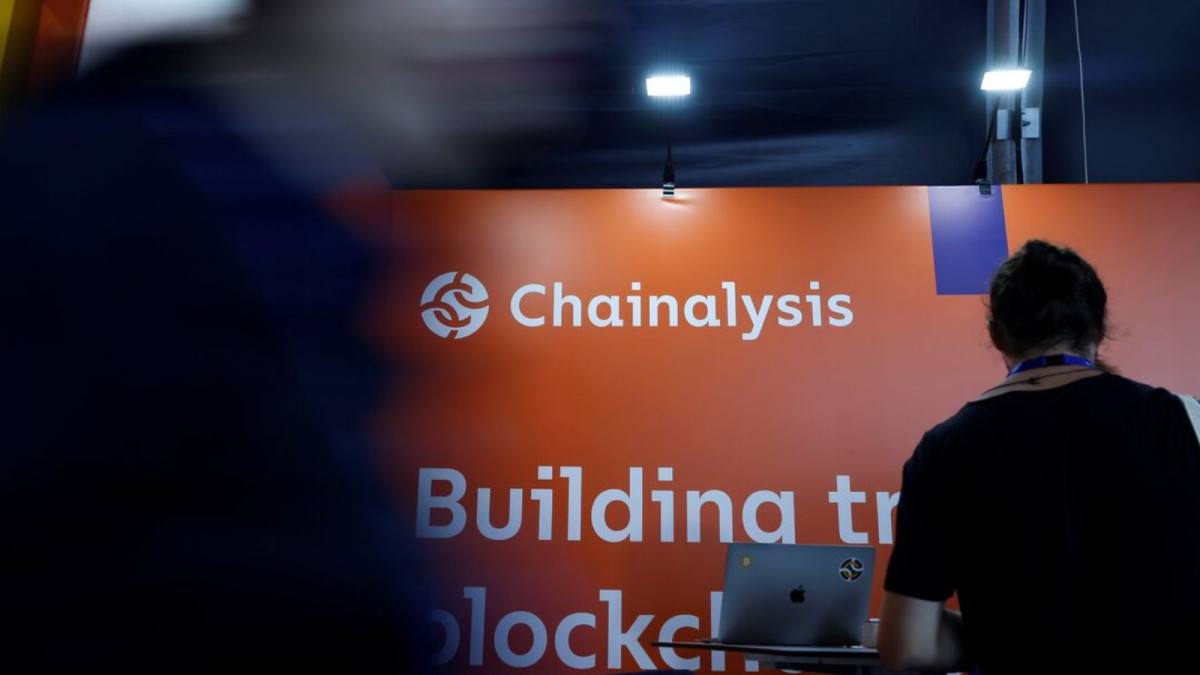
Chainalysis Launches AI Blockchain Intelligence Agents

Blockchain data analytics company Chainalysis announced on Tuesday at its annual Links conference in New York the introduction of its blockchain intelligence agents, designed to scale investigations and compliance for security professionals and organizations.
According to the company’s CEO and co-founder, Jonathan Levine, the AI agents are not a “new product” or a “bolted-on chatbot feature,” but rather an evolution of the company’s existing platform and experience, built on insights from billions of transactions screened and more than ten million investigations conducted over the past decade.
"Chainalysis blockchain intelligence agents put the full depth of our platform, our data, products, and institutional expertise, into the hands of anyone in your organization,” Levine wrote in a company blog post. “From seasoned investigators and compliance analysts to executives, Chainalysis agents provide insights and amplify what your team can do.”

To ensure transparency and reliability in its use, the Chainalysis team built its blockchain intelligence agents around four key principles: data quality, context and reasoning, auditable results, deterministic workflows, and human control. These principles are designed to help the agents deliver accurate and consistent insights.
The blockchain intelligence agents will begin rolling out over the summer, and the team expects that, over time, they will be used by professionals across a range of roles to unlock new levels of blockchain insight.
Chainalysis Joins the AI Agents Race
Prior to Chainalysis's integration of AI agents into its blockchain intelligence platform, several blockchain companies had already developed and launched their own AI-powered tools.
On March 25, blockchain intelligence firm and Chainalysis competitor TRM Labs announced the launch of its Co-Case Agent, an embedded AI investigative assistant that enables investigators to use plain-language prompts for complex on-chain tasks such as tracing funds, auditing transaction graphs, and maintaining immutable audit logs for Suspicious Activity Reports (SARs).
Blockchain analytics and crypto intelligence platform Nansen also launched its Nansen AI agent earlier this year. The conversational assistant supports on-chain research and agentic trading, helping users analyze wallets, identify market signals, and suggest trades.
These AI agent releases followed the introduction of Elliptic’s Copilot. In April 2025, the blockchain analytics and crypto compliance firm launched its AI-powered assistant to streamline compliance workflows and risk management.
Elliptic’s Copilot is widely regarded as one of the earlier AI assistant tools introduced by a blockchain intelligence company.

X User Loses $24 million in a Violent Crypto Attack

An X user with the username "Sillytuna" has reportedly lost $24 million in Aave Ethereum USDC (aEthUSDC) in an attack that involved a combination of violence, sexual assault, weapons, and threats to life.

"Bruised, held off while I could, but can't do that much with axes over your hands and feet," Sillytuna wrote. The user further stated that he was, at this point, done with crypto. In his words, "And now... definitely out of crypto ****ers."
While the matter has already been reported to law enforcement, no official statement has been issued by the authorities. However, the X user has announced a 10% bounty for whoever helps recover the stolen funds.

How the Crypto Community Reacted
Shortly after the news went viral, the crypto community reacted with mixed feelings, with many commiserating with the user over their loss. Some also raised awareness about the deplorable state of security in the United Kingdom. Apparently, the victim is a UK resident.

Amid the sympathy from the global crypto community, some, however, doubted the authenticity of the victim's story.
According to YokaiCapital, an X user, the victim had not posted anything about crypto before. He also alleges that the victim's account appears to have been bought recently.
"He will probably shill the coin at some point or say that he will take donations from the coin," YokaiCapital went on to write.
However, the victim has denied allegations that he intentionally wanted to trend and claims the stolen funds were long-term holdings.
How the Attackers Moved the Stolen Funds
Tracking the stolen funds, blockchain analytics firm Arkham Intelligence said that the attackers moved the funds across Layer 2 networks, Bitcoin, and Monero, obviously to evade trail.

Roughly $20 million of the stolen funds were stored in two Ethereum addresses as DAI, a stablecoin on the Ethereum network, while $2.48 million was bridged to USDC on Arbitrum.
Arkham reported that the attackers sent $2.47 million to Hyperliquid through 19 separate Wagyu accounts, which were used to convert the funds to Monero (XMR).
The attackers also bridged $1.1 million to the Bitcoin blockchain using LiFi, noting that 0.5 BTC was deposited into a mixing service, Arkham added.

Crypto Withdrawals Surge After US-Israel Airstrikes in Iran

There was a surge in crypto withdrawals minutes after the U.S. and Israel launched targeted military airstrikes in Tehran, Iran’s capital, last Saturday.
In a recent post, London-based blockchain analytics company Elliptic gave a report on the aftermath of the airstrikes in Iran. Elliptic reported a significant increase in crypto withdrawals from Nobitex, Iran's largest cryptocurrency exchange.
According to the firm, outgoing transaction volume from Nobitex spiked by over 700% within minutes after the first airstrike hit Tehran on Saturday, with crypto outflows reaching nearly $3 million in a single hour that same day.

Image credit: elliptic.co
Further tracing these funds, Elliptic reported that most of the withdrawals were sent to foreign crypto exchanges, potentially indicating intense capital flight amid uncertainty in the region.
"Nobitex allows rials to be converted to cryptoassets, which can then be withdrawn to any external wallet…initial tracing of recent outflows from Nobitex suggests that the funds are being sent to overseas cryptoasset exchanges," Elliptic stated.
Although this outflow persisted for most of that day, it fell sharply afterward, an event attributed to the nation's widespread internet outage. Yes, there was a 99% decline in internet connectivity in the country.
However, contrary to the "capital flight" situation being reported by Elliptic, blockchain intelligence firm TRM Labs seems to hold a different view and cautions against drawing a "capital flight" conclusion.
"It appears that the country's crypto ecosystem is not showing signs of acceleration or capital flight, but instead is experiencing a downturn in both transactions and volume as the regime enforces strict internet blackouts," TRM Labs said.
The State of Crypto in Iran
Despite ongoing unrest, the Iranian cryptocurrency economy appears to be among the largest crypto markets in the world. In 2025, over $10 billion in volume was processed, with Nobitex processing over $5 billion.
Iranian crypto exchanges have had to deal with massive crypto outflows, the largest of which occurred on January 9 of this year, after the nationwide demonstrations in the country.

Image credit: elliptic.co
To adapt to changing events, cryptocurrency exchanges in the country have had to make operational adjustments and move to risk-containment modes.
Wallex, a domestic crypto exchange, suspended crypto withdrawals until further notice, citing infrastructure instability. Nobitex, Aban Tether, and Ramzinex, which are all Iranian-based cryptocurrency exchanges, have also had to suspend deposits and withdrawals.
However, despite these challenges, cryptocurrencies and digital assets have come to the rescue of many who have had to cope with the several economic sanctions plaguing the country.