#financial markets

Kalshi Gains Federal Support in Ohio Court Battle

The Commodity Futures Trading Commission (CFTC) has filed an amicus brief in the United States Court of Appeals for the Sixth Circuit following a United States District Court decision involving Kalshi in Ohio.

Through this filing, the CFTC seeks to assert its exclusive jurisdiction over prediction markets and to overturn the ban previously imposed by Chief Judge Sarah D. Morrison of the United States District Court for the Southern District of Ohio.
“The federal district court in Ohio took an improperly narrow view of the Commission’s jurisdiction, and we are asking the Court of Appeals to correct that error,” said CFTC Chairman Michael S. Selig. “As I’ve said repeatedly, the CFTC will not allow overzealous state governments to undermine the agency’s longstanding authority over these markets.”
Kalshi’s Case Against Ohio
The March ban on Kalshi by an Ohio district court dates back to early 2025, when the Ohio Casino Control Commission (OCCC) issued a cease-and-desist order to Kalshi, instructing it to stop offering its sports event contracts in the state, alleging that those contracts were illegal.
Following this order, Kalshi sued state regulators and other state officials, seeking a preliminary injunction to block enforcement of the cease-and-desist order. However, the case was dismissed when Judge Sarah D. Morrison ruled against Kalshi, allowing state regulators to enforce the ban and later impose a $5 million fine on Kalshi for continuing to offer sports event contracts in the state.
Kalshi has now appealed to the United States Court of Appeals for the Sixth Circuit, seeking to overturn the ban. In its amicus brief filing, the Commodity Futures Trading Commission (CFTC) not only argues for the removal of the ban but also seeks to protect prediction market companies from what it describes as an ongoing campaign of state encroachment.
As part of its protective efforts, the CFTC has engaged in legal disputes with several U.S. states, including Wisconsin, Illinois, Arizona, Connecticut, and New York, over their regulatory stance and enforcement actions against prediction market companies.
Despite the challenging regulatory environment faced by prediction market companies, the sector has grown significantly. In 2025, annual trading volume across prediction market platforms rose to approximately $63.5 billion from $15.8 billion in 2024. The number of users across prediction market companies has also increased, with institutional investors showing greater interest and contributing more capital to these platforms.
CME to Launch AVAX and SUI Futures

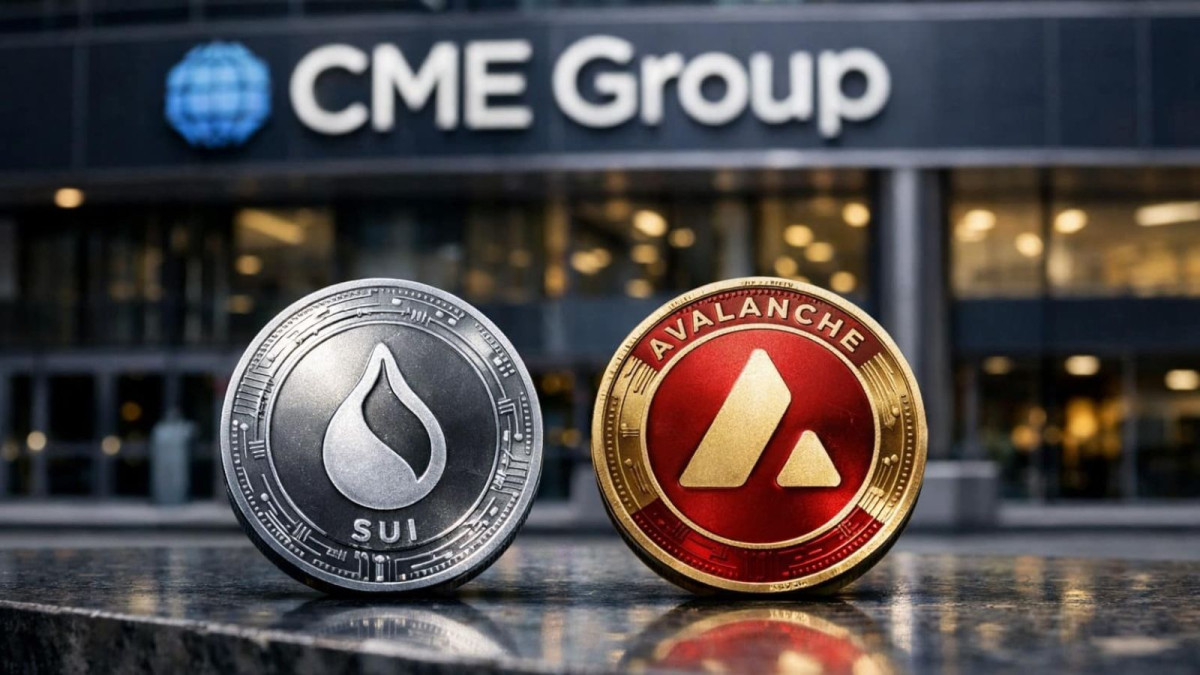
The Chicago Mercantile Exchange (CME), the world’s largest financial derivatives marketplace, has announced plans to launch Avalanche (AVAX) and Sui (SUI) futures contracts on May 4, pending regulatory review by the Commodity Futures Trading Commission (CFTC).
The launch of these contracts, the company says, will allow market participants and traders the option to choose between micro-sized and larger-sized futures contracts, including AVAX futures sized at 5,000 AVAX and micro AVAX futures sized at 500 AVAX, as well as SUI futures contracts sized at 50,000 SUI and micro SUI futures contracts sized at 5,000 SUI.
According to Giovanni Vicioso, CME Group Global Head of Cryptocurrency Products, the launch of this new set of futures contracts is aimed at providing clients and market participants with greater flexibility and more market options, as well as improved capital efficiency across the deeply liquid CME derivatives market.
"We continue to see strong volumes as market participants turn to our markets to manage risk and pursue opportunities, with March average daily volume up 19 percent year over year and nearly $8 billion in average notional value traded daily,” Vicioso said.
The nearly $8 billion in average notional value traded is not insignificant, as CME is one of the most liquid derivatives exchanges. According to a February trading report, the CME derivatives trading platform recorded an all-time daily trading peak of 29.6 million futures contracts in January of this year, a 15 percent year over year increase compared with January of the previous year.
The launch of the Avalanche and Sui contracts comes shortly after CME Group launched Cardano (ADA) futures, Chainlink (LINK) futures, and Stellar (XLM) futures contracts on February 9 of this year, as part of the firm’s ongoing strategy of providing trusted, regulated crypto products to all kinds of market participants.
Crypto Derivatives Market Continues to Boom
The crypto derivatives trading market, primarily the futures and options market, has continued to boom. In the first quarter of this year, crypto derivatives trading accounted for almost 90 percent of the total $20.57 trillion traded in that period, reaching $18.63 trillion, while spot trading accounted for $1.94 trillion.
There has also been an increase in the number of large institutions in recent times, including traditional finance institutions that have moved to tap into this vast section of the crypto market.
In October 2025, the global investment bank Goldman Sachs, in collaboration with DBS Bank, launched the first-ever over-the-counter interbank cryptocurrency options trade. In December last year, JPMorgan Chase, America’s largest bank, also began exploring the launch of crypto spot and derivatives trading services for its institutional clients.

Prediction Markets Top $20 Billion In Monthly Volume

Prediction markets used to be weird section of the internet where die-hard political junkies placed small bets on election outcomes. That version appears to be gone. According to new data from blockchain intelligence firm TRM Labs, prediction markets have now cracked $20 billion in monthly trading volume, and the category driving most of that activity is not sports or elections but geopolitics.
That says something real about how the world has changed. Traders are no longer just wagering on who wins a Senate seat. They are pricing the odds of a Russia-Ukraine ceasefire, assessing the likelihood of a Chinese military action in Taiwan, and putting money on whether Iran's Supreme Leader survives the year. These are not just fringe markets. They are, increasingly, some of the most liquid on the entire platform landscape.
The shift reflects a broader transformation in how both retail and institutional participants are using prediction markets. According to TRM Labs, geopolitics now accounts for the majority of activity by volume, a reversal from even 18 months ago when political elections and sports dominated the leaderboard. The firm's report points to a world in which macro uncertainty, military escalation, and trade conflict have become reliable generators of trading interest.
The numbers behind this story are hard to argue with. The global prediction market industry processed roughly $63.5 billion in total notional trading volume across 2025, up from about $15.8 billion the year prior. Yes, that's correct...four times the amount. In a single year. In 2022, the entire sector did around $500 million. The growth is extraordinary.
Two platforms sit at the center of all this. Polymarket and Kalshi together accounted for approximately 97.5 percent of total industry volume in 2025, according to aggregated data tracked by multiple research outlets. Kalshi, the CFTC-regulated exchange backed by a $1 billion Series E led by Paradigm, processed over $23 billion in notional volume last year. Polymarket, the blockchain-based platform that operates globally and recently cleared its U.S. legal hurdles following the change in administration, brought in comparable figures, though some of its reported numbers are complicated by a structural double-counting issue flagged by Paradigm in December.

By February 2026, the combined monthly run rate for the two platforms had climbed to roughly $16.8 billion, with Kalshi accounting for about $9.8 billion of that and Polymarket the remaining $7 billion. At that pace, the sector is on track to top $200 billion in annual volume, with some forecasts reaching $325 billion if growth continues. A report cited by CNBC projects prediction markets could approach $1.1 trillion in annual volume by the end of the decade.
What makes the TRM Labs data particularly interesting is the composition of what is being traded. The firm has been tracking prediction market activity not just for volume but for what that volume reveals about where geopolitical risk is being priced. As the Ukraine conflict has dragged on and tariff uncertainty under the current U.S. administration has remained elevated, contracts tied to those outcomes have attracted serious capital. Russia-Ukraine ceasefire contracts on Polymarket have shifted repeatedly in response to diplomatic signals, functioning in a way that closely mirrors how traditional derivatives respond to macro news. Some institutional desks now watch these contracts alongside oil futures and sovereign bond spreads.
The Council on Foreign Relations noted earlier this year that prediction markets had demonstrated real forecasting credibility in a high-profile case. When the Trump administration was weighing strikes on Iran's nuclear program in mid-2025, many analysts dismissed the prospect as unlikely. Prediction markets assigned a 58 percent probability to strikes by the end of that week. Seven B-2 stealth bombers were already airborne.
That kind of accuracy does not happen every time, and anyone betting on these platforms should know that. Liquidity constraints still limit reliability on smaller or more obscure contracts, and the platforms have faced criticism over resolution disputes and rules design that has occasionally left winning bettors on the losing side. But on major geopolitical events where information is widely available and traders are motivated to get it right, the markets have shown a notable ability to aggregate collective judgment quickly.
The regulatory backdrop in the United States has shifted considerably in the past year. The Biden-era hostility to prediction markets has given way to a CFTC posture that is, by most accounts, far more permissive. Polymarket, which had been operating outside the U.S. and faced a federal investigation that included a raid on its founder's apartment, was cleared to operate domestically in late 2025. Kalshi, which had won its own legal battle over political markets in late 2024, has since integrated with Robinhood and Webull, putting its contracts in front of tens of millions of retail brokerage users.
The competition is intensifying. DraftKings and FanDuel have entered prediction markets, though analysts have suggested the two sports betting giants may have arrived too late to challenge Polymarket and Kalshi's entrenched liquidity. CertiK, the blockchain security firm, published a report in early 2026 flagging structural questions about sustainability once platform incentives fade, and noted that wash trading had inflated some Polymarket volumes in prior periods. Those are legitimate concerns for anyone trying to assess whether the sector's growth is as clean as the headline numbers suggest.
Still, the direction of travel is clear. Prediction markets have moved past the stage where they can be dismissed as a gambling novelty. The data from TRM Labs, taken alongside the broader market statistics, describes a financial layer that is increasingly responsive to the same forces that move bond markets and currency pairs. Geopolitics has always moved markets. What is new is that there is now a market specifically for geopolitics itself.

Bitcoin vs. Gold: Why the Yellow Metal is Soaring While ‘Digital Gold’ Stumbles And Why I’m Betting on Bitcoin’s Long Game

As a relatively new reporter in the financial space here in Cincinnati, I’m still learning the ropes of these massive markets every day. I’ve pored over charts, read analyst reports, and talked to people who live and breathe this work. The facts right now are clear: gold is on fire, while Bitcoin, often called “digital gold,” is lagging or even pulling back. Gold has surged past $5,000 per ounce amid global tensions and renewed safe-haven buying, while Bitcoin is hovering around $87,000 to $88,000 after dipping from recent highs near $98,000. It is tempting to think gold has won this round outright. But when I look deeper at the data and think about where we are headed, I cannot shake the feeling that Bitcoin is still the head of the future.
Let me break down the current picture using real data and major players, then explain why, as someone still green in this industry, I am leaning toward the digital side over the long term.
The Numbers Don’t Lie: Gold’s Dominance in Early 2026
Gold’s dominance in early 2026 has been unmistakable. As of January 26, 2026, spot gold is trading roughly between $5,067 and $5,100 per ounce, up about 1.6 percent on the day and nearly 85 percent from a year ago. It recently pushed past $5,100 as investors rushed into safe assets driven by geopolitical flashpoints, a weaker U.S. dollar, and continued central bank accumulation. Analysts at firms such as J.P. Morgan are projecting average prices near $5,055 by the fourth quarter of 2026, with more aggressive scenarios reaching $5,400 or even $6,000 if uncertainty remains elevated.
This surge is being driven by familiar forces. Demand for safe havens has intensified amid global risks, including tensions involving Venezuela, Iran, and broader macroeconomic stress. Central banks continue to purchase gold at a strong pace, and expectations for lower interest rates are making non-yielding assets like gold more attractive relative to bonds and cash.
Major mining companies are capitalizing on these conditions. Newmont Corp., the world’s largest gold producer, is benefiting from its diversified operations and has seen its shares rise alongside record prices. Barrick Gold continues to deliver strong output from its core assets, while Agnico Eagle is expanding in politically stable jurisdictions. The emphasis these companies place on operational efficiency and ESG-conscious production has helped attract institutional capital, reinforcing gold’s reputation as a reliable hedge in uncertain times.
Bitcoin’s Rough Patch: Stagnation Amid the Rally
Bitcoin, meanwhile, is struggling to keep pace. It is trading in the $87,000 to $88,000 range, down from highs near $98,000 earlier this month and well below its 2025 peak. Year-to-date performance has been flat to negative at times, and the Bitcoin-to-gold ratio has fallen to roughly 17 to 18, meaning one Bitcoin now buys significantly fewer ounces of gold than it did previously. Recent outflows from crypto-focused ETFs have added pressure, and Bitcoin has failed to capture the same fear-driven momentum that is powering gold’s rally.
Several factors are weighing on sentiment. Regulatory uncertainty and ongoing energy concerns remain unresolved, while broader macro resets are pushing investors toward traditional safe havens first. At the same time, profit-taking by early Bitcoin holders has contributed to selling pressure during rallies.
On the mining side, companies such as Marathon Digital and Riot Platforms are facing margin pressure from higher energy costs and the effects of the most recent halving. Some firms, including CleanSpark, are attempting to adapt by shifting portions of their operations toward AI-related infrastructure. Institutional backing through products like BlackRock’s Bitcoin ETFs has helped establish a price floor, but so far it has not been enough to spark a sustained breakout.
Ty’s Take: Gold Feels Safe Now, But Bitcoin Is the Future I’m Betting On
I will be upfront: I am new to covering this beat, and the data clearly shows that gold has been the winner so far in 2026. Its thousands of years of history as a store of value, its lower volatility, and its tangible demand during periods of turmoil make it feel especially solid when headlines are filled with uncertainty. From my desk in Cincinnati, where many investors favor steady and familiar assets, gold’s rally makes complete sense. Mining stocks such as Newmont and Barrick look like attractive options for those seeking exposure without extreme swings.
But here is where my gut...and what I have learned through deeper research, come into play. Bitcoin is not failing; it is moving through a cyclical pullback while gold does what it has always done best during risk-off environments. Bitcoin’s fixed supply of 21 million coins, expanding adoption, and potential as borderless, programmable money position it as an evolution in how value is stored and transferred. Gold has history on its side, but Bitcoin brings innovation, including growing institutional participation, the possibility of clearer regulation under current leadership, and continued improvements in efficiency and infrastructure. Forecasts for Bitcoin range from relatively conservative targets of $120,000 to $170,000 by year end, with much higher outcomes possible if momentum returns.
As someone still learning this industry, I see gold winning the short-term fear trade, while Bitcoin leads the longer-term shift toward digital assets. For investors building wealth over the next decade, allocating to both can make sense: gold for near-term stability through miners or ETFs, and a heavier tilt toward Bitcoin or its broader ecosystem for long-term growth. The facts show gold shining today, but the future, in my view, remains digital.
Crypto Surges Ahead of FOMC Decision as Traders Position for Policy Shift
Crypto Market Surges Ahead of the FOMC Decision and What It Means for the Market
The crypto market has seen a sharp rise in volatility and price movement, with Bitcoin and Ethereum leading the rally. This surge has not come out of nowhere. It is tied closely to speculation surrounding the latest Federal Open Market Committee decision. As traders positioned themselves for potential changes in U.S. monetary policy, the crypto market responded with a wave of buying, short liquidations, and renewed bullish sentiment.
The move is another clear example of how deeply connected crypto has become to broader macroeconomic conditions.
How FOMC Speculation Became the Spark for the Latest Crypto Rally
In the days leading up to the meeting, expectations grew that the Federal Reserve might soften its stance on interest rates. Even the possibility of a rate cut or a more dovish tone tends to shift investors toward higher risk assets. Crypto is usually among the first to react.
Lower interest rates reduce the appeal of cash and bonds, while making speculative and growth oriented assets more attractive. That dynamic has long played out in equities. Now it is becoming increasingly visible in crypto as well.
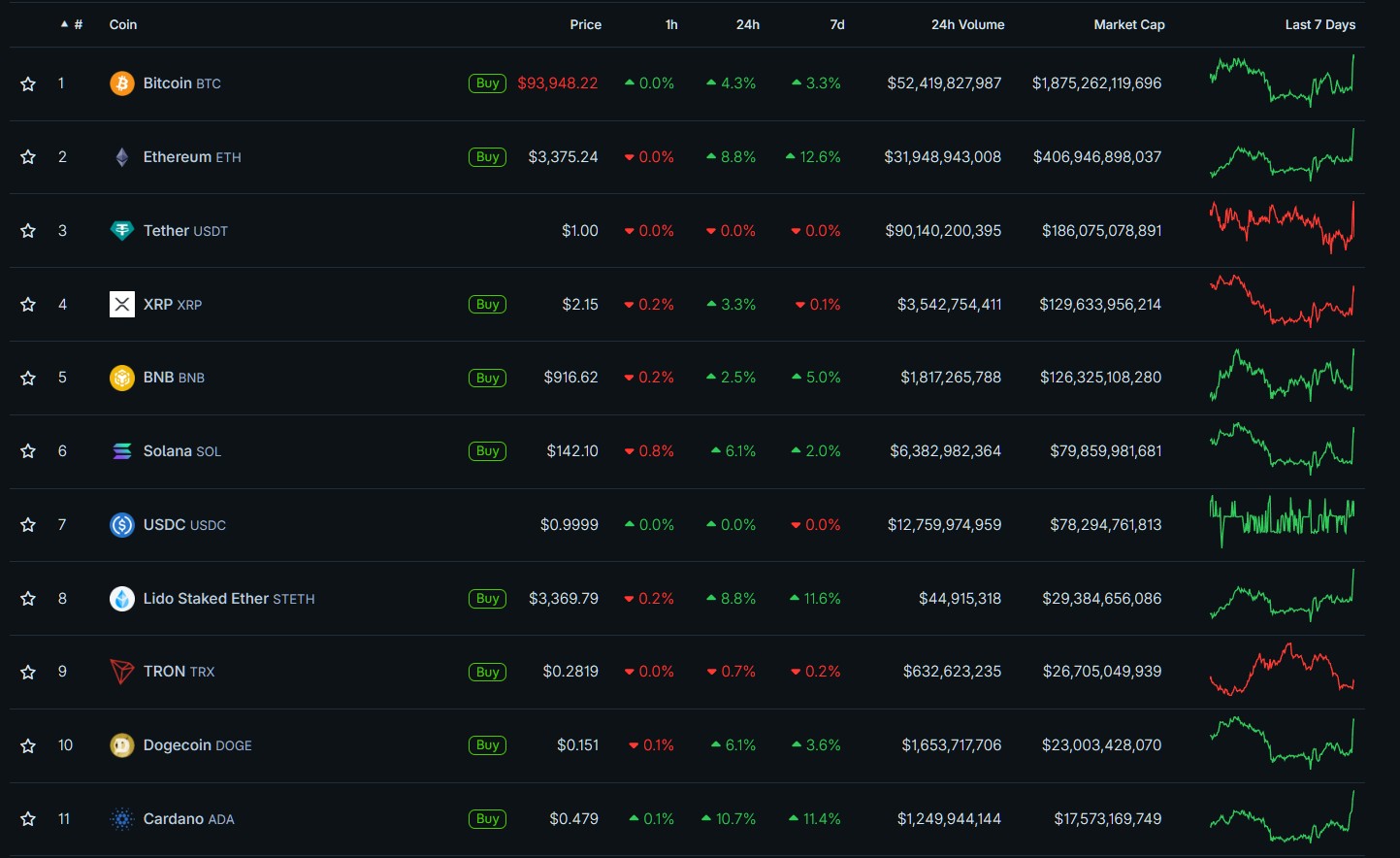
Bitcoin and Ethereum both climbed into short term highs before the decision. As prices moved up, heavily leveraged short positions began to unwind. This added fuel to the rally as forced liquidations pushed prices even higher. It was a feedback loop that often appears during major macro events and is especially common in the crypto market due to its high leverage environment.
Market Behavior Shows the Fed Still Drives Risk Appetite
Even though crypto operates independently of government control, the industry still reacts strongly to the tone and trajectory of central bank policy.
A few things are becoming clear:
-
Traders treat FOMC guidance as a direct indicator of risk sentiment.
-
Expectations alone can drive price action before the decision is released.
-
Liquidity conditions continue to shape the strength of crypto market rebounds.
-
Bitcoin and Ethereum are increasingly acting like macro assets rather than purely speculative ones.
As the market leaned toward a more accommodative outlook, traders began rotating capital back into large cap cryptocurrencies. Bitcoin and Ethereum benefited the most, but the effect spilled into altcoins as well.
Short term, this created a volatile environment. Longer term, it signals a deeper connection between crypto and global financial cycles.
Why Some Analysts See This as More Than a Temporary Move
While investors always react to big economic events, this moment feels different. The alignment of easing inflation, slower economic pressure, and the possibility of rate cuts creates a setup where risk assets could see more sustained inflows.
Crypto is no longer operating separately from traditional finance. If liquidity improves across the economy, that liquidity tends to find its way into high growth and high volatility markets. Bitcoin and Ethereum fit that profile perfectly.
This raises a question that many in the industry are now considering. Is this the beginning of a broader shift where crypto consistently responds to macro cycles the same way equities and bonds do?
If so, price behavior may become more predictable around central bank events than it was in the early years of the industry.
What Could Go Right and What Could Still Disrupt the Momentum
What Could Go Right
-
If the Fed follows a path of easing or signals greater flexibility, crypto markets could experience a sustained wave of inflows.
-
Investors may shift back toward risk, viewing Bitcoin and Ethereum as core components of a diversified macro portfolio.
-
Lower interest rates increase liquidity across financial markets, which historically supports larger moves in non traditional assets.
-
A clearer link between crypto and macro conditions could attract more institutional traders who specialize in macro driven strategies.
What Could Go Wrong
-
If the Fed holds rates higher for longer or delivers a hawkish message, the market could see an immediate reversal.
-
Liquidations can cut both ways. The same leverage that amplifies rallies can intensify declines.
-
Uncertainty in global markets, geopolitical pressure, or a sudden risk off event could stall any recovery.
-
Crypto may remain highly sensitive to macro shifts, reducing the independence that once drove speculative surges.
What This Phase Means for Investors and the Broader Market
This moment serves as a reminder that crypto does not move in isolation. Bitcoin and Ethereum now sit within the larger financial ecosystem. When central bank policy shifts, these assets feel the impact quickly. That connection is growing stronger, not weaker.
For traders, FOMC weeks will continue to be periods of heightened volatility. Positioning before and after the decision may offer opportunities, but it also increases risk.
For long term investors, understanding macro cycles is becoming just as important as understanding blockchain fundamentals.
For the market as a whole, this could signal a shift toward a more mature ecosystem. If crypto continues to move with global financial cycles, it may attract more institutional interest, more capital, and more stability over time.
The surge before the FOMC decision is not just another short term rally. It is a signal of where the market is heading and how interconnected crypto has become with traditional finance.
Stay Connected
You can stay up to date on all News, Events, and Marketing of Rare Network, including Rare Evo: America’s Premier Blockchain Conference, happening July 28th-31st, 2026 at The ARIA Resort & Casino, by following our socials on X, LinkedIn, and YouTube.