#Trading Volume
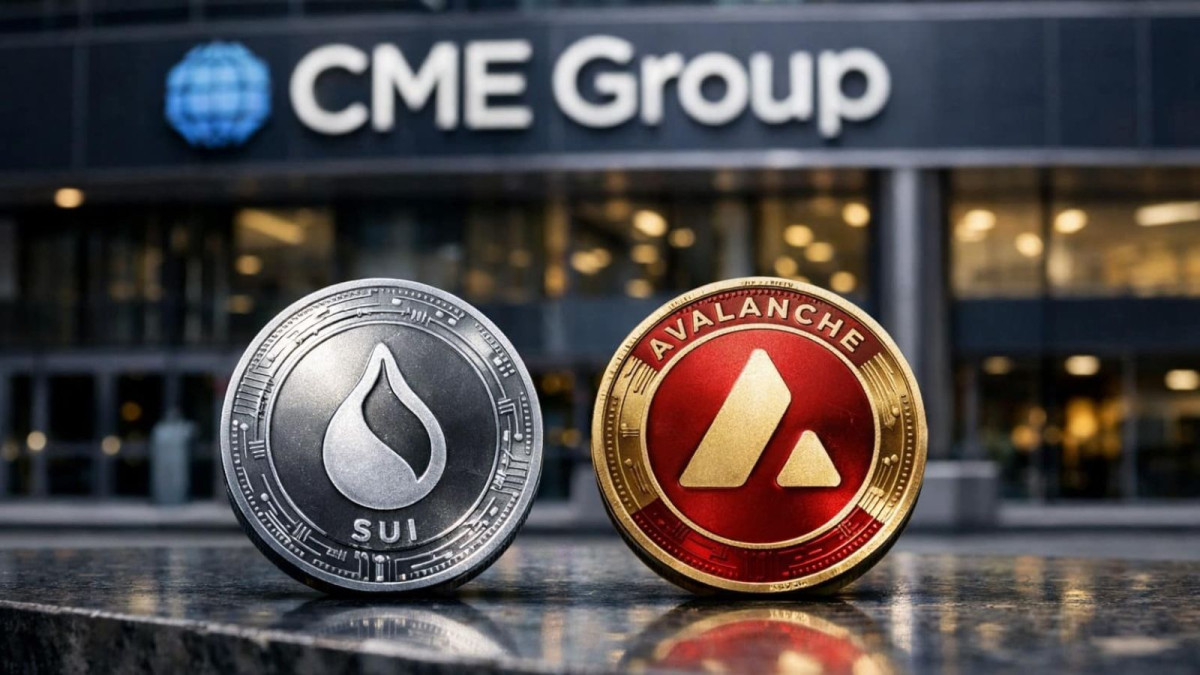
CME to Launch AVAX and SUI Futures

The Chicago Mercantile Exchange (CME), the world’s largest financial derivatives marketplace, has announced plans to launch Avalanche (AVAX) and Sui (SUI) futures contracts on May 4, pending regulatory review by the Commodity Futures Trading Commission (CFTC).
The launch of these contracts, the company says, will allow market participants and traders the option to choose between micro-sized and larger-sized futures contracts, including AVAX futures sized at 5,000 AVAX and micro AVAX futures sized at 500 AVAX, as well as SUI futures contracts sized at 50,000 SUI and micro SUI futures contracts sized at 5,000 SUI.
According to Giovanni Vicioso, CME Group Global Head of Cryptocurrency Products, the launch of this new set of futures contracts is aimed at providing clients and market participants with greater flexibility and more market options, as well as improved capital efficiency across the deeply liquid CME derivatives market.
"We continue to see strong volumes as market participants turn to our markets to manage risk and pursue opportunities, with March average daily volume up 19 percent year over year and nearly $8 billion in average notional value traded daily,” Vicioso said.
The nearly $8 billion in average notional value traded is not insignificant, as CME is one of the most liquid derivatives exchanges. According to a February trading report, the CME derivatives trading platform recorded an all-time daily trading peak of 29.6 million futures contracts in January of this year, a 15 percent year over year increase compared with January of the previous year.
The launch of the Avalanche and Sui contracts comes shortly after CME Group launched Cardano (ADA) futures, Chainlink (LINK) futures, and Stellar (XLM) futures contracts on February 9 of this year, as part of the firm’s ongoing strategy of providing trusted, regulated crypto products to all kinds of market participants.
Crypto Derivatives Market Continues to Boom
The crypto derivatives trading market, primarily the futures and options market, has continued to boom. In the first quarter of this year, crypto derivatives trading accounted for almost 90 percent of the total $20.57 trillion traded in that period, reaching $18.63 trillion, while spot trading accounted for $1.94 trillion.
There has also been an increase in the number of large institutions in recent times, including traditional finance institutions that have moved to tap into this vast section of the crypto market.
In October 2025, the global investment bank Goldman Sachs, in collaboration with DBS Bank, launched the first-ever over-the-counter interbank cryptocurrency options trade. In December last year, JPMorgan Chase, America’s largest bank, also began exploring the launch of crypto spot and derivatives trading services for its institutional clients.

Prediction Markets Top $20 Billion In Monthly Volume

Prediction markets used to be weird section of the internet where die-hard political junkies placed small bets on election outcomes. That version appears to be gone. According to new data from blockchain intelligence firm TRM Labs, prediction markets have now cracked $20 billion in monthly trading volume, and the category driving most of that activity is not sports or elections but geopolitics.
That says something real about how the world has changed. Traders are no longer just wagering on who wins a Senate seat. They are pricing the odds of a Russia-Ukraine ceasefire, assessing the likelihood of a Chinese military action in Taiwan, and putting money on whether Iran's Supreme Leader survives the year. These are not just fringe markets. They are, increasingly, some of the most liquid on the entire platform landscape.
The shift reflects a broader transformation in how both retail and institutional participants are using prediction markets. According to TRM Labs, geopolitics now accounts for the majority of activity by volume, a reversal from even 18 months ago when political elections and sports dominated the leaderboard. The firm's report points to a world in which macro uncertainty, military escalation, and trade conflict have become reliable generators of trading interest.
The numbers behind this story are hard to argue with. The global prediction market industry processed roughly $63.5 billion in total notional trading volume across 2025, up from about $15.8 billion the year prior. Yes, that's correct...four times the amount. In a single year. In 2022, the entire sector did around $500 million. The growth is extraordinary.
Two platforms sit at the center of all this. Polymarket and Kalshi together accounted for approximately 97.5 percent of total industry volume in 2025, according to aggregated data tracked by multiple research outlets. Kalshi, the CFTC-regulated exchange backed by a $1 billion Series E led by Paradigm, processed over $23 billion in notional volume last year. Polymarket, the blockchain-based platform that operates globally and recently cleared its U.S. legal hurdles following the change in administration, brought in comparable figures, though some of its reported numbers are complicated by a structural double-counting issue flagged by Paradigm in December.

By February 2026, the combined monthly run rate for the two platforms had climbed to roughly $16.8 billion, with Kalshi accounting for about $9.8 billion of that and Polymarket the remaining $7 billion. At that pace, the sector is on track to top $200 billion in annual volume, with some forecasts reaching $325 billion if growth continues. A report cited by CNBC projects prediction markets could approach $1.1 trillion in annual volume by the end of the decade.
What makes the TRM Labs data particularly interesting is the composition of what is being traded. The firm has been tracking prediction market activity not just for volume but for what that volume reveals about where geopolitical risk is being priced. As the Ukraine conflict has dragged on and tariff uncertainty under the current U.S. administration has remained elevated, contracts tied to those outcomes have attracted serious capital. Russia-Ukraine ceasefire contracts on Polymarket have shifted repeatedly in response to diplomatic signals, functioning in a way that closely mirrors how traditional derivatives respond to macro news. Some institutional desks now watch these contracts alongside oil futures and sovereign bond spreads.
The Council on Foreign Relations noted earlier this year that prediction markets had demonstrated real forecasting credibility in a high-profile case. When the Trump administration was weighing strikes on Iran's nuclear program in mid-2025, many analysts dismissed the prospect as unlikely. Prediction markets assigned a 58 percent probability to strikes by the end of that week. Seven B-2 stealth bombers were already airborne.
That kind of accuracy does not happen every time, and anyone betting on these platforms should know that. Liquidity constraints still limit reliability on smaller or more obscure contracts, and the platforms have faced criticism over resolution disputes and rules design that has occasionally left winning bettors on the losing side. But on major geopolitical events where information is widely available and traders are motivated to get it right, the markets have shown a notable ability to aggregate collective judgment quickly.
The regulatory backdrop in the United States has shifted considerably in the past year. The Biden-era hostility to prediction markets has given way to a CFTC posture that is, by most accounts, far more permissive. Polymarket, which had been operating outside the U.S. and faced a federal investigation that included a raid on its founder's apartment, was cleared to operate domestically in late 2025. Kalshi, which had won its own legal battle over political markets in late 2024, has since integrated with Robinhood and Webull, putting its contracts in front of tens of millions of retail brokerage users.
The competition is intensifying. DraftKings and FanDuel have entered prediction markets, though analysts have suggested the two sports betting giants may have arrived too late to challenge Polymarket and Kalshi's entrenched liquidity. CertiK, the blockchain security firm, published a report in early 2026 flagging structural questions about sustainability once platform incentives fade, and noted that wash trading had inflated some Polymarket volumes in prior periods. Those are legitimate concerns for anyone trying to assess whether the sector's growth is as clean as the headline numbers suggest.
Still, the direction of travel is clear. Prediction markets have moved past the stage where they can be dismissed as a gambling novelty. The data from TRM Labs, taken alongside the broader market statistics, describes a financial layer that is increasingly responsive to the same forces that move bond markets and currency pairs. Geopolitics has always moved markets. What is new is that there is now a market specifically for geopolitics itself.

Spot Crypto ETFs Cross $2 Trillion in Trading Volume as Market Matures

U.S. spot crypto ETFs have now crossed $2 trillion in cumulative trading volume, and the pace is what stands out. The second trillion arrived in a fraction of the time it took to reach the first, a sign that these products are no longer just a post launch curiosity. They’ve become part of the daily machinery of crypto markets.
This milestone is about usage, not hype. Cumulative volume counts every trade that’s taken place since launch. It’s not a measure of how much money investors have parked in these funds, and it’s not a scorecard for inflows. It simply answers one question: how often are people actually using these ETFs to trade crypto exposure?
The answer now is: a lot.
Bitcoin Did the Heavy Lifting, Ethereum Added Fuel
Most of that $2 trillion comes from spot Bitcoin ETFs, which have been trading heavily all year. Bitcoin products built liquidity early and never really gave it back. By the end of 2025, they were doing massive daily volume even on relatively quiet market days.
Ethereum ETFs came later, but once they found their footing, they added a meaningful second leg. As ETH products matured, traders began using them not just for long term exposure, but also for positioning, rotation, and relative value trades against Bitcoin.
Together, they pushed cumulative volume past the $2 trillion mark, and the curve got steeper along the way.

Why Trading Picked Up So Quickly
A few things changed over the past year.
First, the plumbing improved. Market makers figured out how to price these products efficiently, spreads tightened, and trading got easier. Once friction drops, volume usually follows.
Second, volatility helped. Crypto spent much of the year moving between risk on and risk off. In those environments, ETFs are an easy switch. They let traders adjust exposure fast without dealing with custody, exchanges, or operational headaches.
Third, liquidity concentrated. A handful of ETFs became clear winners, and traders gravitate to the deepest pools. That concentration pulls even more activity into the same tickers, reinforcing the trend.
And finally, these ETFs stopped feeling “new.” Once something becomes familiar, it starts getting used more casually, for hedges, reallocations, and short term trades that don’t make headlines.
This Isn’t Just About New Money
It’s important to separate volume from inflows.
Yes, spot crypto ETFs have pulled in tens of billions in new capital since launch, especially on the Bitcoin side. That shows real demand for regulated crypto exposure. But volume tells a different story. It shows repetition. The same capital moving in and out, sometimes many times over.
That’s actually what makes this milestone interesting. It suggests ETFs are becoming the default execution venue for a growing slice of crypto trading, not just a one way funnel for long term investors.
ETFs Are Becoming a Price Discovery Layer
As trading volume piles up, ETFs start to matter more for price formation. On active days, price moves often show up in ETFs first, then ripple into futures and spot markets as arbitrage kicks in.
That doesn’t mean ETFs control crypto prices, but it does mean they’re part of the feedback loop now. For traditional investors especially, the ETF ticker is the market.
This also nudges crypto a bit closer to traditional market behavior. Flows, positioning, and narrative cycles start to matter more, sometimes even more than onchain activity in the short term.
What to Watch From Here
Crossing $2 trillion doesn’t mean volume will grow in a straight line forever. Trading activity can cool when volatility drops or when investors get more comfortable holding through cycles.
But a few things will signal whether this trend sticks:
-
steady daily volume, not just spikes
-
broader participation beyond one or two dominant funds
-
continued activity in Ethereum ETFs, not just Bitcoin
-
how ETFs behave during the next real market stress test
For now, the takeaway is simple. Spot crypto ETFs aren’t an experiment anymore. They’re being used, heavily, and the market is treating them like infrastructure. That $2 trillion figure isn’t just a big number. It’s a sign that crypto trading has quietly picked up a new center of gravity.
Stay Connected
You can stay up to date on all News, Events, and Marketing of Rare Network, including Rare Evo: America’s Premier Blockchain Conference, happening July 28th-31st, 2026 at The ARIA Resort & Casino, by following our socials on X, LinkedIn, and YouTube.

Kalshi and Polymarket Hit Record 10 Billion Dollar Volume
Kalshi and Polymarket Post Record Volume as Prediction Markets Hit Nearly $10 Billion in November
Prediction markets are entering their strongest era to date. In November 2025, Kalshi and Polymarket collectively recorded nearly 10 billion dollars in trading volume, marking the most active month in the history of the sector. This surge shows that prediction markets are no longer niche experiments. They are becoming influential financial instruments used by millions of traders, analysts and institutions.
The industry’s rapid expansion reflects growing interest in real world event trading, increased liquidity and a shift in how investors view information markets.
How Kalshi and Polymarket Reached New Heights
Institutional Investment and Regulatory Clarity
Kalshi has positioned itself as the regulated prediction exchange in the United States. With a green light from federal derivatives regulators, the platform attracted significant institutional investment. Its most recent funding round valued the company at approximately 11 billion dollars.
Polymarket, on the other hand, grew from the crypto native community. Its decentralized architecture and global accessibility attracted users drawn to event based markets that operate without borders. As Polymarket expanded, its volume accelerated sharply, particularly in 2024 and 2025.
Together, the two platforms now represent the core of the prediction market ecosystem. One operates with traditional oversight, and the other leverages blockchain transparency. Both models have succeeded by meeting rising demand for trading around news, sports, politics and global uncertainty.
Surge in Demand From Sports, Politics and Macroeconomics
The November boom appears to have been driven by significant events across sports and entertainment, along with heightened activity in political and macroeconomic markets. Major sporting events, international political developments and volatility in global markets created a perfect environment for event driven speculation.
Polymarket in particular saw sharp month over month growth, with more than 3 billion dollars traded in October followed by an even stronger November contribution. Kalshi also reported record numbers across political, sports and economic categories.
What This Means for the Future of Prediction Markets
Prediction Markets Are Becoming a Serious Asset Class
A combined 10 billion dollars in monthly trading volume places prediction markets in the realm of legitimate financial instruments. This surge demonstrates that traders are increasingly comfortable speculating on real world outcomes using structured markets rather than informal sentiment or traditional betting platforms.
Liquidity and Market Depth Are Strengthening
As more capital enters the ecosystem, liquidity improves and spreads tighten. Higher liquidity reduces volatility and improves price accuracy, allowing events to reflect true market expectations. This makes prediction markets more reliable indicators of sentiment around elections, economic reports, policy shifts and high profile entertainment events.
Traditional Finance Meets Crypto Native Innovation
Kalshi and Polymarket represent two very different models. Kalshi is regulated, compliant and geared toward traditional market participants. Polymarket is decentralized, global and capable of listing a wide variety of markets. The success of both platforms shows that prediction markets can appeal to different audiences and regulatory frameworks while still growing in parallel.
New Hedging and Speculation Tools
Prediction markets enable traders to hedge against real world uncertainty. Instead of relying solely on equities, commodities or forex markets, users can now hedge or speculate directly on election outcomes, interest rate decisions, policy changes or cultural events. This is a fundamental expansion of what financial markets can price.
Challenges That Still Remain
Prediction markets face headwinds even as they achieve record volume.
-
Regulatory uncertainty. Some jurisdictions classify certain event markets as gambling, while others treat them as derivatives.
-
Concentration of liquidity. Large events dominate attention, leaving smaller markets with limited participation.
-
Volatility around major events. Binary markets can swing sharply as news breaks, creating risk for traders and market makers.
-
Infrastructure demands. Platforms must scale securely to handle institutional interest and larger volumes.
How Kalshi, Polymarket and future competitors handle these challenges will help determine whether prediction markets can sustain long term growth.
Final Thoughts
The combined 10 billion dollar surge in November volume from Kalshi and Polymarket signals a major shift in the financial landscape. Prediction markets are becoming mainstream. They are attracting serious capital, gaining institutional legitimacy and proving that people want tools that let them trade on real world information.
Whether it is politics, macroeconomics, sports or cultural events, prediction markets offer a new expression of financial participation. If growth continues, they may soon become a standard part of global finance, sitting alongside equities, futures, options and digital assets.
This moment marks the transition from niche concept to powerful market infrastructure. The prediction market revolution is now fully underway.
Stay Connected
You can stay up to date on all News, Events, and Marketing of Rare Network, including Rare Evo: America’s Premier Blockchain Conference, happening July 28th-31st, 2026 at The ARIA Resort & Casino, by following our socials on X, LinkedIn, and YouTube.