#US Courts
Appeals Court Upholds Sam Bankman-Fried FTX Conviction

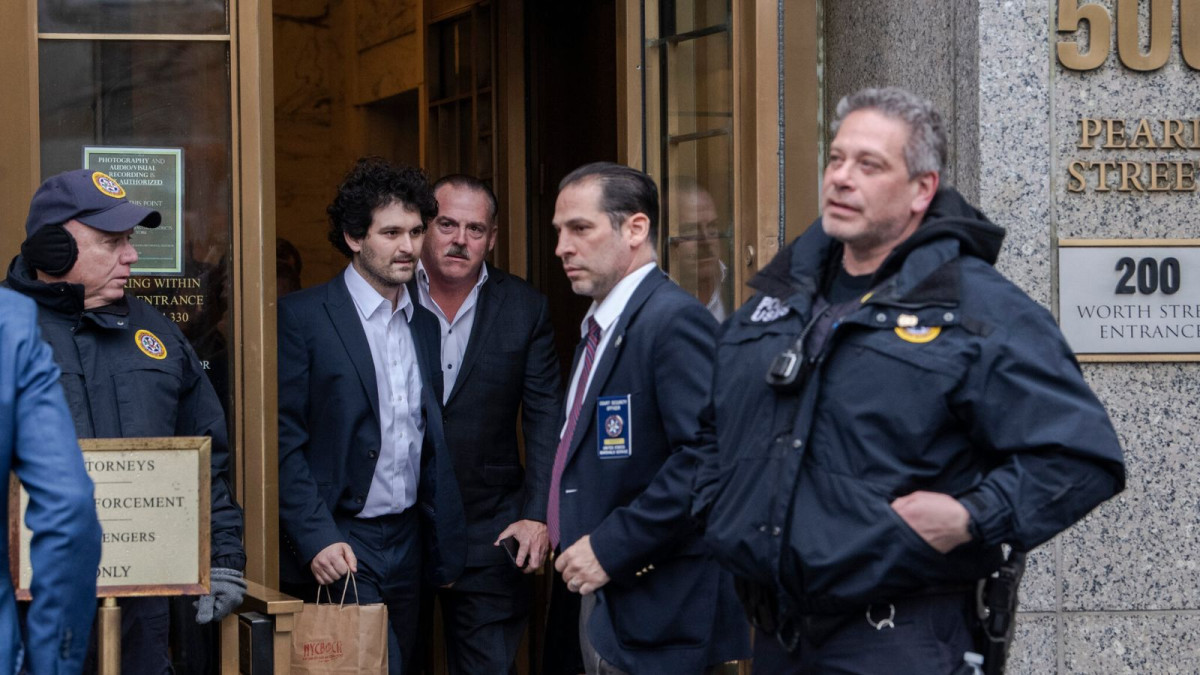
A federal appeals court, the U.S. Court of Appeals for the Second Circuit in Manhattan, has upheld the conviction of Sam Bankman-Fried, the founder of the now-defunct FTX cryptocurrency exchange.
Following his conviction on March 28, 2024, Bankman-Fried’s lawyers filed a direct appeal with the U.S. Court of Appeals on April 11, 2024. His legal team argued that the trial was unfair, citing alleged judicial bias by Judge Lewis Kaplan, disputed jury instructions, and other procedural issues.
Through the appeal filing, Bankman-Fried’s legal team sought to overturn the conviction and secure a new trial before a different judge. However, the appeals court rejected the request, stating that there was “robust” evidence supporting the conviction.
“The overwhelming evidence presented at trial proved that Bankman-Fried knowingly and intentionally committed large-scale fraud against FTX’s customers,” Judge Barrington Parker wrote.
“While he was publicly reassuring customers, investors, and regulators that FTX customer funds were safe, he was simultaneously using FTX as his own personal piggy bank, spending customer funds on real estate, political contributions, and investments.”
Following the decision, Bankman-Fried’s legal team has the option of requesting an en banc review, in which all active judges on the Second Circuit would rehear the case. This request must typically be filed within 14 days, although the exact deadline depends on the court’s rules. If the review is denied, his lawyers could petition the U.S. Supreme Court to consider the case.
The appeals court’s rejection of Bankman-Fried’s retrial bid comes shortly after he reportedly filed for a presidential pardon from former President Donald Trump. The request does not seek to shorten or reduce his sentence, but instead aims to restore certain civil rights associated with a felony conviction.
Before the appeals court ruling, Bankman-Fried had filed a request for a new trial in February, arguing that there was newly discovered evidence. However, the request was denied by Judge Lewis Kaplan on April 28, 2026.
The former founder of what was once the world’s largest cryptocurrency exchange is currently serving a 25-year sentence after being convicted on multiple charges, including conspiracy to commit wire fraud, securities fraud, commodities fraud, and money laundering.
US Prosecutors Oppose Sam Bankman-Fried Retrial Request
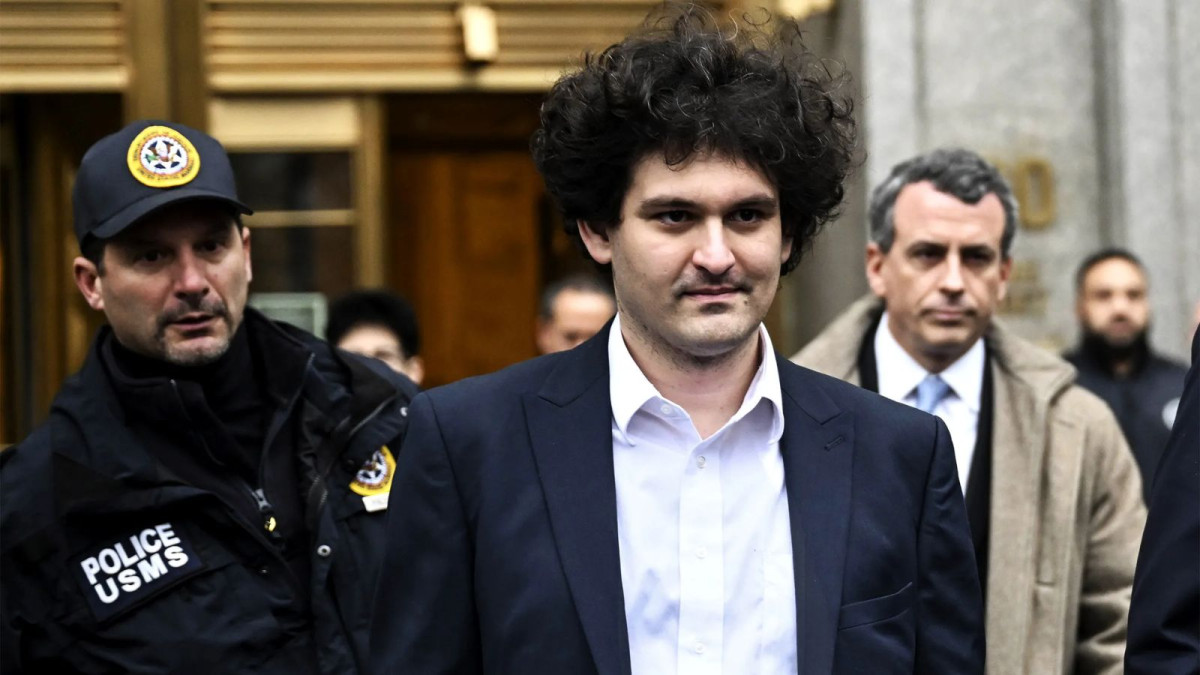
Sam Bankman-Fried, the former CEO of the defunct crypto exchange FTX, filed a motion in February seeking a retrial in his case. However, the request is reportedly being opposed by some U.S. prosecutors.
Some U.S. prosecutors have filed a motion in the United States District Court for the Southern District of New York, seeking to block Bankman-Fried’s latest request for a retrial, Bloomberg reports.
According to the prosecutors, Bankman-Fried’s argument that new witnesses could change the outcome of his case does not meet the standard for a retrial. They said the two witnesses he wants to call, Daniel Chapsky and Ryan Salame, both former FTX executives, do not qualify as new witnesses because they were already known to the defense and could have testified at the original trial.
“The defense’s decision not to put the witnesses on his witness list or compel their testimony forecloses any claim that their post-trial views are newly discovered,” prosecutors said.
The prosecutors also rejected Bankman Fried's claim that he was being weaponized by the Department of Justice, calling it "incoherent."
"The defendant was one of the largest Democratic donors in 2020 and 2022, and his campaign finance crimes were in furtherance of making those contributions, so the notion he was targeted for his Democratic politics by the prior presidential administration is fanciful," prosecutors added.
Although the motion has just been filed, the judge has not ruled on whether it will proceed. Nevertheless, this is Bankman-Fried’s third attempt to appeal his case.
Is a Presidential Pardon in Sight?
After President Trump granted a presidential pardon to Changpeng Zhao, founder of Binance, rumors circulated that he might also pardon Sam Bankman-Fried.
Trump, however, has dismissed these rumors in several interviews, stating that he has no plans to pardon Bankman-Fried. Despite this, some online groups continue to speculate about a potential, well-funded effort to secure a pardon.
Until a pardon is issued, Bankman-Fried’s legal options remain limited to filing appeal motions. Otherwise, he must continue serving his 25-year prison sentence on multiple federal charges, including fraud, conspiracy, and money laundering.
Uniswap Wins Final Dismissal in Rug Pull Lawsuit

Uniswap Labs has secured a decisive courtroom victory that could ripple across decentralized finance for years.
On March 2, a federal judge in New York dismissed, with prejudice, a long-running class action lawsuit accusing the company of facilitating crypto rug pulls on its decentralized exchange. The ruling closes the door on a case first filed in 2022 and underscores a principle that courts are becoming increasingly comfortable with: writing open-source software is not the same as committing securities fraud.
The Lawsuit That Would Not Go Away
The case began in April 2022, when a group of investors led by Nessa Risley sued Uniswap Labs, founder Hayden Adams, and several high-profile venture capital backers. The plaintiffs alleged that scam tokens traded on Uniswap had caused substantial losses and argued that the protocol’s creators should bear responsibility.
At its core, the lawsuit tried to stretch traditional securities law into a decentralized environment. The argument was relatively straightforward. If fraudulent tokens were being created and traded on Uniswap, and if Uniswap’s infrastructure made that trading possible, then perhaps the developers and investors behind the protocol were on the hook.
The problem for the plaintiffs was always going to be causation and knowledge.
But Uniswap is a permissionless protocol built on Ethereum. Anyone can deploy a token. Anyone can create a liquidity pool. Smart contracts execute swaps automatically. There is no listing committee. No approval process. No centralized trading desk.
Over the past four years, the case wound through motions to dismiss, amendments to complaints, and an appeal to the Second Circuit. Federal securities claims were largely thrown out earlier in the process. What remained were state law claims, including allegations that Uniswap had aided and abetted fraudulent conduct.
This week, those claims fell too. Manhattan federal judge Katherin Polk Failla dismissed the suit with prejudice on Monday.
Why the Court Said No
Judge Katherine Polk Failla dismissed the second amended complaint with prejudice, meaning the plaintiffs cannot bring the same claims again.
The reasoning was technical but important. To establish aiding and abetting liability, plaintiffs generally must show that a defendant had actual knowledge of wrongdoing and substantially assisted it. The court found that the complaint failed on both fronts.
There were no plausible allegations that Uniswap Labs knew about specific rug pulls before they happened. Nor was there evidence that the company took affirmative steps to advance fraudulent schemes. Providing a neutral, automated protocol that others can use, even if some use it badly, was not enough.
The court drew comparisons to other neutral infrastructure. Payment networks process transactions that later turn out to be illicit. Messaging apps are used for scams. Internet service providers transmit fraudulent communications. Yet courts have historically hesitated to hold those intermediaries liable absent clear knowledge and participation.
The same logic, at least here, applied to DeFi.
The dismissal with prejudice sends a strong signal.
A Win for Protocol Neutrality
Uniswap founder Hayden Adams described the outcome as sensible. Company lawyers called it precedent-setting. That may not be an exaggeration.
The Second Circuit had already affirmed dismissal of the core securities claims last year, reinforcing the notion that decentralized trading protocols are not automatically securities exchanges under existing law. This final ruling on the remaining state claims sharpens the boundary further.
Developers who publish autonomous smart contracts are not, by default, guarantors of every token that trades through them.
If courts had ruled the other way, it would have opened the door to expansive liability for developers across DeFi. Automated market makers, lending protocols, even wallet providers could have found themselves exposed whenever bad actors exploited open systems.
Instead, the judiciary appears to be drawing a line between building infrastructure and orchestrating fraud.

Venture Capital Backers Breathe Easier
The case also named major venture capital firms that invested in Uniswap Labs. While those firms were not accused of directly launching scam tokens, plaintiffs argued that by funding and promoting the protocol, they shared responsibility.
Those claims have now effectively collapsed alongside the broader case.
For crypto VCs, the ruling reduces a specific litigation risk. Investing in a protocol that later hosts fraudulent activity does not automatically translate into liability, at least under the theories tested here.
Still, risk has not disappeared. Regulators continue to scrutinize token listings, governance structures, and revenue models. And courts have not issued a blanket immunity for DeFi projects.
What this case does suggest is that stretching traditional intermediary liability to decentralized software will be an uphill battle.
A Move in the Right Direction
The broader regulatory environment for crypto remains unsettled. Lawmakers are still debating market structure legislation. Agencies continue to spar over jurisdiction. Courts are gradually filling in gaps.
Uniswap’s victory does not settle whether certain tokens are securities. It does not resolve how decentralized autonomous organizations should be treated under U.S. law. And it certainly does not eliminate fraud in DeFi.
But it does clarify one thing.
Writing code that others misuse is not, without more, a securities violation.
For an industry that has spent years arguing that decentralized protocols are more like public infrastructure than traditional financial institutions, this ruling is validation. It also places pressure back where many judges seem to believe it belongs, on the individuals who design and execute scams.
As DeFi matures, that distinction between neutral tools and active misconduct will likely remain central. The Uniswap case may not be the final word, but it is an important chapter in defining how far platform liability extends in crypto’s open markets.
SBF Seeks New Trial in FTX Fraud Case
More than two years after FTX collapsed and reshaped the crypto industry, Sam Bankman-Fried is still fighting.
The former FTX CEO, now serving a 25 year federal prison sentence, has formally moved for a new trial in Manhattan federal court. The filing argues that key evidence was excluded, important testimony never reached the jury, and that the original proceedings did not present the full picture of what was happening inside the exchange before its implosion.
It is a long shot. But it keeps one of crypto’s biggest scandals squarely in the headlines.
A Quick Reset: How We Got Here
FTX was once valued at $32 billion and marketed itself as the responsible face of crypto trading. Bankman-Fried cultivated relationships in Washington, testified before Congress, and presented himself as a regulator-friendly industry leader.
That narrative unraveled in November 2022.
After a liquidity crunch exposed a multibillion-dollar hole in FTX’s balance sheet, the exchange halted withdrawals and filed for bankruptcy. Prosecutors later alleged that customer deposits were secretly routed to Alameda Research, Bankman-Fried’s trading firm, where the funds were used for speculative bets, venture investments, loans to executives, and political donations.
The case moved quickly. By late 2023, a jury found Bankman-Fried guilty on seven counts including wire fraud, securities fraud, and conspiracy. Several former executives, including Caroline Ellison and Nishad Singh, testified for the government. In 2024, Judge Lewis Kaplan sentenced him to 25 years in prison.
It was one of the most significant criminal convictions in crypto’s short history.
The Argument for a New Trial
Bankman-Fried’s latest filing hinges on a legal mechanism that allows courts to grant a new trial if newly discovered evidence could materially affect the verdict, or if there were serious procedural errors.
His motion makes a few central claims.
First, that certain testimony from former FTX and Alameda insiders was either excluded or not fully presented to the jury. According to the filing, that testimony could challenge the government’s portrayal of FTX as hopelessly insolvent and operating as a straightforward fraud.
Second, the defense argues that FTX’s collapse was more akin to a bank run than an inevitable implosion. In this telling, the exchange had assets and would have recovered if not for the sudden withdrawal panic that followed public reporting about its balance sheet. That argument goes directly to intent, which was central to the prosecution’s case.
Third, the motion questions the credibility of cooperating witnesses. Bankman-Fried claims some testimony evolved under government pressure and suggests that early statements made by insiders painted a more ambiguous picture of events than what jurors ultimately heard.
The filing also calls for Judge Kaplan to step aside from reviewing the request, alleging bias in evidentiary rulings during trial.
None of this is easy to prove. Courts rarely grant new trials once a conviction has been secured and upheld through sentencing. The legal threshold is high, particularly in complex financial cases where juries have already weighed extensive testimony.
The Broader Legal Strategy
The new trial motion is separate from Bankman-Fried’s ongoing appeal. That appeal focuses on whether the trial court made reversible legal errors, including limiting certain lines of defense.
Appeals courts typically give trial judges considerable leeway in managing evidence and courtroom procedure. Overturning a conviction requires demonstrating more than disagreement. It requires showing that errors materially affected the outcome.
For now, the new filing appears to be part of a layered strategy. Preserve every argument. Challenge every ruling. Keep procedural options open.
The Bottom Line
FTX’s collapse triggered one of the most severe credibility crises crypto has faced. Billions in customer assets were trapped. Venture capital firms wrote down massive stakes. Regulators in the U.S. and abroad accelerated enforcement and oversight efforts.
Even as the industry shifts toward ETF approvals, institutional adoption, and regulatory frameworks, the FTX saga remains a reference point. It is cited in congressional hearings, enforcement actions, and investor debates about custodial risk.
Bankman-Fried’s continued legal maneuvers keep the story alive, even if the odds of a successful retrial remain slim.
For many in crypto, the question is less about whether he gets a second trial and more about what the case ultimately represents. Was FTX an isolated failure of governance and internal controls, or proof that parts of the industry scaled too quickly without guardrails?
The courts will decide the narrow legal questions. The market, as always, is deciding the broader narrative in real time.
For now, one of crypto’s most infamous founders is still arguing that the story jurors heard was incomplete. Whether a judge agrees is another matter entirely.