#Rug Pulls
Uniswap Wins Final Dismissal in Rug Pull Lawsuit

Uniswap Labs has secured a decisive courtroom victory that could ripple across decentralized finance for years.
On March 2, a federal judge in New York dismissed, with prejudice, a long-running class action lawsuit accusing the company of facilitating crypto rug pulls on its decentralized exchange. The ruling closes the door on a case first filed in 2022 and underscores a principle that courts are becoming increasingly comfortable with: writing open-source software is not the same as committing securities fraud.
The Lawsuit That Would Not Go Away
The case began in April 2022, when a group of investors led by Nessa Risley sued Uniswap Labs, founder Hayden Adams, and several high-profile venture capital backers. The plaintiffs alleged that scam tokens traded on Uniswap had caused substantial losses and argued that the protocol’s creators should bear responsibility.
At its core, the lawsuit tried to stretch traditional securities law into a decentralized environment. The argument was relatively straightforward. If fraudulent tokens were being created and traded on Uniswap, and if Uniswap’s infrastructure made that trading possible, then perhaps the developers and investors behind the protocol were on the hook.
The problem for the plaintiffs was always going to be causation and knowledge.
But Uniswap is a permissionless protocol built on Ethereum. Anyone can deploy a token. Anyone can create a liquidity pool. Smart contracts execute swaps automatically. There is no listing committee. No approval process. No centralized trading desk.
Over the past four years, the case wound through motions to dismiss, amendments to complaints, and an appeal to the Second Circuit. Federal securities claims were largely thrown out earlier in the process. What remained were state law claims, including allegations that Uniswap had aided and abetted fraudulent conduct.
This week, those claims fell too. Manhattan federal judge Katherin Polk Failla dismissed the suit with prejudice on Monday.
Why the Court Said No
Judge Katherine Polk Failla dismissed the second amended complaint with prejudice, meaning the plaintiffs cannot bring the same claims again.
The reasoning was technical but important. To establish aiding and abetting liability, plaintiffs generally must show that a defendant had actual knowledge of wrongdoing and substantially assisted it. The court found that the complaint failed on both fronts.
There were no plausible allegations that Uniswap Labs knew about specific rug pulls before they happened. Nor was there evidence that the company took affirmative steps to advance fraudulent schemes. Providing a neutral, automated protocol that others can use, even if some use it badly, was not enough.
The court drew comparisons to other neutral infrastructure. Payment networks process transactions that later turn out to be illicit. Messaging apps are used for scams. Internet service providers transmit fraudulent communications. Yet courts have historically hesitated to hold those intermediaries liable absent clear knowledge and participation.
The same logic, at least here, applied to DeFi.
The dismissal with prejudice sends a strong signal.
A Win for Protocol Neutrality
Uniswap founder Hayden Adams described the outcome as sensible. Company lawyers called it precedent-setting. That may not be an exaggeration.
The Second Circuit had already affirmed dismissal of the core securities claims last year, reinforcing the notion that decentralized trading protocols are not automatically securities exchanges under existing law. This final ruling on the remaining state claims sharpens the boundary further.
Developers who publish autonomous smart contracts are not, by default, guarantors of every token that trades through them.
If courts had ruled the other way, it would have opened the door to expansive liability for developers across DeFi. Automated market makers, lending protocols, even wallet providers could have found themselves exposed whenever bad actors exploited open systems.
Instead, the judiciary appears to be drawing a line between building infrastructure and orchestrating fraud.

Venture Capital Backers Breathe Easier
The case also named major venture capital firms that invested in Uniswap Labs. While those firms were not accused of directly launching scam tokens, plaintiffs argued that by funding and promoting the protocol, they shared responsibility.
Those claims have now effectively collapsed alongside the broader case.
For crypto VCs, the ruling reduces a specific litigation risk. Investing in a protocol that later hosts fraudulent activity does not automatically translate into liability, at least under the theories tested here.
Still, risk has not disappeared. Regulators continue to scrutinize token listings, governance structures, and revenue models. And courts have not issued a blanket immunity for DeFi projects.
What this case does suggest is that stretching traditional intermediary liability to decentralized software will be an uphill battle.
A Move in the Right Direction
The broader regulatory environment for crypto remains unsettled. Lawmakers are still debating market structure legislation. Agencies continue to spar over jurisdiction. Courts are gradually filling in gaps.
Uniswap’s victory does not settle whether certain tokens are securities. It does not resolve how decentralized autonomous organizations should be treated under U.S. law. And it certainly does not eliminate fraud in DeFi.
But it does clarify one thing.
Writing code that others misuse is not, without more, a securities violation.
For an industry that has spent years arguing that decentralized protocols are more like public infrastructure than traditional financial institutions, this ruling is validation. It also places pressure back where many judges seem to believe it belongs, on the individuals who design and execute scams.
As DeFi matures, that distinction between neutral tools and active misconduct will likely remain central. The Uniswap case may not be the final word, but it is an important chapter in defining how far platform liability extends in crypto’s open markets.
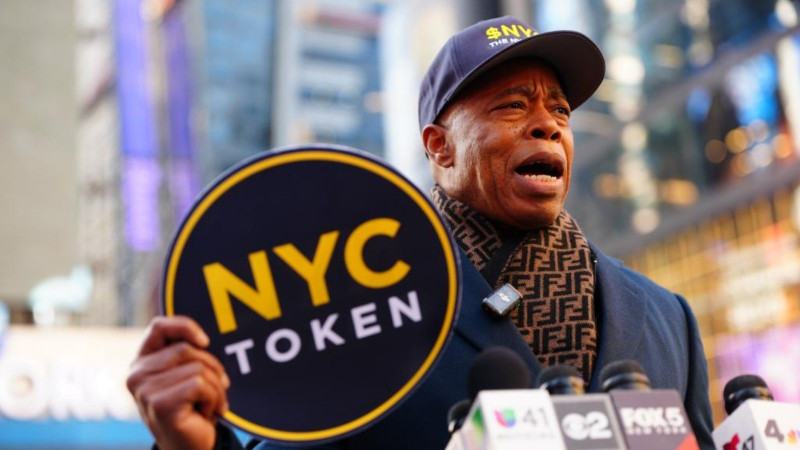
Eric Adams NYC Token Crash Fuels Rugging Claims
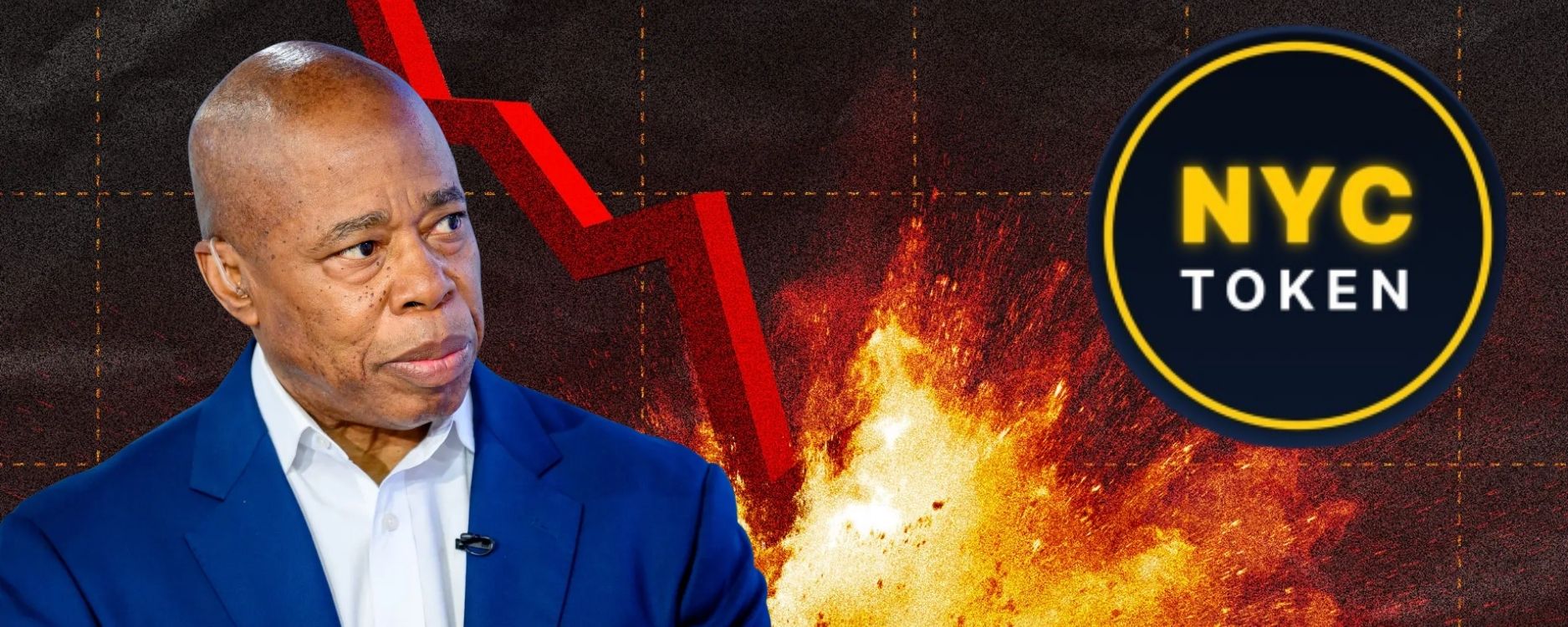
For a brief window, Eric Adams’ “NYC Token” looked like it might be the next Solana rocket. The price ripped higher almost immediately after launch, pushing the token to a paper valuation north of half a billion dollars.
Then it collapsed. Fast.
Within roughly 30 minutes of peaking, the token had lost more than 80 percent of its value. What looked like a breakout turned into a straight-down chart, and by the time most traders realized what was happening, liquidity was already disappearing.
This was not just volatility. The on-chain data tells a much messier story.
The Numbers Behind the Crash
At its peak, NYC Token briefly reached an estimated market capitalization of around $540 million. That number didn’t last long. As selling pressure hit, the price unraveled almost immediately, wiping out roughly $500 million in value in under an hour.
The speed matters. This was not a slow bleed or a multi-day unwind. It was a vertical move up followed by an even faster move down.
And the data shows why.
The Liquidity Move That Changed Everything
According to on-chain analysis highlighted in the original report, a wallet linked to the token’s deployer pulled roughly $2.5 million worth of USDC liquidity from the main trading pool right around the price peak.
That single action dramatically reduced the pool’s depth.
When liquidity is pulled like that, every sell becomes more painful. Slippage increases, prices gap lower, and panic compounds itself. That’s exactly what happened next.
Later, about $1.5 million in USDC was added back into the pool. But that still leaves roughly $900,000 that was never returned, at least not publicly accounted for.
To traders watching in real time, that sequence looked brutal. Liquidity out near the top, partial liquidity back after the damage was done, and silence on where the rest went.

The Supply Was Never Really Free
Then there’s the ownership data.
This was not a broadly distributed token. The top five wallets controlled roughly 92 percent of the total supply. The top ten held close to 99 percent. One wallet alone reportedly held about 70 percent.
Put simply, almost no one outside a very small group actually controlled meaningful supply.
That means price discovery was never organic. It also means that liquidity removal hit a market that was already artificially thin. Retail traders weren’t trading against thousands of independent holders. They were trading inside a structure dominated by a handful of wallets.
Once those wallets moved, the market had no choice but to follow.
Retail Traders Paid the Price
The data includes some ugly examples.
One wallet tracked on Solana bought the token five separate times, spending a total of about $745,000. Less than 20 minutes later, that same wallet sold everything for roughly $272,000.
That’s a loss of nearly $475,000 in minutes.
That pattern wasn’t unique. Many late buyers entered during the final leg of the pump, assuming liquidity would hold and momentum would continue. Instead, they became exit liquidity as soon as the pool thinned out.
This is how these collapses always look after the fact. Clean on-chain evidence, messy human behavior.
The Narrative Problem
Eric Adams positioned NYC Token as something more than a meme. The messaging leaned heavily on civic themes, education, and fighting antisemitism. It sounded closer to a mission than a gamble.
But the mechanics told a different story.
No clear public breakdown of wallet ownership. No transparent explanation of liquidity controls before launch. No smart-contract enforced locks that traders could independently verify in real time.
When the crash happened, explanations focused on market dynamics and demand rather than addressing the core issue. Liquidity was moved. Concentration was extreme. Retail traders were exposed.
In crypto, narratives don’t survive contact with block explorers.
Was It Rugged?
That depends on definitions, but the structure is hard to defend.
A token that crashes more than 80 percent within 30 minutes, after millions in liquidity are removed by a deployer-linked wallet, while one address holds the majority of supply, is going to be viewed as a rug pool by the market. Fair or not, that perception sticks.
You don’t need a hidden backdoor or malicious code. Control alone is enough.
The Bigger Takeaway
NYC Token will probably be forgotten in a few weeks. The losses won’t be.
This episode is another reminder that in crypto, structure matters more than slogans. Liquidity locks matter. Distribution matters. Transparency matters.
When those things are missing, hype fills the gap. And hype is fragile.
The data here wasn’t subtle. It was loud, fast, and unforgiving. Traders who ignored it paid the price. And the next memecoin with a famous name attached will almost certainly test the same limits again.
Because in this market, the charts always tell the truth eventually.
Stay Connected
You can stay up to date on all News, Events, and Marketing of Rare Network, including Rare Evo: America’s Premier Blockchain Conference, happening July 28th-31st, 2026 at The ARIA Resort & Casino, by following our socials on X, LinkedIn, and YouTube.