#Swift
Swift Launches Blockchain Ledger for Cross-Border Payments Pilot With 17 Banks

Swift has launched a blockchain-based ledger that enables banks to execute cross-border payments 24 hours a day, seven days a week, using tokenized deposits while maintaining final settlement on existing infrastructure.

Image credit: x.com
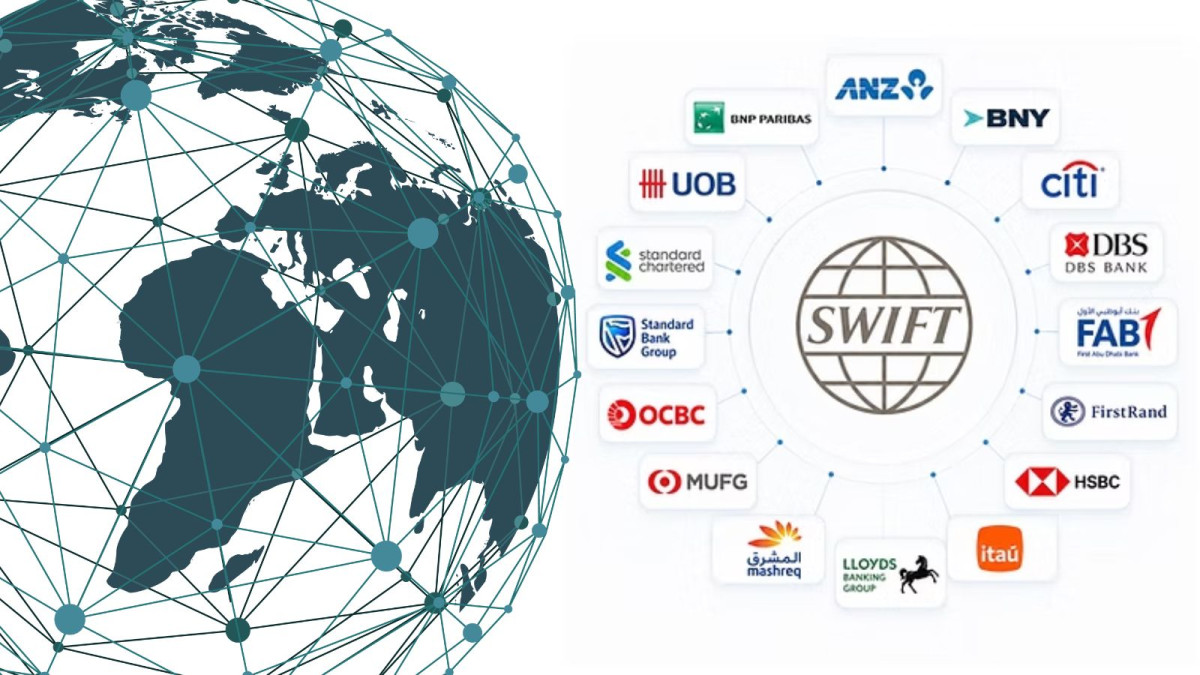
According to Swift, 17 banks from six continents are set to pilot transactions on its blockchain-based ledger. Among the banks participating in the pilot program are Wells Fargo, First Abu Dhabi Bank, Standard Chartered, Bank of New York Mellon, Citibank, HSBC, DBS, and Lloyds Bank, among others.
Swift says the shared ledger will provide participating banks with a secure orchestration layer that allows them to issue tokenized deposits on their respective ledgers, enabling customers' funds to move quickly, including on weekends. Participating banks are also expected to benefit from improved client experience and enhanced global liquidity, without compromising their existing compliance, risk, and operational standards.
"With our new ledger capability, we're extending the trust and stability of established finance into the frontiers of digital money. It allows tokenized value to move across borders with the velocity and flexibility modern commerce expects, while maintaining the same high levels of resiliency, security, and compliance global finance requires," said Thierry Chilosi, Chief Business Officer at Swift.
"The strong support from banks shows the practical value of this approach, one that will help scale benefits globally while creating a foundation for future innovation in areas like programmable money and agentic commerce."
Swift said it took nine months to build the blockchain-based ledger, with the team incorporating feedback from financial institutions throughout the development process. According to the company, 75% of payments on the shared ledger will reach beneficiary banks within 10 minutes, and often within seconds. Swift said it also plans for the network to help meet the G20 target for faster international payments.
About Swift
Swift, short for Society for Worldwide Interbank Financial Telecommunication, is a global entity that enables banks and other institutions to exchange standardized, secure instructions for cross-border payments, securities, trade, and treasury transactions.
Since its inception, Swift has connected more than 11,500 institutions in over 200 countries. Before its most recent blockchain-based ledger pilot, Swift had conducted multiple interoperability pilots, testing tokenized assets, stablecoins, CBDCs, and the integration of traditional financial rails with blockchains.
Swift and Chainlink Drive Blockchain in Banking

Swift and Chainlink just finished another interoperability trial focused on tokenized bond transactions, and it pulled in some serious European banking names: BNP Paribas Securities Services, Intesa Sanpaolo, and Société Générale FORGE all took part, testing how digital assets can move across both blockchain networks and traditional systems without anyone having to rebuild their existing infrastructure. The setup uses Swift's messaging standards alongside Chainlink's Cross-Chain-Interopability-Protocol (CCIP) so institutions can interact with blockchain networks through rails they already know and trust.

This builds on earlier work with over a dozen global institutions including Citi, BNY Mellon, and UBS Asset Management, who were already testing cross chain settlement on existing payment rails. The throughline across all of it is pretty straightforward: banks aren't going to adopt anything that forces them to gut their current systems, so if you can make tokenized asset settlement feel like a natural extension of what they already do, you've actually got a shot at making this work at scale.

Back in 2023, Swift ran experiments with Chainlink alongside Citi, BNY Mellon, BNP Paribas, Euroclear, Clearstream, and a bunch of others. They moved tokenized assets between wallets on the same chain, across public and private chains, and between different public chains entirely. CCIP validated the Swift requests, posted the transactions on chain, tracked execution, and sent confirmations back so banks saw one clean workflow on their end.
Then in 2024, under the Monetary Authority of Singapore's Project Guardian, Swift teamed up with UBS Asset Management and Chainlink to actually settle tokenized fund subscriptions and redemptions. Swift handled the fiat cash side, CCIP handled the on-chain asset side which shows digital asset transactions plugging into the payment systems that over 11,500 institutions across 200 countries already use, rather than needing some separate parallel settlement network nobody has actually built yet.
Legacy systems need to be able to talk to blockchains and right now you've got different CBDCs, tokenized deposits, and all kinds of assets sitting on different ledgers that can't be exchanged easily. By making CCIP the standard cross chain messaging layer, Swift gives banks a way to touch multiple chains without having to rebuild their whole stack every single time a new network shows up. There's identity work layered in too with GLEIF and Chainlink working on verifiable institutional IDs, and you can't have regulated cross border settlement without knowing who's on the other end.
Chainlink has already pulled in hundreds of millions in revenue, and it's coming from a mix of sources. A big chunk is large enterprises paying off-chain for platform access, integrations, usage, and maintenance. On top of that, there are on-chain fees from subscription and per call models, plus revenue sharing arrangements.
Chainlink's CCIP has been processing around $18 billion in monthly cross chain volume back in early 2026, which was up roughly 62 percent from the year before. JPMorgan and UBS both have live blockchain settlement pilots running on it.
March saw some solid activity with Coinbase activated a $5 billion cbBTC bridge to the Monad network, which basically brought their wrapped Bitcoin liquidity into Monad's DeFi ecosystem. Apps like Curvance and Neverland have already adopted related markets because of this. Coinbase also hooked up Chainlink's DataLink to bring premium exchange data on-chain for the first time, and that's powering billions in trading volume now. They were already using Chainlink for Proof of Reserve and as their exclusive bridging solution for wrapped assets, so this felt like the natural next move.
Institutions don’t have to directly use $LINK and can pay however works for them, whether that's fiat, stablecoins, gas tokens, or other digital assets which gets programmatically converted into LINK and deposited into the Chainlink Reserve. Node operators and service providers get paid out in LINK, and staking adds another layer of security on top of that. So, there is some design to keep creating demand for the token as usage grows, rather than just treating it as an afterthought.
Swift is the control panel for global banking, Chainlink CCIP is the router that speaks every blockchain's language, and banks keep doing what they do and the translation layer handles everything else.