#Oil Price
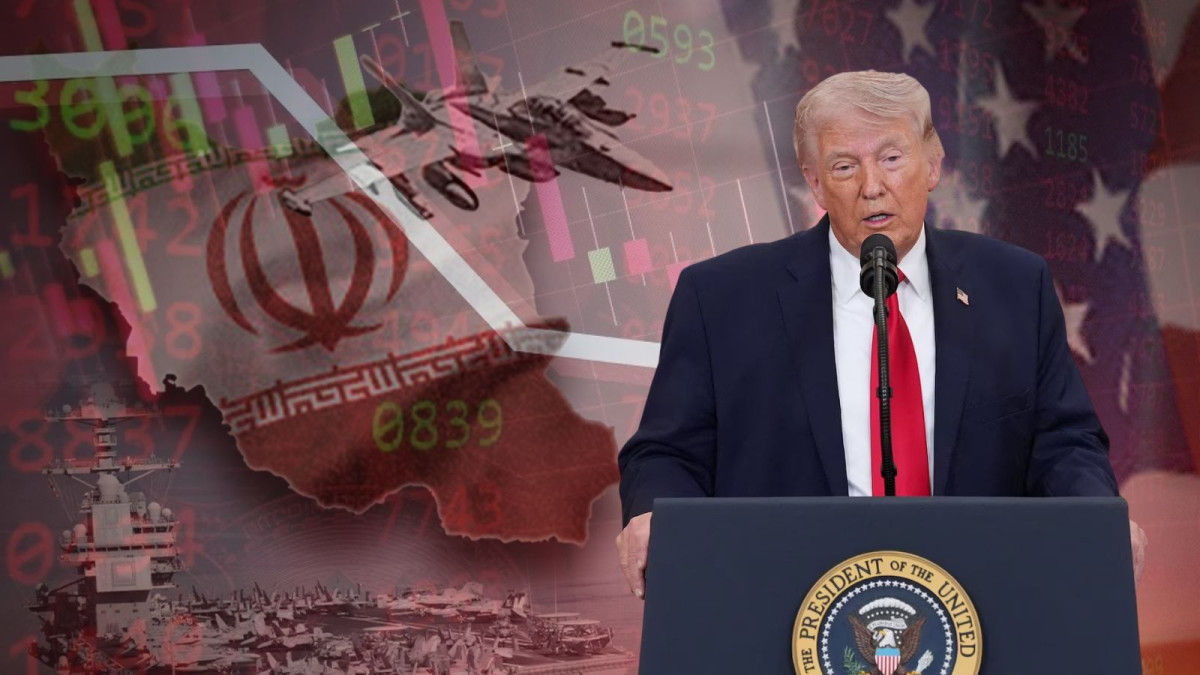
Crypto Markets Drop as Trump Threatens to Hit Iran 'Extremely Hard'

Whatever optimism had crept back into crypto markets over the past two days got wiped out Thursday morning after President Trump's primetime address to the nation offered not a path to peace, but a harder line. Crypto fell. Stocks fell. Oil surged past $106. The familiar cycle repeated itself, for roughly the fifth or sixth time in five weeks.
Bitcoin dropped 3% to around $66,000, giving back the gains it had quietly built on Tuesday. Ethereum fell by a similar margin, sliding to $2,056. BNB shed 4.9% to $580, XRP lost 3.5% to $1.30, and Solana's SOL had the worst session of the major tokens, off 5.2% and now down roughly 13% on the week. It was an ugly morning across the board, and it felt awfully familiar.
A Rally Built on Hope, Not Reality
Tuesday had been, briefly, a good day. Trump had made offhand comments suggesting the Iran conflict could wrap up within weeks and that a formal deal was not necessarily a prerequisite for a resolution. That was enough. Asian equities surged 4%. S&P 500 futures climbed. Bitcoin pushed back toward $69,000. The crypto Fear and Greed Index, which had been pinned at single digits for weeks, got a bit of air.
Then came the Wednesday speech. In nearly 20 minutes, Trump outlined no real shift in Iran policy, offered no pathway to a ceasefire, and gave no timeline for reopening the Strait of Hormuz, the critical oil shipping lane that has been effectively closed since mid-March. He said the strait would reopen 'naturally' once hostilities subside. That was not what markets had priced in and our small rally just went away.
The Real Problem Underneath the Headlines
Analysts and traders increasingly point out that tracking Trump's daily commentary on Iran may be beside the point. The underlying oil market situation has been quietly deteriorating, independent of whatever the president says on any given afternoon. The International Energy Agency's member nations authorized the largest coordinated strategic petroleum reserve release in the organization's 50-year history, around 426 million barrels in total, to compensate for the near-shutdown of Hormuz flows. Those flows represent about 20% of the world's seaborne oil trade.
The problem is that those emergency reserves are expected to run dry within weeks. When that happens, the manageable shortfall of roughly 4.5 to 5 million barrels per day could balloon to 10 or 11 million, which would be an entirely different kind of crisis. Ship insurance premiums for Hormuz transits remain elevated. Tanker traffic through the strait has not recovered. The real-world picture, independent of political statements, is not improving.
Going Nowhere Fast
Bitcoin has essentially traded between $60,000 and $73,000 for the entirety of the conflict, now entering its sixth week. It sells off on escalation headlines, bounces on de-escalation headlines, and ends up more or less where it started. The Fear and Greed Index has been stuck between 8 and 14 for a month, deep in extreme fear territory. The pattern has become almost mechanical at this point.
There are some who see reasons for cautious optimism, and they are not entirely without basis. April has historically been one of Bitcoin's stronger months, finishing green in 10 out of 15 years with an average gain of around 20.9%. Bitcoin also bounced clearly off two-month uptrend support near $60,000 last week and is attempting to reclaim its 50-day moving average. Spot Bitcoin ETFs have seen roughly $2.5 billion in net inflows over the past month, a sign that institutional interest has not collapsed. BlackRock noted this week that large investors are concentrating specifically in Bitcoin and Ether rather than spreading into the broader altcoin market.
But seasonality does not trade against a war. Until the conflict itself shows signs of genuinely unwinding, the pattern of hope, headline, reversal is unlikely to change. Wednesday was just another reminder of that.
The next few weeks will likely be decisive, not because of anything Trump says, but because of what happens with oil supply fundamentals that have been quietly building toward a breaking point regardless of the diplomatic noise.