#digital assets
Sony Bank Receives Conditional Approval From U.S. OCC to Set Up a National Trust Bank

Image credit: pymnts.com
Sony Bank, one of Japan's largest online banks, has received conditional approval from the U.S. Office of the Comptroller of the Currency, or OCC, to establish a national trust bank.
According to a press release from Sony Bank, the establishment of the trust bank, named Connectia Trust, is intended to prepare for the commercialization of businesses related to the issuance and management of U.S. dollar-denominated stablecoins in the United States.
"The establishment of this trust subsidiary is intended to contribute to the development of a medium to long-term business foundation for the Sony Financial Group's digital asset businesses," Sony Bank said in a press statement.
Although Connectia is being established this month, with Sony Bank committing an initial capital investment of $40 million (equivalent to JPY 6.4 billion), the trust bank will not begin full operations or stablecoin issuance until 2027. That is contingent on receiving final approval from the OCC after meeting all regulatory requirements.
Sony Bank's approval comes at a time when several other financial institutions, including crypto companies, have sought to establish national trust banks. In December last year, stablecoin issuer Circle received conditional approval to establish a national trust bank before securing final approval this week. Other companies that have received similar conditional approval include Ripple, Paxos, Fidelity, and BitGo.
By seeking an OCC national trust charter, companies can gain greater regulatory clarity and credibility to issue and manage U.S. dollar-backed stablecoins, provide custody services, and operate under a single national regulatory framework that preempts many state licensing requirements. An OCC charter can also help companies build trust among institutional clients, enabling them to expand their services to a broader range of customers.
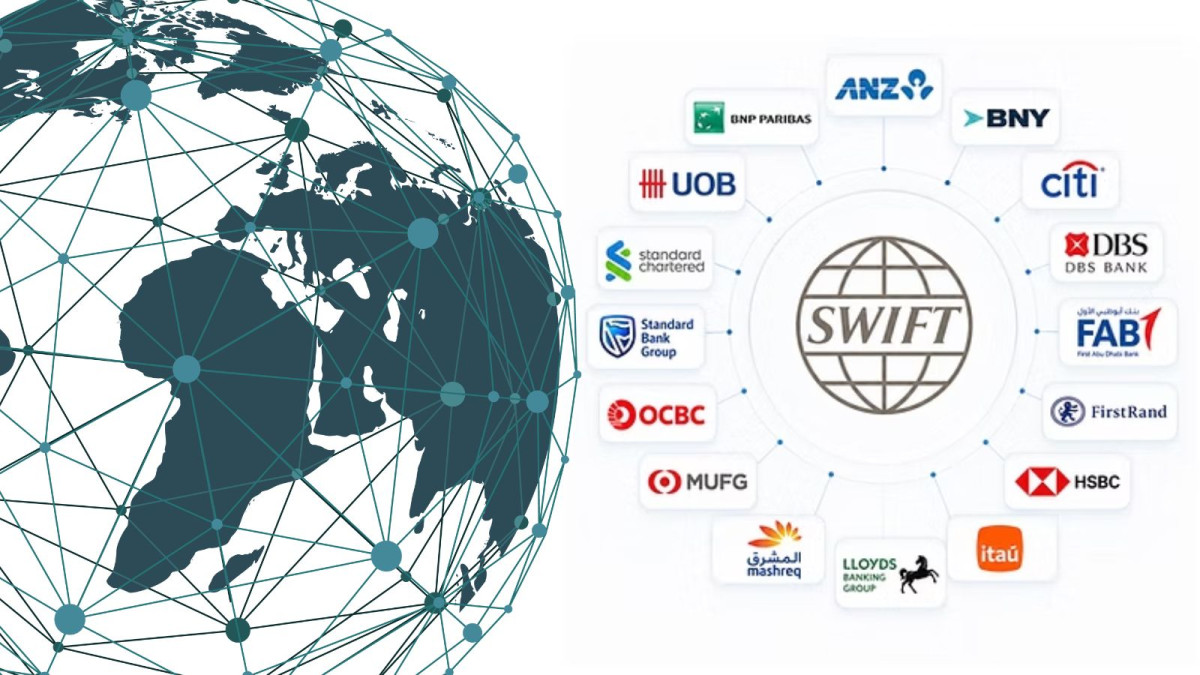
Swift Launches Blockchain Ledger for Cross-Border Payments Pilot With 17 Banks

Swift has launched a blockchain-based ledger that enables banks to execute cross-border payments 24 hours a day, seven days a week, using tokenized deposits while maintaining final settlement on existing infrastructure.

Image credit: x.com
According to Swift, 17 banks from six continents are set to pilot transactions on its blockchain-based ledger. Among the banks participating in the pilot program are Wells Fargo, First Abu Dhabi Bank, Standard Chartered, Bank of New York Mellon, Citibank, HSBC, DBS, and Lloyds Bank, among others.
Swift says the shared ledger will provide participating banks with a secure orchestration layer that allows them to issue tokenized deposits on their respective ledgers, enabling customers' funds to move quickly, including on weekends. Participating banks are also expected to benefit from improved client experience and enhanced global liquidity, without compromising their existing compliance, risk, and operational standards.
"With our new ledger capability, we're extending the trust and stability of established finance into the frontiers of digital money. It allows tokenized value to move across borders with the velocity and flexibility modern commerce expects, while maintaining the same high levels of resiliency, security, and compliance global finance requires," said Thierry Chilosi, Chief Business Officer at Swift.
"The strong support from banks shows the practical value of this approach, one that will help scale benefits globally while creating a foundation for future innovation in areas like programmable money and agentic commerce."
Swift said it took nine months to build the blockchain-based ledger, with the team incorporating feedback from financial institutions throughout the development process. According to the company, 75% of payments on the shared ledger will reach beneficiary banks within 10 minutes, and often within seconds. Swift said it also plans for the network to help meet the G20 target for faster international payments.
About Swift
Swift, short for Society for Worldwide Interbank Financial Telecommunication, is a global entity that enables banks and other institutions to exchange standardized, secure instructions for cross-border payments, securities, trade, and treasury transactions.
Since its inception, Swift has connected more than 11,500 institutions in over 200 countries. Before its most recent blockchain-based ledger pilot, Swift had conducted multiple interoperability pilots, testing tokenized assets, stablecoins, CBDCs, and the integration of traditional financial rails with blockchains.
Tether to Shut Down Alloy Platform and aUSDT Stablecoin

Tether, the world’s largest stablecoin issuer, has announced plans to shut down its Alloy platform, along with the platform’s main product, Alloy Tether (aUSDT).
According to Tether, the decision was based on a review of user activity levels, market demand, and the company’s broader priorities, with the team planning to focus its resources on areas where it sees stronger user demand, deeper liquidity, and longer-term market opportunity.
The wind-down will take place in phases, with Tether disabling both aUSDT minting and the opening of new positions on the Alloy platform. Users will, however, be able to continue redeeming their aUSDT and withdrawing their Tether Gold (XAUT) collateral from the Alloy platform for the next three months, until September 17, 2026.
This is not the first time Tether has shut down one of its products. In 2024, the stablecoin issuer discontinued its euro-pegged stablecoin, Euro Tether (EURT), citing low demand. In February of this year, it discontinued issuing its yuan-pegged stablecoin, Chinese Yuan Tether (CNHT), due to low demand and usage.
About Alloy
Alloy by Tether is an open platform launched by Tether that allows users to create Tethered assets, a category of digital assets designed to track the price of referenced assets such as the United States dollar, using over-collateralized assets like Tether Gold (XAUT).
Keyrock Secures MiCA License to Expand Across EU

Keyrock, a leading crypto investment company and digital asset liquidity provider, has secured a Markets in Crypto Assets Regulation (MiCA) license, advancing its efforts to expand its presence across the European Union (EU).

The company announced the authorization in a Monday blog post, stating that it was granted through its French subsidiary, Keyrock FR SAS. According to Reza Ghadiri Zare, Keyrock’s general counsel, the MiCA license provides regulatory certainty as the firm scales its operations across EU member states, thereby strengthening investor confidence.
“Achieving a MiCA license not only demonstrates our uncompromising market integrity, but also signals our intent for the future,” commented Kevin de Patoul, CEO of Keyrock. “We’ll continue to drive progress in digital assets, but never at the expense of security or transparency. As we grow, we’ll provide clients with the stability and confidence required in a regulated market.”
With MiCA licensing secured and regulatory hurdles cleared, Keyrock aims to enhance its cross-border operations across the EU. Coupled with its liquidity and risk management infrastructure, the company plans to further scale its digital asset initiatives.
With a valuation of $1.1 billion, Keyrock operates a liquidity infrastructure that spans more than 85 centralized and decentralized exchanges and over 1,400 markets.
About Keyrock
Founded in 2017, Keyrock is a leading global digital asset market maker that aims to make crypto markets more accessible and scalable. Leveraging its high-frequency trading technologies, risk management capabilities, and deep liquidity, Keyrock offers a range of services, including market making, OTC trading, and digital asset and wealth management.
As one of the earliest crypto market makers, Keyrock has achieved several significant milestones, including raising more than $170 million and achieving unicorn valuation. The company has also secured the necessary licenses, reducing regulatory uncertainty as it expands across the EU. Keyrock serves institutional clients, including hedge funds, asset managers, and traditional finance companies entering the digital asset market.
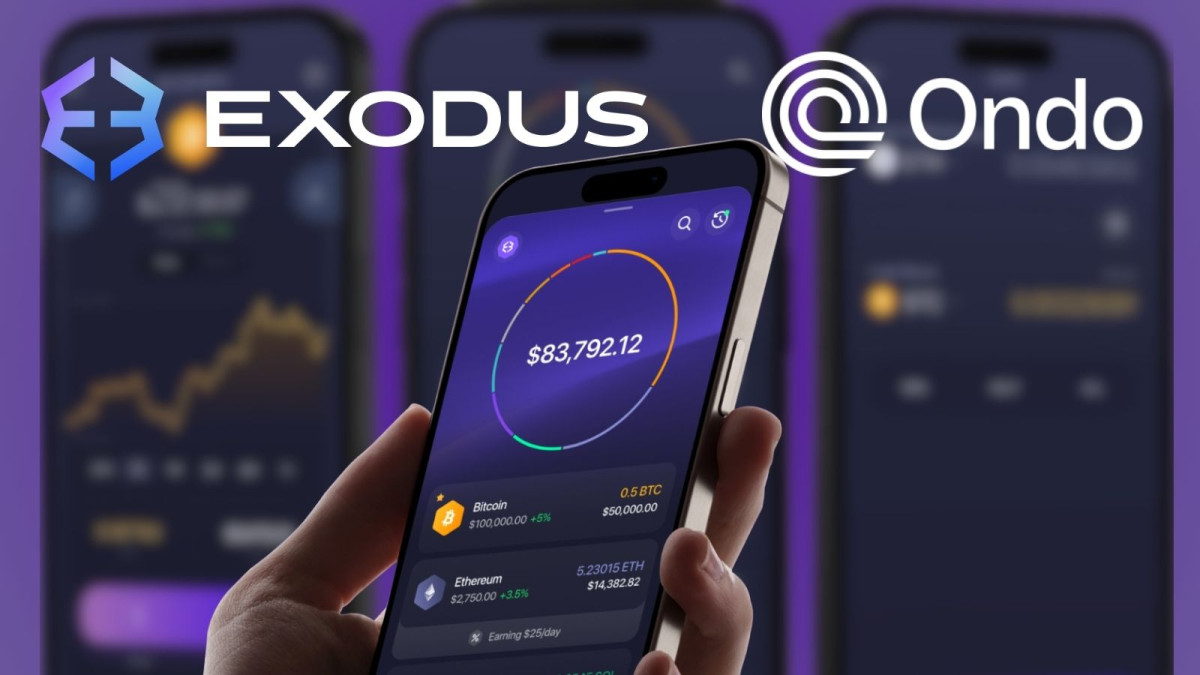
Exodus Partners With Ondo To Launch Tokenized Stocks

Exodus Movement Inc. (NYSE American: EXOD), a publicly traded financial technology company and developer of the Exodus wallet, has partnered with Ondo Finance to launch Exodus Markets, a platform for trading tokenized assets.

With Exodus Markets, users can now buy and sell more than 200 tokenized stocks, exchange-traded funds (ETFs), and real-world assets directly in the Exodus wallet app on the Solana blockchain.
"Tokenized stocks are one of the most important developments in modern finance," said JP Richardson, CEO and co-founder of Exodus.
"For the first time, our customers can trade and hold tokenized equities with the same direct control and global access they expect from crypto. Exodus is becoming the front door to every asset you hold, without compromising on trust and control."
The launch of Exodus Markets aligns with Exodus’s goal of transforming from a custodial wallet into a full financial platform that allows users to trade, earn rewards, send, spend, and manage money.
As part of its efforts to become a comprehensive financial app, Exodus launched Exodus Pay, a self-custodial payment feature within the Exodus app that enables users to transact with digital assets, including stablecoins, for everyday purchases. The company also launched XO Cash, a stablecoin pegged to the U.S. dollar.
The Tokenization Space
The tokenization space, particularly real-world assets (RWAs), has experienced significant growth over the past 1 to 2 years. Excluding stablecoins, the tokenization sector grew from roughly $5 billion to $6 billion at the start of 2025 to $27 billion to $31 billion or more by mid 2026, representing an increase of more than 400% over a period of 15 to 18 months.
Several institutions are also entering this growing sector, with Bitget most recently launching Reality, its real-world asset (RWA) platform. Kraken has also launched xChange, an on-chain trading engine designed for trading tokenized equities. MetaMask, Trust Wallet, Blockchain.com, and Robinhood have also made strategic moves to enter the sector, partnering with RWA firms and rolling out tokenized assets and stocks.
Given the level of growth and adoption the real-world asset and tokenization sector has seen so far, several projections have been made regarding its future potential. The Boston Consulting Group and Ripple have projected that the sector could be worth more than $15 trillion by 2030.
Zodia Custody Secures Luxembourg Payment License for EU Expansion

Zodia Custody, a company that provides institutional custody for cryptocurrencies and digital assets, has secured a payment license from Luxembourg’s Commission de Surveillance du Secteur Financier (CSSF), the country’s primary financial regulator.

With this payment license secured, Zodia Custody is set to expand beyond crypto custody, its main offering, and is now moving into both the custody and seamless transfer of electronic money tokens and stablecoins within the European Union.
“Institutional adoption of crypto assets demands infrastructure that meets the highest standards of regulatory adherence and operational efficiency,” said Ami Nagata, Managing Director, Luxembourg at Zodia Custody Europe.
“Securing a Payment Institution license alongside our MiCA CASP authorization is a critical step in bridging our capabilities across crypto asset safekeeping. With both licenses in place, our clients have the certainty they need to manage their electronic money token and crypto asset strategies across Europe, with full confidence that their assets are safeguarded within a bank-grade environment.”
Alongside the payment license and the MiCA license it secured in December last year, Zodia Custody is now well-positioned to serve as a core infrastructure provider for institutional digital finance. Securing these licenses removes structural barriers and counterparty risks commonly associated with crypto asset service providers.
The securing of the Luxembourg payment license comes shortly after Standard Chartered made a non-binding offer to acquire Zodia Custody. Although the acquisition cost was not publicly disclosed, the offer has already been accepted by Zodia Custody shareholders.
Zodia Custody currently serves a number of institutional clients, including 21Shares, Re7 Capital, Bitwise, and BitMEX. In April of this year, Zodia Custody partnered with BitMEX to integrate the Interchange platform into BitMEX's infrastructure to enable off-exchange trading, a move that enhances the safety of clients' assets on the BitMEX platform, especially in the event of a security breach.

Kraken Becomes Official Crypto Exchange Supporter of FIFA 2026

Kraken has been named the official cryptocurrency exchange supporter of the FIFA 2026 World Cup, which is scheduled to begin on June 11.
In a blog post announcing the partnership, Kraken said the collaboration will allow it to leverage its digital technology to enhance the fan experience for the global audience expected to tune in to this year’s World Cup tournament, which will be hosted across three countries: Canada, Mexico, and the United States. The tournament is expected to reach more than 6 billion people worldwide.

“Innovation has always played a central role in how FIFA evolves and enhances the fan experience. As we prepare to welcome the world to the biggest FIFA World Cup in history, we are delighted to partner with Kraken, an organization that shares our commitment to innovation and technology,” said Romy Gai, FIFA Chief Business Officer.
“Together, we look forward to exploring new ways to connect supporters with the tournament, creating memorable experiences that bring fans closer to the game and the moments that make the FIFA World Cup so special.”
With Kraken becoming the official cryptocurrency exchange supporter of this year’s World Cup, the company said it will deliver a series of fan-focused product experiences across North America and Europe. Kraken said the initiatives are designed to introduce new audiences to digital assets while strengthening the connection between football engagement and financial participation.
About Kraken
Kraken is one of the world’s oldest global cryptocurrency exchanges. Launched in 2011, the exchange operates as a full-service digital asset platform offering spot trading, margin trading, futures, staking, over-the-counter services, tokenized equities, and stocks. Its mission is to accelerate the global adoption of crypto by enabling broader access to financial services and promoting financial inclusion.
Since its launch, Kraken has grown to serve millions of users worldwide. Its services are currently available in more than 190 countries and serve over 13 million users globally. To provide non-U.S. users with access to U.S.-listed stocks and IPO opportunities, Kraken launched xChange, a platform that offers tokenized representations of real U.S. stocks and exchange-traded funds to eligible non-U.S. users.
Mastercard Expands Stablecoin Settlements Across Network

Mastercard is expanding its stablecoin settlement capabilities to support intraday, weekend, and holiday settlements using both fiat currencies and on-chain card settlements.

According to Mastercard, the expansion is aimed at providing users across the company's global payments network with greater flexibility, allowing them to better manage liquidity and gain greater control over how their money moves. The expansion is also expected to facilitate transactions that depend on timing and transparency, including cross-border payments, treasury operations, and payouts.
"The next phase of stablecoin adoption is about real-world utility, especially in settlement, where timing and liquidity matter most," said Raj Dhamodharan, executive vice president of Blockchain & Digital Assets at Mastercard.
"By introducing intraday and weekend settlement options across our global network, we're expanding how partners manage liquidity and operate in an always-on digital economy while maintaining the trust, resilience, and safeguards they expect from Mastercard."
With this expansion, Mastercard will support additional stablecoins, including Paxos's PYUSD, USDG, and USDP; Ripple's RLUSD; and SoFi's SoFiUSD, in addition to Circle's USDC, which it already supports. These stablecoins will be supported across multiple blockchain networks, including Arbitrum, Base, Canton, Ethereum, Polygon, Solana, Tempo, and XRPL.
ARQ (formerly known as DolarApp), CBW Bank, Cross River, Lead Bank, and Nuvei will be among the first companies in the United States and Latin America to support Mastercard's stablecoin settlement options, with further expansion expected throughout the year.
Mastercard's addition of more settlement options comes shortly after the payments giant acquired BVNK, a leading stablecoin infrastructure company, in March. The acquisition is part of Mastercard's broader strategy to connect on-chain payment rails with traditional fiat rails.
Mastercard is currently one of the world's largest payment processing networks, with more than 150 million merchant locations across 210 countries and territories. The company processed approximately $10.6 trillion in gross dollar volume (GDV) and reported net revenue of about $8.4 billion in the first quarter of this year.
Binance NFT Marketplace Is Shutting Down

Binance is winding down its centralized non-fungible token (NFT) platform and has instructed users to move their NFT assets before July 3, 2026.
Although the shutdown was framed as an "upgrade" by the exchange, users have been urged to transfer their NFT assets from the Binance NFT marketplace to the Binance Wallet, which the exchange says will now support NFT custody.

Users holding transferable NFT assets have been given one month's notice, until July 3, 2026, to move their NFTs to either their Binance Wallet or any other compatible wallet of their choice, or risk losing access to any NFTs that remain unwithdrawn.
As for users holding non-transferable NFTs, those assets will neither be withdrawable nor transferable because they were originally coded to prevent withdrawal and transfer. However, Binance said through Binance Academy that it will issue PDF certificates to users who have completed courses on the Binance Academy platform.
To facilitate the prompt withdrawal of NFTs from its marketplace, Binance said it will reimburse 1 USDC to up to 100,000 users withdrawing general NFTs from the platform. The 1 USDC reimbursement represents the estimated cost of withdrawing a single NFT. For users holding CR7-themed NFTs, Binance said it will refund the full withdrawal fees.
Declining NFT Market
The NFT market has experienced a dramatic decline in recent years, falling sharply from its 2021 and 2022 peaks. At its height, the market was valued at an estimated $17 billion to $24 billion, with monthly trading volume surpassing $4 billion.
However, market conditions have changed significantly, and the sector has fallen to historic lows. The global NFT market is currently valued at approximately $1.5 billion, representing a decline of more than 90% from its 2022 peak. Monthly trading volume has also dropped substantially and now ranges between roughly $400 million and $720 million, well below the peak level of more than $4 billion recorded in 2022.
Several NFT platforms, including Magic Eden, X2Y2, Zora, and Nifty Gateway, have either scaled back parts of their operations, significantly reduced their activity, or shifted their focus away from the NFT market, citing the sector's prolonged downturn.
Ethena Labs Partners with Anchorage for Institutional Lending

Decentralized finance protocol Ethena Labs has partnered with Anchorage Digital, a digital asset infrastructure provider, to expand its presence in institutional lending through Anchorage Digital's Atlas Collateral Management platform, which manages institutional-grade digital asset collateral.

As Ethena Labs seeks to deepen its involvement in institutional lending, the partnership will see Anchorage Digital act as collateral manager for Ethena's institutional lending activities. This arrangement allows Ethena to focus on deploying capital for loans, while Anchorage Digital manages and safeguards the associated collateral under its custody.
"Institutions want access to crypto native capital, but not at the cost of custody, controls, or operational rigor. Atlas Collateral Management lets protocols like Ethena Labs meet institutional borrowers where they are, combining the speed of DeFi with the standards institutions require," said Nathan McCauley, Co-Founder and CEO of Anchorage Digital.
Through the Atlas Collateral Management platform, Anchorage can monitor collateral and loan thresholds in real time, support margin processes, and execute rules-based actions when necessary. Because the collateral remains under Anchorage's custody and does not move on the chain, Ethena can access traditional institutional lending markets without requiring institutions to adopt blockchain native custody solutions or interact directly with DeFi smart contracts.
For borrowers, the collaboration provides access to crypto native credit while allowing them to maintain their existing custodial, compliance, and risk management frameworks. Atlas offers protocols a streamlined way to expand into institutional lending without building and maintaining their own collateral management, monitoring, and liquidation infrastructure.
The partnership between Ethena Labs and Anchorage Digital builds on an existing relationship. In July 2025, Ethena partnered with Anchorage Digital Bank, the first federally chartered crypto bank in the United States, to become the primary issuer of USDtb, Ethena Labs' institutional-grade stablecoin.
As part of its broader push into institutional lending, Ethena recently partnered with Solana-based DeFi platform Jupiter and Bitwise Asset Management to launch an institutional-grade USDe lending market on Jupiter's lending platform.
The partnership between Anchorage Digital and Ethena Labs comes at roughly the same time as Coinbase's investment in Ethena Labs, which included the purchase of an undisclosed amount of ENA tokens. Coinbase and Ethena are working together to launch on-chain savings and finance products for Coinbase's more than 100 million users.
Robinhood Expands Into Canada With WonderFi Purchase

Robinhood Markets, Inc. has completed the acquisition of WonderFi, a formerly publicly traded Canadian fintech company focused on cryptocurrency and digital assets.
The acquisition, valued at $180 million, now allows Robinhood to fully enter the Canadian crypto market, with WonderFi subsidiaries Bitbuy, a crypto trading platform, and Coinsquare, a regulated crypto exchange, becoming part of the Robinhood brand.
“WonderFi has extensive experience operating regulated crypto platforms that serve beginner and advanced crypto users alike, making it an ideal partner to accelerate Robinhood’s mission in Canada,” said Johann Kerbrat, SVP and General Manager of Robinhood Crypto & International.
“We’re pleased to have closed our acquisition and look forward to delivering innovative, user-centric investing products to Canadian customers,” he added.
With this acquisition, WonderFi employees will join more than 240 Robinhood employees based in Canada, collectively serving more than 1 million Robinhood customers internationally and 300,000 existing WonderFi customers.
About Robinhood
Robinhood Markets, Inc. is a Nasdaq-listed American financial technology company with a presence in the United Kingdom, the European Union (EU), and now Canada.
Established in February 2018, Robinhood operates a dual trading platform across mobile and web that is designed to make access to different asset classes easier, particularly for newer investors. Its mission is simple: to democratize finance for all.
Since its launch, Robinhood has achieved several milestones, including pioneering commission-free trading in the United States, a move that prompted many brokerage firms to eliminate commission fees. Over the years, Robinhood has also completed a number of acquisitions, including X1, a financial technology company; TradePMR; Bitstamp, a cryptocurrency exchange; and Pluto Capital.
Like Robinhood, several other companies have completed acquisitions this year to expand into new areas of finance and cryptocurrency. Bullish, a cryptocurrency exchange, recently acquired Equiniti for approximately $4.2 billion as part of its effort to enter the tokenized securities sector. Other companies, including Mastercard, Polygon Labs, and OKX, have also pursued strategic acquisitions to expand their market presence.

Indonesia Blocks Polymarket, Expands Gambling Crackdown

Indonesia’s Ministry of Communication and Digital Affairs has blocked access to Polymarket, the world’s largest prediction market platform, and plans to block all social media accounts affiliated with it.
According to Alexander Sabar, Director General of Digital Space Supervision, platforms that facilitate money-based betting on specific outcomes or events are still categorized as online gambling, even if they are presented as prediction markets.
“The government will not allow any form of online gambling in Indonesia. Activities like Polymarket involve betting and speculation on uncertain outcomes, thus violating Indonesian law,” Sabar said in Central Jakarta, one of the country’s main administrative areas.
The agency also said the decision to block Polymarket is intended to protect younger users and the broader public in the digital space, and added that it will block access to other platforms that facilitate online gambling activities in the country.
Prior to the ban, Polymarket had a limited user base in Indonesia. However, it gained greater visibility between May 20 and 21 of this month when it launched a contract on whether President Prabowo Subianto would leave office early. The contract drew significant attention in Indonesian digital spaces, attracting roughly 51,000 dollars in trading volume within days of its launch.
Global Crackdown on Prediction Markets Continues
Regulators' crackdown on the activities of prediction market companies continues to intensify. Just last month, Brazil’s National Monetary Council (CMN), together with other government agencies and regulators, blocked Polymarket, Kalshi, and 27 other prediction market platforms from operating in the country. This came shortly after a court in Buenos Aires reportedly ordered a ban on Polymarket in Argentina.
Other countries in Europe, including France, Belgium, Germany, Italy, Poland, Portugal, and Hungary, have either banned or heavily restricted the activities of Polymarket, Kalshi, and other prediction market companies within their jurisdictions.
In the United States, several state regulators have taken action against prediction markets, with Minnesota most recently imposing a comprehensive ban on them. At least 17 states, including Illinois, New York, and Ohio, have issued cease-and-desist orders against prediction market companies.